Category Archives: Recommended

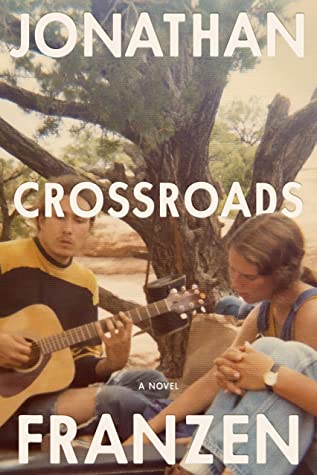
Crossroads – Jonathan Franzen

Crossroads – Jonathan Franzen

I have always liked Franzen’s novels and I went to hear him speak once at a Writer’s Festival event.

Here’s the blurb …

Jonathan Franzen’s gift for wedding depth and vividness of character with breadth of social vision has never been more dazzlingly evident than in Crossroads.

It’s December 23, 1971, and heavy weather is forecast for Chicago. Russ Hildebrandt, the associate pastor of a liberal suburban church, is on the brink of breaking free of a marriage he finds joyless–unless his wife, Marion, who has her own secret life, beats him to it. Their eldest child, Clem, is coming home from college on fire with moral absolutism, having taken an action that will shatter his father. Clem’s sister, Becky, long the social queen of her high-school class, has sharply veered into the counterculture, while their brilliant younger brother Perry, who’s been selling drugs to seventh graders, has resolved to be a better person. Each of the Hildebrandts seeks a freedom that each of the others threatens to complicate.

Jonathan Franzen’s novels are celebrated for their unforgettably vivid characters and for their keen-eyed take on contemporary America. Now, in Crossroads, Franzen ventures back into the past and explores the history of two generations. With characteristic humor and complexity, and with even greater warmth, he conjures a world that resonates powerfully with our own.

A tour de force of interwoven perspectives and sustained suspense, its action largely unfolding on a single winter day, Crossroads is the story of a Midwestern family at a pivotal moment of moral crisis. Jonathan Franzen’s gift for melding the small picture and the big picture has never been more dazzlingly evident.

Once again it was a very long book, but I enjoyed it. I liked the switch in perspectives (although I intensely disliked Russ). I think Franzen writes like a woman, which I mean as a compliment and he might take as a criticism, his novels focus on families, and relationships and to my mind seem character rather than plot driven. I look forward to the next two.

Here’s a review from The Guardian

Leave a Comment

Filed under 4, Fiction, Recommended

Scary Monsters – Michelle De Krester

Scary Monsters – Michelle De Krester

I have read other books by Michelle De Krester, so I was keen to read this one when I saw it in my local book shop. It is double-sided, you read one side and then flip it over and read the other. I don’t think you need to read a particular side first.

Here’s the blurb …

‘When my family emigrated it felt as if we’d been stood on our heads.’

Michelle de Kretser’s electrifying take on scary monsters turns the novel upside down – just as migration has upended her characters’ lives.

Lili’s family migrated to Australia from Asia when she was a teenager. Now, in the 1980s, she’s teaching in the south of France. She makes friends, observes the treatment handed out to North African immigrants and is creeped out by her downstairs neighbour. All the while, Lili is striving to be A Bold, Intelligent Woman like Simone de Beauvoir.

Lyle works for a sinister government department in near-future Australia. An Asian migrant, he fears repatriation and embraces ‘Australian values’. He’s also preoccupied by his ambitious wife, his wayward children and his strong-minded elderly mother. Islam has been banned in the country, the air is smoky from a Permanent Fire Zone, and one pandemic has already run its course.

Three scary monsters – racism, misogyny and ageism – roam through this mesmerising novel. Its reversible format enacts the disorientation that migrants experience when changing countries changes the story of their lives. With this suspenseful, funny and profound book, Michelle de Kretser has made something thrilling and new.

‘Which comes first, the future or the past?’ 

I think this book consists of two novellas and the linking theme is living in a place that is not your place of birth. One of the stories is set in the future and one in the past. I liked them both, but my favourite would be Lilli’s story (the one set in the past). I think that’s because she was young, living in France and it all seemed a bit of an adventure. Lyle’s story (the other version) was funnier – I liked the references to trying to be more Australian, but also more upsetting – the future is not a particularly pleasant place and it all seemed plausible: 50+ temperatures in Melbourne, Australia’s unclimate policy, etc.

It is beautifully written and engaging.

Leave a Comment

Filed under 4, Fiction, Recommended

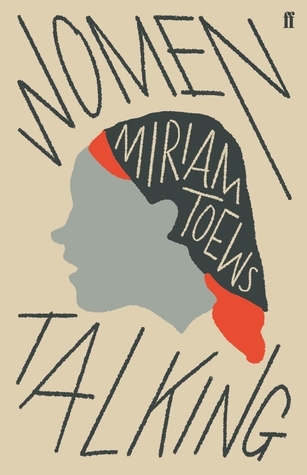
Women Talking – Miriam Toews

Women Talking – Miriam Towes

I am not sure when I first heard of this author. I tried to find her books at my local book store, but they didn’t have any. In the end I found this one at the library.

Here’s the blurb …

Between 2005 and 2009, in a remote religious Mennonite colony, over a hundred girls and women were knocked unconscious and raped, often repeatedly, by what many thought were ghosts or demons, as a punishment for their sins. As the women tentatively began to share the details of the attacks-waking up sore and bleeding and not understanding why their stories were chalked up to ‘wild female imagination.’

Women Talking is an imagined response to these real events. Eight women, all illiterate, without any knowledge of the world outside their colony and unable even to speak the language of the country they live in, meet secretly in a hayloft with the intention of making a decision about how to protect themselves and their daughters from future harm. They have two days to make a plan, while the men of the colony are away in the city attempting to raise enough money to bail out the rapists (not ghosts as it turns out but local men) and bring them home.

How should we live? How should we love? How should we treat one another? How should we organise our societies? These are questions the women in Women Talking ask one another-and Miriam Toews makes them the questions we must all ask ourselves.

I really enjoyed this, although it made me angry when I thought about all of the women and children living under such a system. The writing is beautiful, simple but powerful. At times it is darkly funny, but it is also sad and occasionally frustrating (the women get bogged down in semantics – like any meeting anywhere)

Leave a Comment

Filed under 4, Fiction, Recommended

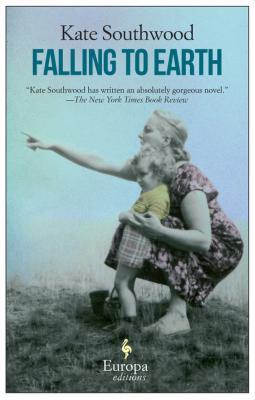
Falling to Earth – Kate Southwood

Falling to Earth – Kate Southwood

A family member lent this to me – out of the blue she just asked if I wanted to read it and as I knew her taste was good I jumped at the chance.

Here’s the blurb …

“Kate Southwood has written an absolutely gorgeous – and completely modern – first novel” — New York Times Book Review

March 18, 1925. The day begins as any other rainy, spring day in the small settlement of Marah, Illinois. But the town lies directly in the path of the worst tornado in US history, which will descend without warning midday and leave the community in ruins. By nightfall, hundreds will be homeless and hundreds more will lie in the streets, dead or grievously injured. Only one man, Paul Graves, will still have everything he started the day with –– his family, his home, and his business, all miraculously intact.

Based on the historic Tri-State tornado, Falling to Earth follows Paul Graves and his young family in the year after the storm as they struggle to comprehend their own fate and that of their devastated town, as they watch Marah resurrect itself from the ruins, and as they miscalculate the growing resentment and hostility around them with tragic results

It was fabulous – beautifully written. I found it compelling – the way their lives slowly unravel around them.

Leave a Comment

Filed under 4, Fiction, Historical Fiction, Recommended

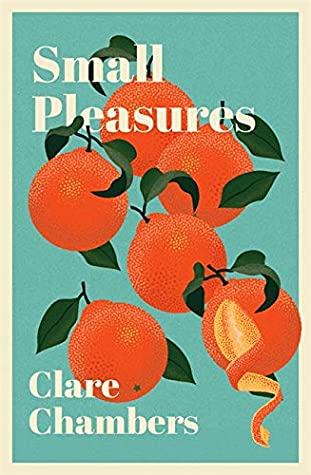
Small Pleasures – Claire Chambers

Small Pleasures – Clare Chambers

I can’t remember where I first hear about this novel – book club maybe? I had to order it from Dymocks and it did take about 4 weeks to arrive (book shortage).

Here’s the blurb …

1957, south-east suburbs of London.
Jean Swinney is a feature writer on a local paper, disappointed in love and — on the brink of forty — living a limited existence with her truculent mother: a small life from which there is no likelihood of escape.

When a young Swiss woman, Gretchen Tilbury, contacts the paper to claim that her daughter is the result of a virgin birth, it is down to Jean to discover whether she is a miracle or a fraud. But the more Jean investigates, the more her life becomes strangely (and not unpleasantly) intertwined with that of the Tilburys: Gretchen is now a friend, and her quirky and charming daughter Margaret a sort of surrogate child. And Jean doesn’t mean to fall in love with Gretchen’s husband, Howard, but Howard surprises her with his dry wit, his intelligence and his kindness — and when she does fall, she falls hard.

But he is married, and to her friend — who is also the subject of the story she is researching for the newspaper, a story that increasingly seems to be causing dark ripples across all their lives. And yet Jean cannot bring herself to discard the chance of finally having a taste of happiness…

But there will be a price to pay, and it will be unbearable.

I really enjoyed this novel – it’s beautiful, and sad, and interesting. The writing is lovely. It was well-researched, but unobtrusively so.

Another review

1 Comment

Filed under 4, Fiction, Historical Fiction, Recommended

The Story of the Bayeux Tapestry

The Story of the Bayeux Tapestry – David Musgrove and Michael Lewis

I am very keen to visit the Bayeux Tapestry. I planned to go in 2020, but we all know how that turned out. So i keep buying books about it. I first heard of this one on the History Extra podcast (worth listening to if you are at all interested in the tapestry – or even the Norman conquest).

Here’s the blurb …

Most people know that the Bayeux Tapestry depicts the moment when the last Anglo-Saxon king of England, Harold Godwinson, was defeated at the Battle of Hastings in 1066 by his Norman adversary William the Conqueror. However, there is much more to this historic treasure than merely illustrating the outcome of this famous battle. Full of intrigue and violence, the tapestry depicts everything from eleventh-century political and social life—including the political machinations on both sides of the English Channel in the years leading up to the Norman Conquest—to the clash of swords and stamp of hooves on the battle field.

Drawing on the latest historical and scientific research, authors David Musgrove and Michael Lewis have written the definitive book on the Bayeux Tapestry, taking readers through its narrative, detailing the life of the tapestry in the centuries that followed its creation, explaining how it got its name, and even offering a new possibility that neither Harold nor William were the true intended king of England. Featuring stunning, full- color photographs throughout, The Story of the Bayeux Tapestry explores the complete tale behind this medieval treasure that continues to amaze nearly one thousand years after its creation.

Firstly, this is a beautiful object with fabulous colour pictures of the tapestry – scene by scene and then altogether at the end (over several pages).

The opening two chapters are about the tapestry as a physical object – how did it survive, who commissioned it – and some information on the Normal Conquest.

The following 10 chapters are a detailed description (including images) of the scenes of the tapestry. I particularly enjoyed these chapters – the action in the main section is described as well as anything happening in the two borders. The authors have a lovely way of describing the action – they really bring the characters (actors?) to life.

The final chapter is about the tapestry’s legacy – will it ever get back to England?

I really enjoyed reading this (and it was easy to read) and I think anyone interested in textiles, early medieval history and even military history will find this a fascinating read.

Leave a Comment

Filed under 4, Non-Fiction, Recommended, Serious

Black Sheep – Georgette Heyer

Black Sheep – Georgette Heyer

This is another of my Rottnest reads. I like Georgette Heyer and I thought I had read all of her regency romances, but I hadn’t read this one. I found it for $5 at Target (about the cost of a coffee).

Here’s the blurb

With her high-spirited intelligence and good looks, Abigail Wendover was a most sought-after young woman. But of all her high-placed suitors, there was none Abigail could love. Abigail was kept busy when her pretty and naive niece Fanny falls head over heels in love with Stacy Calverleigh, a good-looking town-beau of shocking reputation and an acknowledged seductor. She was determined to prevent her high-spirited niece from becoming involved with the handsome fortune-hunter. The arrival to Bath of Stacy’s uncle seemed to indicate an ally, but Miles Calverleigh is the black sheep of the family.

Miles Calverleigh had no regard for the polite conventions of Regency society. His cynicism, his morals, his manners appalled Abigail. He also turned out to be the most provoking creature Abigail had ever met – with a disconcerting ability to throw her into giggles at quite the wrong moment. Will Abigail overcome Mile’s indifference towards his nephew and help Abigail foil Stacy’s plans?

This is fun, all set in Bath, lots of talk of clothes (or at least the fabric to make clothes) and Bath society (going to the Pump Room, excursions to Wells Cathedral, concerts, etc.)

Another review

Leave a Comment

Filed under 4, Fiction - Light, Historical Fiction, Recommended

The Redeemed – Tim Pears

The Redeemed – Tim Pears

This is the third in the West Country Trilogy and it is definitely a three-act story.

Here’s the blurb …

The final instalment in Tim Pears’s spellbinding chronicle of love, exile and belonging in a world on the brink of change Selected as a book of 2019 by the Guardian, Scotsman and The TimesIt is 1916. The world has gone to war, and young Leo Sercombe, hauling coal aboard the HMS Queen Mary, is a long way from home. The wild, unchanging West Country roads of his boyhood seem very far away from life aboard a battlecruiser, a universe of well-oiled steel, of smoke and spray and sweat, where death seems never more than a heartbeat away. Skimming through those West Country roads on her motorcycle, Lottie Prideaux defies the expectations of her class and sex as she covertly studies to be a vet. But the steady rhythms of Lottie’s practice, her comings and goings between her neighbours and their animals, will be blown apart by a violent act of betrayal, and a devastating loss.In a world torn asunder by war, everything dances in flux: how can the old ways life survive, and how can the future be imagined, in the face of such unimaginable change? How can Leo, lost and wandering in the strange and brave new world, ever hope to find his way home? The final instalment in Tim Pears’s exquisite West Country Trilogy, The Redeemed is a timeless, stirring and exquisitely wrought story of love, loss and destiny fulfilled, and a bittersweet elegy to a lost world.

I found this one fascinating -I had no idea about the scuttling of the German fleet, or the effort to raise these ships again. Or the fact that all steel manufactured after world war two contains radiation (from Hiroshima and Nagasaki) and so these ships are some of the last ‘pure’ steel left in the world.

It is a beautiful story, full of detail of a vanishing world. Horses replaced by tractors and fewer men required to work the fields.

A review

Leave a Comment

Filed under 4, Fiction, Historical Fiction, Recommended

The Horseman – Tim Pears

The Horseman – Tim Pears

I heard about this trilogy from the Slightly Foxed podcast and then a friend asked if I wanted to read them – how serendipitous.

Here’s the blurb …

From the prize-winning author of In the Place of Fallen Leaves comes a beautiful, hypnotic pastoral novel reminiscent of Thomas Hardy, about an unexpected friendship between two children, set in Devon in 1911. In a forgotten valley, on the Devon-Somerset border, the seasons unfold, marked only by the rituals of the farming calendar. Twelve-year-old Leopold Sercombe skips school to help his father, a carter. Skinny and pale, with eyes as dark as sloes, Leo dreams of a job on the Master ‘s stud farm. As ploughs furrow the hard January fields, the Master ‘s daughter, young Miss Charlotte, shocks the estate ‘s tenants by wielding a gun at the annual shoot. Spring comes, Leo watches swallows build their nests, hedgerows thrum with life and days lengthen into summer. Leo is breaking a colt for his father when a boy dressed in a Homburg, breeches and riding boots appears. Peering under the stranger ‘s hat, he discovers Charlotte.And so a friendship begins, bound by a deep love of horses, but divided by rigid social boundaries boundaries that become increasingly difficult to navigate as they approach adolescence – Hallucinatory, beautiful and suffused with the magic of nature, this tale of an unlikely friendship and the loss of innocence builds with a hypnotic power. Evoking the realities of agricultural life with precise, poetic brushstrokes, Tim Pears has created a masterful, Hardyesque pastoral novel. The first in a dazzling new trilogy, The Horseman is his greatest achievement.

This is a beautiful novel – the writing is poetic. It spans 18 months from January 1911 to June 1912. Each chapter is a different event, activity or thing in Leo’s life. We learn a lot about farming in the early 20th century and it looks hard and very labour intensive.

Leo is a quiet and extremely observant boy and I loved all of the sections about horses and nature.

Lottie is a fiercely independent soul who shares Leo’s love of horses. There is definitely going to be class tensions or at least problems in the future.

Another review

Leave a Comment

Filed under 4, Fiction, Historical Fiction, Recommended

How Fiction Works – James Woods

How Fiction Works – James Wood

I heard about this book on twitter (I think).

Here is the blurb …

Rediscover this deep, practical anatomy of the novel from ‘the strongest … literary critic we have’ (New York Review of Books) in this new revised 10th anniversary edition.

What do we mean when we say we ‘know’ a fictional character?

What constitutes a ‘telling’ detail?

When is a metaphor successful?

Is realism realistic?

Why do most endings of novels disappoint?

In the tradition of E. M. Forster’s Aspects of the Novel and Milan Kundera’s The Art of the NovelHow Fiction Works is a study of the main elements of fiction, such as narrative, detail, characterization, dialogue, realism, and style. In his first full-length book of criticism, one of the most prominent critics of our time takes the machinery of story-telling apart to ask a series of fundamental questions.

Wood ranges widely, from Homer to Beatrix Potter, from the Bible to John Le Carré, and his book is both a study of the techniques of fiction-making and an alternative history of the novel. Playful and profound, it incisively sums up two decades of bold, often controversial, and now classic critical work, and will be enlightening to writers, readers, and anyone interested in what happens on the page.

‘Should find a place on every novel-lover’s shelf. It has the quality all useful works of criticism should have: refined taste, keen observation, and the ability to make the reader argue, passionately, with it’ Financial Times

It’s great, if you’re at all interested in literature and how it works, then you will love this book. It has a conversational style and there are lots of examples.

Leave a Comment

Filed under Non-Fiction, Recommended