I have read two other Spufford books – Golden Hill and Light Perpetual, and I liked them both. So when a friend said she had this one, I was keen to read it.
Here’s the blurb …
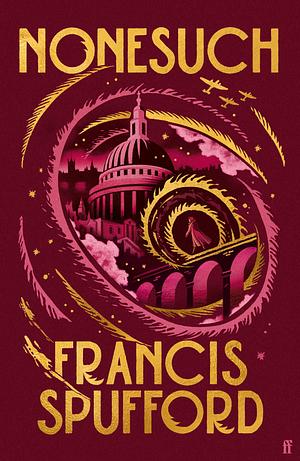
It’s the summer of 1939. London is on the brink of catastrophic war. Iris Hawkins, an ambitious young woman in the stuffy world of City finance, has a chance encounter with Geoff, a technical whizz at the BBC’s nascent television unit.
What was supposed to be one night of abandon draws her instead into an adventure of otherworldly pursuit – into a reality where time bends, spirits can be summoned, and history hangs by a thread. Soon there are Nazi planes overhead. But Iris has more to contend with than the terrors of the Blitz. Over the rooftops of burning London, in the twisted passages between past and present, a fascist fanatic is travelling with a gun in her hand.
And only Iris can stop her from altering the course of history forever.
Mr Spufford has such a wonderful way with words. His descriptions, in particular, are fabulous. I could see the cluttered attic, Iris’s flat in Chelsea, etc. I also think Iris and Geoff’s relationship is lovely – a grownup relationship with ups and downs and doubts.
I had heard about this book in various places, but it is out of print. I finally found a second hand copy at Awesome Books.
Here’s the blurb …
Business As Usual by Jane Oliver and Ann Stafford was first published in 1933. It’s a delightful illustrated novel in letters from Hilary Fane, an Edinburgh girl fresh out of university who is determined to support herself by her own earnings in London for a year, despite the mutterings of her surgeon fiance . After a nervous beginning looking for a job while her savings rapidly diminish, she finds work as a typist in the London department store of Everyman’s (a very thin disguise for Selfridges), and rises rapidly through the ranks to work in the library, where she has to enforce modernising systems on her entrenched and frosty colleagues. Business as Usual is charming: intelligent, heart-warming, funny, and entertaining. It’s deeply interesting as a record of the history of shopping in the 1930s, and also fascinating for its unflinching descriptions of social conditions, poverty and illegitimacy.
I love this book! A series of letters and memos (meemos) that Hilary writes to various people (and the ocassional letter about her). It is witty and interesting. Given that it was published in 1933 and set in 1931 and 1932, I have to think the working and living conditions are accurate. There were so many staff employed in the department store – originally Hilary was writing postage labels for the books! Now days you’re lucky to find any staff in department stores.
I bought this book because it was a book about books and that cover!
Here’s the blurb …
Twelve stories. Twelve months. One chance to heal her heart…
When Tilly Nightingale receives a call telling her there’s a birthday gift from her husband waiting for her at her local bookshop, it couldn’t come as more of a shock. Partly, because she can’t remember the last time she read a book for pleasure. Mainly, because Joe died five months ago…
The gift is simple – twelve carefully chosen books from Joe, one for each month, to help her turn the page on her first year without him.
And so begins a reading-inspired journey that takes Tilly around the world; from bustling sidewalks in New York and the tree-lined avenues of Paris to the tranquil Tuscan countryside and the white sands of Bali. With the help of the bookshop owner, Alfie, Tilly starts to discover who she is now, after Joe.
But can Tilly’s year of books show her how to love again?
Currently this is my favourite read of the year. I cried a bit – usually while reading Joe’s letters to Tilly, or when Tilly had a moment of grief. I bought some books – based on the recommendations at the start of each month, or even the books Joe selected for Tilly. I liked almost all of the characters – Harper, Tilly’s sister, annoyed me. The settings were great – Primrose Hill, Paris, New York, Tuscany, Bali, and a very welcoming book store (with a cat – more book stores should have a cat).
Some of my favourite quotes
I wish I could show you when you are lonely or in darkness the astonishing light of your own being – Hafiz of Shiraz (from Shakespeare and Company in Paris)
The right book in the hands of the right person at exactly the right moment can change their life forever.
I really enjoyed H is for Hawk. I saw this while on holiday in Dunsborough (here). I did know it was going to be completely different, but good writing is good writing.
Here’s the blurb …
A genre-bending, strikingly original tour-de-force about an unlikely spy duo on the most dangerous and otherwordly mission of their lives, from the New York Times–bestselling author of H is for Hawk, Helen Macdonald, and the stunning new voice of Sin Blaché.
Adam Rubinstein and Sunil Rao have been nemeses and reluctant partners since their Uzbekistan days. Adam is a seemingly unflappable American Intelligence officer; Rao is ex-MI6, an addict and rudderless pleasure-hound with an uncanny ability to discern the truth about anything and anyone—except Adam.
Adam and Rao have gone their separate ways until they are called back together when a full-sized, 1950s American diner shows up in an English farmer’s field and a mysterious death ensues. What follows is a reality-twisting, action-filled quest as the unlikely duo begin to uncover how and why people’s fondest memories are being manifested and weaponized against them, in increasingly bizarre and tangible forms, by a spooky, ever-shifting substance called Prophet. Adam and Rao must find a way to stop these malevolent entities from taking over a world that is just one perilous step from our own.
The brilliant minds of Helen Macdonald and Sin Blaché have created a tantalizing fusion of sci-fi, detective noir, action, and romance in this high-tension, fast-paced adventure. Prophet is a triumph of storytelling.
Like a lot of science fiction this was a bit too long. However, I loved the premise and the relationship between Adam and Rao. This novel has emotional heft – damaged people, working together to save the world. But at its heart it’s really about Adam and Rao, so relationships, courage and trust. And two people who really need to have a conversation.
I found this one at the library, but then when I was sorting my ‘tbr’ I found a copy! At least I didn’t buy another copy.
Here’s the blurb …
A stunning, exquisite novel from an award-winning writer about a minister dispatched to a remote island off of Scotland to “clear” the last remaining inhabitant, who has no intention of leaving—an unforgettable tale of resilience, change, and hope.
John, an impoverished Scottish minister, has accepted a job evicting the lone remaining occupant of an island north of Scotland—Ivar, who has been living alone for decades, with only the animals and the sea for company. Though his wife, Mary, has serious misgivings about the errand, he decides to go anyway, setting in motion a chain of events that neither he nor Mary could have predicted.
Shortly after John reaches the island, he falls down a cliff and is found, unconscious and badly injured, by Ivar who takes him home and tends to his wounds. The two men do not speak a common language, but as John builds a dictionary of Ivar’s world, they learn to communicate and, as Ivar sees himself for the first time in decades reflected through the eyes of another person, they build a fragile, unusual connection.
Unfolding in the 1840s in the final stages of the infamous Scottish Clearances—which saw whole communities of the rural poor driven off the land in a relentless program of forced evictions—this singular, beautiful, deeply surprising novel explores the differences and connections between us, the way history shapes our deepest convictions, and how the human spirit can survive despite all odds. Moving and unpredictable, sensitive and spellbinding, Clear is a profound and pleasurable read.
This is a beautiful novel, the descriptions of the people (Ivar, John and Mary), the island, and their activities on the island are breath taking. It is a gentle story about human connection and isolation (and greed, but that’s just the catalyst to get the story going).
Bury our Bones in the Midnight Soil – V. E. Schwab
I am a fan of V. E. Schwab. I have listened to The Invisible Life of Addie La Rue and Gallant. So when I saw this on sale at Target, I had to have it. Of course, it then lingered on my shelves (although I think I purchased it this year).
Here’s the blurb …
This is a story about hunger. 1532. Santo Domingo de la Calzada. A young girl grows up wild and wily—her beauty is only outmatched by her dreams of escape. But María knows she can only ever be a prize, or a pawn, in the games played by men. When an alluring stranger offers an alternate path, María makes a desperate choice. She vows to have no regrets.
This is a story about love. 1827. London. A young woman lives an idyllic but cloistered life on her family’s estate, until a moment of forbidden intimacy sees her shipped off to London. Charlotte’s tender heart and seemingly impossible wishes are swept away by an invitation from a beautiful widow—but the price of freedom is higher than she could have imagined.
This is a story about rage. 2019. Boston. College was supposed to be her chance to be someone new. That’s why Alice moved halfway across the world, leaving her old life behind. But after an out-of-character one-night stand leaves her questioning her past, her present, and her future, Alice throws herself into the hunt for answers . . . and revenge.
This is a story about life— how it ends, and how it starts.
I do enjoy the historical fiction aspects of this novel. I didn’t know at all what it was about and I was quite surprised when I discovered what ‘bury our bones in the midnight soil’ means. Although this is a fantasy novel, it’s really about people – relationships, family, chosen family, friendships and toxic relationships. It’s about women claiming space and agency for themselves.
It was long and I am not sure it needed to be that long. We could have had a few less incidents in Sabine’s life without losing any of the character or plot development.
The Austen Affair – Madeline Bell (My copy is getting a bit worn)
I am not sure when I first heard of this one, but my daughter sent me a photo from Stefan’s Books, and, of course, I had to have it.
Here’s the blurb …
Two feuding co-stars in a Jane Austen film adaptation accidentally travel back in time to the Regency Era in this delightfully clever and riotously funny debut
Tess Bright just scored her dream role starring in an adaptation of Jane Austen’s Northanger Abbey. It’s not just the role of a lifetime, but it’s also her last chance to prove herself as a serious actress (no easy feat after being fired from her last TV gig) and more importantly, it’s her opportunity to honor her mom, who was the biggest fan of Jane Austen ever. But one thing is standing in Tess’s way—well, one very tall, annoyingly handsome person, actually: Hugh Balfour.
A serious British method actor, Hugh wants nothing to do with Tess (whose Teen Choice Awards somehow don’t quite compare to his BAFTA nominations). Hugh is a type-A, no-nonsense, Royal Academy prodigy, whereas Tess is big-hearted, a little reckless, and admittedly, kind of a mess. But the film needs chemistry—and Tess’s career depends on it.
Sparks fly, but not in the way Tess hoped, when an electrical accident sends the two feuding co-stars back in time to Jane Austen’s era. 200 years in the past with only each other to rely on, Tess and Hugh need to ad-lib their way through the Regency period in order to make it back home, and hopefully not screw up history along the way. But if a certain someone looks particularly dashing in those 19th century breeches…well, Tess won’t be complaining.
A wickedly funny, delightfully charming story, The Austen Affair is a tribute to Jane Austen, second chances, and love across the space-time continuum.
This novel was great fun, and I loved the time travelling aspects of it (and meeting Jane Austen). It was well-written and witty, but also with a bit of emotional heft. I do think it could have been a bit tighter – a bit more editing perhaps.
I read Audition on my Boox and when I finished it I couldn’t be bothered getting up and finding a paper book, so I looked for what else I had on my Boox, and this one was the first thing I saw.
Here’s the blurb …
Laid off from her department store job, Carmen has perilously little cash and few options. The prospect of spending Christmas with her perfect sister Sofia, in Sofia’s perfect house with her perfect children and her perfectly ordered yuppie life does not appeal.
Frankly, Sofia doesn’t exactly want her prickly sister Carmen there either. But Sofia has yet another baby on the way, a mother desperate to see her daughters get along, and a client who needs help revitalizing his shabby old bookshop. So Carmen moves in and takes the job.
Thrown rather suddenly into the inner workings of Mr. McCredie’s ancient bookshop on the picturesque streets of historic Edinburgh, Carmen is intrigued despite herself. The store is dusty and disorganized but undeniably charming. Can she breathe some new life into it in time for Christmas shopping? What will happen when a famous and charismatic author takes a sudden interest in the bookshop–and Carmen? And will the Christmas spirit be enough to help heal her fractured family?
This was lovely. I particularly enjoyed all of the Edinburgh references – I want to visit that bookshop. This was a cozy romance. No terrible people, a bit of character growth, and some witty dialogue and situations.
My local library (Evelyn H Parker) was having an Author talk and craft event. Ms Paull was one of the authors. So, in preparation, I read this novel.
I do like a novel set in W.A.
Here’s the blurb …
Sarah Willis longs to free herself from the expectations of a privileged upbringing, while Winston Keller can’ t afford the luxury of a dream. Despite their differences, the pair are drawn together in a whirlwind romance that defies the boundaries of class. But when a dark family secret pulls the young lovers apart, and WWII plunges the world into chaos, it seems impossible they will ever find their way back to each other &– or even hold onto the dream of what might have been
It is clear that a lot of research went into this novel. I learnt quite a few things. For example, I didn’t know that there was rationing (here in W.A) during World War Two. Or that there were so many war brides (not to mention the ones who got duped).
The characters are well-written, particularly the bitchy Florence. Winston and his mother, Elsie, were delightful. Robert Willis might be a bit too stark a villain, but otherwise this was an interesting and enjoyable novel to read.
I have tried to read Villette many times. I usually get to the part when Lucy is desperately lonely and visits the catholic church. However, this time I made it all the way to the end (and it has a happy ending (well maybe a happy ending) – who knew? I thought it was going to be miserable).
Here’s the wikipedia summary
Villette begins with its protagonist and unreliable narrator, Lucy Snowe, aged 13, staying at the home of her godmother Mrs. Bretton in “the clean and ancient town of Bretton”, in England. Also in residence are Mrs. Bretton’s teenaged son, John Graham Bretton (whom the family calls Graham), and a young visitor, Paulina Home (who is called Polly), who is aged 6. Polly’s mother, who neglected her daughter, has recently died and her father is recommended by doctors to travel to improve his spirits. Polly is invited by Mrs. Bretton to stay. Polly is a serious little girl, who is described as unlike normal children.
Polly soon develops a deep devotion to Graham, who showers her with attention. But Polly’s visit is cut short when her father arrives to summon her to live with him abroad.
For reasons that are not stated, Lucy leaves Mrs. Bretton’s home a few weeks after Polly’s departure. Some years pass, during which an unspecified family tragedy leaves Lucy without family, home, or means. After some initial hesitation, she is hired as a caregiver by Miss Marchmont, a rheumatic crippled woman. Lucy is soon accustomed to her work and has begun to feel content with her quiet, frugal lifestyle.
The night of a dramatic storm, Miss Marchmont regains all her energy and feels young again. She shares with Lucy her sad love story of 30 years ago, and concludes that she should treat Lucy better and be a better person. She believes that death will reunite her with her dead lover. The next morning, Lucy finds Miss Marchmont died in the night.
Newspaper illustration from abridged version of Villette, 1909
Lucy then leaves the English countryside and goes to London. At the age of 22, she boards a ship for Labassecour despite knowing very little French. On the ship, she meets Ginevra Fanshawe, who tells Lucy that the directress of her boarding school for girls (based upon the Hegers’ Brussels pensionnat) she is attending, Madame Beck, needs a bonne for her children. She travels to the city of Villette in Labassecour where Madame Beck’s school is located. After a time, she is hired to teach English at the school, in addition to having to mind Madame Beck’s three children. She thrives despite Madame Beck’s constant spying on the staff and students.
“Dr. John,” a handsome English doctor, frequently visits the school at the behest of Madame Beck, and deepens his affection for the coquette Ginevra Fanshawe. In one of Villette’s famous plot twists, “Dr. John” is later revealed to be John Graham Bretton, a fact that Lucy has known since he once asked her why she was staring at him, but has deliberately concealed from the reader.
During the school holidays, all the teachers and pupils have either gone to travel abroad or gone back to their families. The school is completely empty except for a disabled child whom Lucy is supposed to take care of. After the disabled child is fetched away, Lucy is extremely lonely and becomes both mentally and physically ill. She goes to a Catholic church (despite being a Protestant) to confess to a priest. On the way back to the school, she collapses due to fever and mental exhaustion. Dr. John brings her to his home, which he shares with his mother, Mrs. Bretton.
Graham recognises Lucy only after she is brought to Mrs. Bretton’s home. After Dr. John (i.e., Graham) discovers Ginevra’s true character while at the theatre, he turns his attention to Lucy, and they become close friends. She values this friendship highly despite her usual emotional reserve. Lucy soon develops feelings for Dr. John and treasures the letters he sends her once she returns to the pensionnat.
Lucy and Graham meet Polly (Paulina Home) again at the same theatre after a fire, in which Polly is injured. Polly’s father has inherited the title “de Bassompierre” and is now a Count; thus her name is now Paulina Mary Home de Bassompierre. Polly and Graham soon discover that they knew each other in the past and slowly renew their friendship. They fall in love and eventually marry despite the initial reluctance of Polly’s father.
Lucy becomes progressively closer to a colleague, the irascible, autocratic, and confrontational professeur, M. Paul Emanuel, a relative of Mme. Beck. Lucy gradually realises that his apparent antagonism is actually helping her to overcome her weaknesses and to grow. She and Paul eventually fall in love.
However, a group of conspiring antagonists, including Madame Beck, the priest Père Silas, and the relatives of M. Paul’s long-dead fiancée, work to keep the two apart, on the grounds that a union between a Catholic and a Protestant is impossible. They finally succeed in forcing M. Paul’s departure for Guadeloupe to oversee a plantation there. He nonetheless declares his love for Lucy before his departure and arranges for her to live independently as the headmistress of her own day school, which she later expands into a pensionnat.
During the course of the novel, Lucy has three encounters with the figure of a nun — which may be the ghost of a nun who was buried alive on the school’s grounds as punishment for breaking her vow of chastity. In a highly symbolic scene near the end of the novel, she discovers the “nun’s” habit in her bed and destroys it. She later finds out that it was a disguise worn by Ginevra’s amour, Alfred de Hamal, placed in Lucy’s bed as a prank. The episodes with the nun no doubt contributed substantially to the novel’s reputation as a gothic novel. Ginevra keeps in contact with Lucy through letters that show the young coquette has not changed and expects to live off of her uncle’s (Basompierre’s) good graces.
Villette’s final pages are ambiguous. Although Lucy says that she wants to leave the reader free to imagine a happy ending, she hints strongly that M. Paul’s ship was destroyed by a storm during his return journey from the West Indies. She says that, “M. Emanuel was away three years. Reader, they were the three happiest years of my life.” This passage suggests that he was drowned by the “destroying angel of tempest.”
There is not much of a plot to this novel, it’s more about Lucy’s progress through life. Her loneliness, her self-possession, the impact other people have on her (both well-meaning and not so well-meaning – Madame Beck and her surveillance). The story is told from Lucy’s point of view. She is a solitary creature who longs for human connection. It is definitely from the 19th century, there is a lot of thinking, religion, and discussions about duty.