I don’t know where I first heard about this novel. I think it was one of the Lit Hub Recommends emails, which is a fabulous resource.
Here is the blurb …
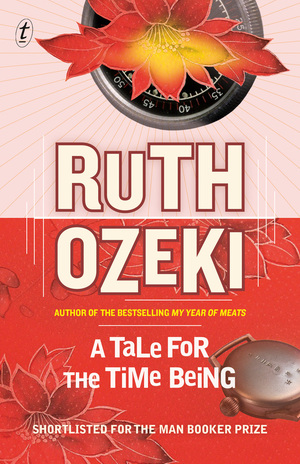
Nao lives in Tokyo. She is sixteen, and has decided to write a diary before she kills herself, she particularly wants to chronicle the life of her great-grandmother, a Buddhist nun. Ruth lives on the Pacific coast of Canada. A few months after the 2010 tsunami she finds a Hello Kitty lunchbox washed up on the shore.
This is a beautiful, enchanting novel. Like Ruth, I wanted to keep reading Nao’s story. The structure is fabulous, we switch between Nao’s and Ruth’s perspective. Learning about their lives both inner and outer. Who knew that Japanese school children could be so brutal?
All I knew about this novel was that it had won the Walter Scott Prize for historical fiction. I love historical fiction, so I bought both a digital and audio copy (instant gratification!).
Here’s the blurb …
Adelheid Brunner does not speak. She writes and draws instead and her ambition is to own one thousand matchboxes. Her grandmother cannot make sense of this, but Adelheid will stop at nothing to achieve her dream. She makes herself invisible, hiding in cupboards with her pet rat, Franz Joseph, listening in on conversations she can’t fully comprehend.
Then she meets Dr Asperger, a man who lets children play all day and who recognises the importance of matchboxes. He invites Adelheid to come and live at the Vienna paediatric clinic, where she and other children like herself will live under observation.
But the date is 1938 and the place is Vienna – a city of political instability, a place of increasing fear and violence. When the Nazis march into the city, a new world is created and difficult choices must be made.
Why are the clinic’s children disappearing, and where do they go? Adelheid starts to suspect that some of Dr Asperger’s games are played for the highest stakes. In order to survive, she must play a game whose rules she cannot yet understand.
I listened to it – this version – the narrator is fabulous. I didn’t even read the blurb, so I went into this novel completely cold. It took me ages to realise who Doctor A was! It is beautifully written, Adelheid is a fabulous character (I enjoyed being in her head). Ms Jolly must have done a huge amount of research, but the novel wears it lightly – it just felt like someone was telling me a story about Vienna, neurodivergence, and the children’s hospital. I didn’t know anything about the history of autism (despite being a neurodivergent family), so that was all fascinating (and horrifying when the Nazis got involved).
It’s a wonderful way to learn history – Vienna during the war, autism research, and the treatment of neurodivergent children. I hope all children have a Sister Viktorine in their lives.
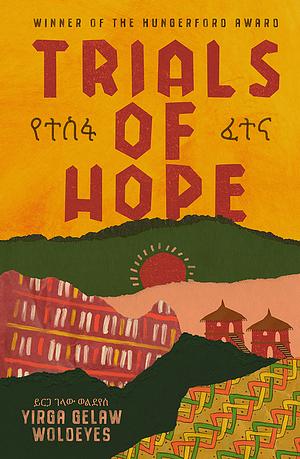
In this profound, groundbreaking narrative, Yirga Gelaw Woldeyes weaves together stories of heritage and heartache. His unique memoir celebrates the beauty of Ethiopian culture while mourning its erosion – first under colonial forces, and later through internal conflict. Framing his work via the Ethiopian belief in the four elemental stages of human experience – water, fire, soil and wind – this is an essential exploration of the human condition, connecting readers to a nation of people whose sagacity and spirit have endured through generations.
This is beautifully written (and the poems in Amharic are visually beautiful as well). The sections of memoir are interspersed with poetry. This made me think about colonisation in a different way. Not so much a violent overthrow, but a more insidious erasure of culture – because, of course, everyone wants to be ‘modern’. Also, I didn’t know anything about Ethiopia, so I enjoyed learning about that as well (all I knew was the terrible famine in 1984). It is also about the immigrant experience, being caught between two worlds, and how would you feel when your new home expects you to be grateful?
This is my latest book club book. I had it in my digital pile, having bought it thinking I would read all of the Booker prize shortlist for 2025 (I am still going). This won.
Here’s the blurb …
A propulsive, hypnotic novel about a man who is unravelled by a series of events beyond his grasp.
Fifteen-year-old István lives with his mother in a quiet apartment complex in Hungary. New to the town and shy, he is unfamiliar with the social rituals at school and soon becomes isolated, with his neighbour – a married woman close to his mother’s age – as his only companion. These encounters shift into a clandestine relationship that István himself can barely understand, and his life soon spirals out of control.
As the years pass, he is carried gradually upwards on the twenty-first century’s tides of money and power, moving from the army to the company of London’s super-rich, with his own competing impulses for love, intimacy, status and wealth winning him unimaginable riches, until they threaten to undo him completely.
Spare and penetrating, Flesh is the finest novel yet by a master of realism, asking profound questions about what drives a life: what makes it worth living, and what breaks it.
This has a pared back, direct writing style. It is also like a group of short stories connected together with István being the connection. Each chapter has him in a new place or a new phase of his life, and we don’t know how he got there. In the bits we read he seems very passive, but he joins the army, moves to England, moves back to Hungary so he has some agency. This is a biography told through relationships; the older neighbour, his mother, Helen, Thomas, and his son. He seems attracted to women who have power over him (Helen and the neighbour). Despite not being a sympathetic character, I did feel for him in the end.