
Category Archives: Serious

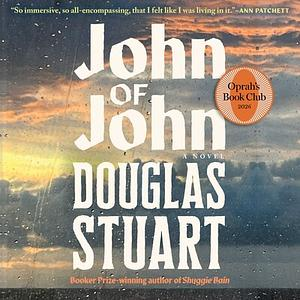
John of John – Douglas Stuart

John of John – Douglas Stuart

Someone recommended this online and I immediately downloaded the Audible book.

Here’s the blurb …

Out of money and with little to show for his art school education, John-Calum Macleod takes the ferry home to the island of Harris to find that not much has changed except for him. In the windswept croft where he grew up, Cal resumes his old life, caught between the two poles of his childhood: his father John, a sheep farmer, weaver, and pillar of their local Presbyterian church, and his Glaswegian grandmother Ella, who has kept a faltering peace with her son-in-law for decades.

While Cal wonders if any lonely men might be found on the barren hillsides of home, John is dismayed by his son’s long hair and how he seems unwilling to be Saved. As the seasons pass, everything is poised to change as the threads holding together the fragile community become increasingly entangled.

I have been having a bit of a Scottish islands thing – this novel, and the movie The Road Damce. This is my first Douglas Stuart novel, but it won’t be my last. I loved this story of religion, family, community, and forbidden love. The writing is beautiful – I particularly enjoyed all of the references to colour. John is a weaver (as well as a farmer) and he and Cal have an extraordinary eye for colour. The descriptions of the landscape and the farming practices are brilliant. It is a small, poor, very religious community with not a lot to keep the young people at home – fishing and farming. Cal is gay, openly on the mainland, but not out at home. His community is presbyterian (of the old sort) and he would be demembered if anyone knew. However, his father, who leads the singing at church, has a secret.

John, with his casual violence, would be a monster, but we see things from his point of view and can appreciate his struggle between faith and love.

This is the story of many remote communities where the living is hard, money scarce and opportunities few. Yet it is not depressing to read and in the end there is hope for a better future.

A review.

Leave a Comment

Filed under 5, Audio, Fiction, Format, Miscellaneous, Recommended, Serious

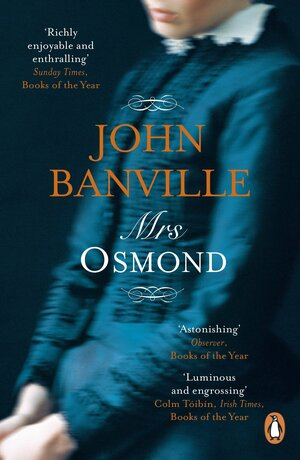
Mrs Osmond – John Banville

Mrs Osmond – John Banville

Is that not a great cover? This is a continuation of Henry James’ Portrait of a Lady. I read Portrait of a Lady years ago – I think it’s my favourite Henry James novel – so this sounded intriguing. I was always disappointed that Isabel married Gilbert Osmond.

Here’s the blurb …

Isabel Archer is a young American woman, swept off to Europe in the late nineteenth century by an aunt who hopes to round out the impetuous but naive girl’s experience of the world. When Isabel comes into a large, unexpected inheritance, she is finagled into a marriage with the charming, penniless, and–as Isabel finds out too late–cruel and deceitful Gilbert Osmond, whose connection to a certain Madame Merle is suspiciously intimate. On a trip to England to visit her cousin Ralph Touchett on his deathbed, Isabel is offered a chance to free herself from the marriage, but nonetheless chooses to return to Italy. Banville follows James’s story line to this point, but Mrs. Osmond is thoroughly Banville’s own: the narrative inventiveness; the lyrical precision and surprise of his language; the layers of emotional and psychological intensity; the subtle, dark humor. And when Isabel arrives in Italy–along with someone else –the novel takes off in directions that James himself would be thrilled to follow.

As I wrote earlier, it has been a while since I read anything by James, but the prose style of this novel feels Jamesian. We have the old characters; Madame Merle, Pansy, Aunt Lydia, Ralph Touchett (just in passing), and Henrietta Stackpole. The settings range from London, Paris, Florence and Rome – quite the Grand Tour.

No spoilers, but I was happy with how this ended.

I do think you need to have read A Portrait of a Lady before tackling this one, but, if you have, then I highly recommend this one.

Leave a Comment

Filed under 4, Classic, Fiction, Paper, Recommended, Serious

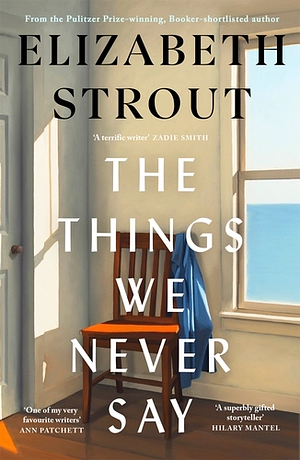
The Things We Never Say – Elizabeth Strout

The Things we Never Say – Elizabeth Strout

I love Elizabeth Strout novels – my favourite is Olive Kitteridge, so I pre-ordered this one.

Here’s the blurb …

Artie Dam is a man with a secret. He spends his days teaching history to high schoolers, expanding their young minds, correcting their casual cruelties, and lending a kind word to those who need it most. He goes to holiday parties with his wife of three decades, makes small talk with neighbours, and, on weekends, takes his sailboat out on the beautiful Massachusetts Bay. He is, by all appearances, present and alive. But inside, Artie is plagued by feelings of isolation. He looks out at a world gone mad—at himself and the people around him—and turns a question over and over in his mind: how is it that we know so little about one another, even those closest to us?
 
 And then, one day, Artie learns that life has been keeping a secret from him, one that threatens to upend his entire world. Once he learns it, he is forced to chart a new course, to reconsider the relationships he holds most dear—and to make peace with the mysteries at the heart of our existence.
 
 With exquisite prose and profound insight, Elizabeth Strout captures the way grief reverberates through decades, the comfort found in deep friendships and the freedom that comes when we break free of our secrets. The Things We Never Say is a stunning new novel from one of our most acclaimed observers of the human heart.

Artie is a good guy in a world gone mad – the election is looming in the US, is it possible that ‘that man’ will be re-elected? He thinks he wants to be gone, but not in a way that would be distressing for others. Then there is a boating incident and he realises that he, in fact, wants to live (this is not the secret). He has a profound impact on two of his students, and develops a relationship with the man who saved him from drowning, is close to his son, but distant from his wife. He is a good man trying to navigate his way in the world – the new principal chastises him for saying ‘boys and girls’ (it’s demeaning and some might not identify as boy or girl).

The dialogue is fabulous – very natural sounding.

I think it would be nice to get this story again, but from Evie’s point of view. Let’s just say the reader (or this reader) doesn’t warm to her.

A review

Leave a Comment

Filed under 4, Fiction, Paper, Recommended, Serious

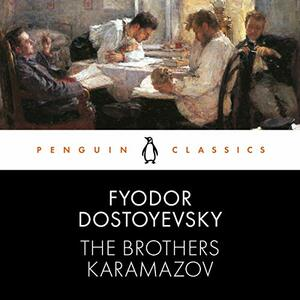
The Brothers Karamazov – Fyodor Dostoevsky

The Brothers Karamazov – Fyodor Dostoevsky

I thought it was time to tackle another Russian classic (after War and Peace and Anna Karenina). I listened to this one, which, I think, is my preferred way of reading these long classics.

Here’s the description

The murder of brutal landowner Fyodor Karamazov changes the lives of his sons irrevocably: Mitya, the sensualist, whose bitter rivalry with his father immediately places him under suspicion for parricide; Ivan, the intellectual, driven to breakdown; the spiritual Alyosha, who tries to heal the family’s rifts; and the shadowy figure of their bastard half-brother, Smerdyakov. Dostoyevsky’s dark masterwork evokes a world where the lines between innocence and corruption, good and evil, blur and everyone’s faith in humanity is tested.

As you can imagine, this was long with lengthy philosophical/religious tracts. It took a long time to get to what I think of as the ‘meat’ of the novel – the murder, trial, etc.

Here is the Wikipedia article

Leave a Comment

Filed under 3, Audio, Classic, Crime, Fiction, Serious

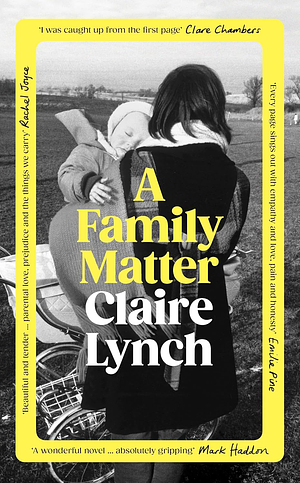
A Family Matter – Claire Lynch

A Family Matter – Claire Lynch

I am not sure where I first hear about this novel – definitely via the internet maybe someone on substack. I borrowed it from the library, so I mustn’t have known much about it (and was a bit loathe to commit to a purchase).

Here’s the blurb …

A mother following her heart
A father with the law on his side
A child caught in the middle

It’s 2022, and Heron, an old man of quiet habits, has just had the sort of visit to the doctor that turns a life upside down. Sharing the diagnosis with Maggie, his only daughter, seems impossible. Heron just can’t find the words to tell her about it, or any of the other things he’s been protecting her from for so long.

It’s 1982, and Dawn is a young wife and mother penned in by the expectations of her time and place. Then Hazel comes into her life like a torch in the dark. It’s the kind of connection that’s impossible to resist, and suddenly Dawn’s world is more joyful, and more complicated, than she ever expected. But Dawn has responsibilities, she has commitments: Dawn has Maggie.

A Family Matter is an immersive and tender debut, at once heart-breaking and hopeful, that asks how we might heal from the wounds of the past, and what we might learn from them.

This had an interesting chapter structure – short and split into sections. I was compelled to keep reading. We have two time periods – 1980s and contemporary, and three major characters – Heron, Dawn and Maggie. Maggie has some great thoughts about being a mother and wife and all of the tasks involved.

It is a beautifully written story – heart break, wit, prejudice, and outrage (mine). And all within recent memory.

A review

Leave a Comment

Filed under 4, Fiction, Paper, Recommended, Serious

Flesh – David Szalay

Flesh – David Szalay

This is my latest book club book. I had it in my digital pile, having bought it thinking I would read all of the Booker prize shortlist for 2025 (I am still going). This won.

Here’s the blurb …

A propulsive, hypnotic novel about a man who is unravelled by a series of events beyond his grasp. 

Fifteen-year-old István lives with his mother in a quiet apartment complex in Hungary. New to the town and shy, he is unfamiliar with the social rituals at school and soon becomes isolated, with his neighbour – a married woman close to his mother’s age – as his only companion. These encounters shift into a clandestine relationship that István himself can barely understand, and his life soon spirals out of control. 

As the years pass, he is carried gradually upwards on the twenty-first century’s tides of money and power, moving from the army to the company of London’s super-rich, with his own competing impulses for love, intimacy, status and wealth winning him unimaginable riches, until they threaten to undo him completely.

Spare and penetrating, Flesh is the finest novel yet by a master of realism, asking profound questions about what drives a life: what makes it worth living, and what breaks it. 

This has a pared back, direct writing style. It is also like a group of short stories connected together with István being the connection. Each chapter has him in a new place or a new phase of his life, and we don’t know how he got there. In the bits we read he seems very passive, but he joins the army, moves to England, moves back to Hungary so he has some agency. This is a biography told through relationships; the older neighbour, his mother, Helen, Thomas, and his son. He seems attracted to women who have power over him (Helen and the neighbour). Despite not being a sympathetic character, I did feel for him in the end.

Service 95 – David Szalay Interview

Leave a Comment

Filed under 4, Booker, Digital, Fiction, Prizes, Serious

South Riding – Winifred Holtby

South Riding – Winifred Holtby

I watched the 2011 TV adaptation (which is great), then I read a paper copy, and now I have listened to it. Clearly a bit of a favourite.

Here’s the blurb …

Winifred Holtby’s masterpiece is a rich evocation of the lives and relationships of the characters of South Riding. Sarah Burton, the fiery young headmistress of the local girls’ school; Mrs Beddows, the district’s first alderwoman—based on Holtby’s own mother; and Robert Carne, the conservative gentleman-farmer locked in a disastrous marriage—with whom the radical Sarah Burton falls in love. Showing how public decisions can mold the individual, this story offers a panoramic and unforgettable view of Yorkshire life.

I really enjoyed this novel. I think it shows a slice of rural life in England between the wars. The machinations of the local council, the living conditions of the poor (lack of sanitation, not to mention birth control), the lack of welfare services (I am thinking of Lydia having to leave school to look after her siblings after her mother dies), but there is also community spirit and a hope that things will improve.

A review and more about Winifred Holtby.

Leave a Comment

Filed under 5, Audio, Classic, Fiction, Historical Fiction, Recommended, Serious

Villette – Charlotte Bronte

Villette – Charlotte Brontë

I have tried to read Villette many times. I usually get to the part when Lucy is desperately lonely and visits the catholic church. However, this time I made it all the way to the end (and it has a happy ending (well maybe a happy ending) – who knew? I thought it was going to be miserable).

Here’s the wikipedia summary

Villette begins with its protagonist and unreliable narrator, Lucy Snowe, aged 13, staying at the home of her godmother Mrs. Bretton in “the clean and ancient town of Bretton”, in England. Also in residence are Mrs. Bretton’s teenaged son, John Graham Bretton (whom the family calls Graham), and a young visitor, Paulina Home (who is called Polly), who is aged 6. Polly’s mother, who neglected her daughter, has recently died and her father is recommended by doctors to travel to improve his spirits. Polly is invited by Mrs. Bretton to stay. Polly is a serious little girl, who is described as unlike normal children.

Polly soon develops a deep devotion to Graham, who showers her with attention. But Polly’s visit is cut short when her father arrives to summon her to live with him abroad.

For reasons that are not stated, Lucy leaves Mrs. Bretton’s home a few weeks after Polly’s departure. Some years pass, during which an unspecified family tragedy leaves Lucy without family, home, or means. After some initial hesitation, she is hired as a caregiver by Miss Marchmont, a rheumatic crippled woman. Lucy is soon accustomed to her work and has begun to feel content with her quiet, frugal lifestyle.

The night of a dramatic storm, Miss Marchmont regains all her energy and feels young again. She shares with Lucy her sad love story of 30 years ago, and concludes that she should treat Lucy better and be a better person. She believes that death will reunite her with her dead lover. The next morning, Lucy finds Miss Marchmont died in the night.

Newspaper illustration from abridged version of Villette, 1909

Lucy then leaves the English countryside and goes to London. At the age of 22, she boards a ship for Labassecour despite knowing very little French. On the ship, she meets Ginevra Fanshawe, who tells Lucy that the directress of her boarding school for girls (based upon the Hegers’ Brussels pensionnat) she is attending, Madame Beck, needs a bonne for her children. She travels to the city of Villette in Labassecour where Madame Beck’s school is located. After a time, she is hired to teach English at the school, in addition to having to mind Madame Beck’s three children. She thrives despite Madame Beck’s constant spying on the staff and students.

“Dr. John,” a handsome English doctor, frequently visits the school at the behest of Madame Beck, and deepens his affection for the coquette Ginevra Fanshawe. In one of Villette’s famous plot twists, “Dr. John” is later revealed to be John Graham Bretton, a fact that Lucy has known since he once asked her why she was staring at him, but has deliberately concealed from the reader.

During the school holidays, all the teachers and pupils have either gone to travel abroad or gone back to their families. The school is completely empty except for a disabled child whom Lucy is supposed to take care of. After the disabled child is fetched away, Lucy is extremely lonely and becomes both mentally and physically ill. She goes to a Catholic church (despite being a Protestant) to confess to a priest. On the way back to the school, she collapses due to fever and mental exhaustion. Dr. John brings her to his home, which he shares with his mother, Mrs. Bretton.

Graham recognises Lucy only after she is brought to Mrs. Bretton’s home. After Dr. John (i.e., Graham) discovers Ginevra’s true character while at the theatre, he turns his attention to Lucy, and they become close friends. She values this friendship highly despite her usual emotional reserve. Lucy soon develops feelings for Dr. John and treasures the letters he sends her once she returns to the pensionnat.

Lucy and Graham meet Polly (Paulina Home) again at the same theatre after a fire, in which Polly is injured. Polly’s father has inherited the title “de Bassompierre” and is now a Count; thus her name is now Paulina Mary Home de Bassompierre. Polly and Graham soon discover that they knew each other in the past and slowly renew their friendship. They fall in love and eventually marry despite the initial reluctance of Polly’s father.

Lucy becomes progressively closer to a colleague, the irascible, autocratic, and confrontational professeur, M. Paul Emanuel, a relative of Mme. Beck. Lucy gradually realises that his apparent antagonism is actually helping her to overcome her weaknesses and to grow. She and Paul eventually fall in love.

However, a group of conspiring antagonists, including Madame Beck, the priest Père Silas, and the relatives of M. Paul’s long-dead fiancée, work to keep the two apart, on the grounds that a union between a Catholic and a Protestant is impossible. They finally succeed in forcing M. Paul’s departure for Guadeloupe to oversee a plantation there. He nonetheless declares his love for Lucy before his departure and arranges for her to live independently as the headmistress of her own day school, which she later expands into a pensionnat.

During the course of the novel, Lucy has three encounters with the figure of a nun — which may be the ghost of a nun who was buried alive on the school’s grounds as punishment for breaking her vow of chastity. In a highly symbolic scene near the end of the novel, she discovers the “nun’s” habit in her bed and destroys it. She later finds out that it was a disguise worn by Ginevra’s amour, Alfred de Hamal, placed in Lucy’s bed as a prank. The episodes with the nun no doubt contributed substantially to the novel’s reputation as a gothic novel. Ginevra keeps in contact with Lucy through letters that show the young coquette has not changed and expects to live off of her uncle’s (Basompierre’s) good graces.

Villette’s final pages are ambiguous. Although Lucy says that she wants to leave the reader free to imagine a happy ending, she hints strongly that M. Paul’s ship was destroyed by a storm during his return journey from the West Indies. She says that, “M. Emanuel was away three years. Reader, they were the three happiest years of my life.” This passage suggests that he was drowned by the “destroying angel of tempest.”

There is not much of a plot to this novel, it’s more about Lucy’s progress through life. Her loneliness, her self-possession, the impact other people have on her (both well-meaning and not so well-meaning – Madame Beck and her surveillance). The story is told from Lucy’s point of view. She is a solitary creature who longs for human connection. It is definitely from the 19th century, there is a lot of thinking, religion, and discussions about duty.

Claire Fallon’s thoughts on Villette

1 Comment

Filed under 4, Audio, Classic, Fiction, Recommended, Romance, Serious

Young Queens – Leah Redmond Chang

Young Queens – Leah Redmond Chang

This was long listed for the Women’s Prize for non-fiction in 2024. I promptly bought it and I have just finished it.

Here’s the blurb …

The gripping story of three young women who came of age and into power in a world dominated by men.

Orphaned from infancy, Catherine de’Medici endured a tumultuous childhood. Married to King Henry II of France, she was widowed by forty, only to become the power behind the throne during a period of intense civil strife. In 1546 Catherine gave birth to a daughter, Elisabeth de Valois, who would become Queen of Spain. Two years later Catherine welcomed to her nursery the beguiling young Mary, Queen of Scots, who would become her daughter-in-law.

These years at the French court bound Catherine, Elisabeth and Mary to one another through blood and marriage, alliance and friendship, love and filial piety – bonds that were tested when they were forced to part and take on new roles in different kingdoms. As queens, they lived through the sea changes that transformed sixteenth century Europe; a time of expanding empires, religious discord and popular revolt. They would learn that to rule was to wage a constant war against the deeply entrenched attitudes of their time. A crown could exalt a young women equally it could destroy her.

This was fascinating. I already knew a bit about Mary, Queen of Scots, having read Embroidering Her Truth by Clare Hunter, and I had heard of Catherine de’Medici (and I have watched a bit of The Serpent Queen), but I had never even heard of Elizabeth de Valois.

This book has a nice easy style (conversational almost), not burdened by jargon. The writing is good and the events so compelling, and sometimes exciting, it’s like reading an historical fiction novel.

A review.

Leave a Comment

Filed under 5, History, Non-Fiction, Paper, Recommended, Serious

Anna Karenina – Leo Tolstoy

Anna Karenina – Leo Tolstoy

After my success at listening to War and Peace, I decided to try Anna Karenina, and this version is read by Maggie Gyllenhaal (what could be better?).

Here is the Goodreads blurb …

Acclaimed by many as the world’s greatest novel, Anna Karenina provides a vast panorama of contemporary life in Russia and of humanity in general. In it Tolstoy uses his intense imaginative insight to create some of the most memorable characters in all of literature. Anna is a sophisticated woman who abandons her empty existence as the wife of Karenin and turns to Count Vronsky to fulfil her passionate nature – with tragic consequences. Levin is a reflection of Tolstoy himself, often expressing the author’s own views and convictions.

Throughout, Tolstoy points no moral, merely inviting us not to judge but to watch. As Rosemary Edmonds comments, ‘He leaves the shifting patterns of the kaleidoscope to bring home the meaning of the brooding words following the title, ‘Vengeance is mine, and I will repay.

I am sure that everyone knows the story of Anna Karenina. And I have watched several adaptations; this one – with Keira Knightley, this one – with Sophie Marceau and Sean Bean as Vronsky, and a modern Australian version, The Beautiful Lie – with Sarah Snook.

Given that I felt I knew the story, I was pleasantly surprised by the novel. I have always thought that Karenin and Vronsky dashing and heroic, and Anna makes really bad decisions. However, now I think Karenin was good, but too christian, and Vronsky is a cad, and Anna still makes really bad decisions.

Although to be fair to Anna, this was the time before divorce, and she was stuck in a marriage with an old boring man, and she had nothing to do.

Vronsky should not have pursued her so relentlessly. He was selfish and self-centred.

Anna reminded me of Madame Bovary – that need for drama, romance and love. Not to mention blowing up their own lives. Madame Bovary was serialised in 1856 and Anna Karenina was published in 1878. Was Tolstoy having a conversation with Flaubert? Or is this a common type of woman in the 19th Century?

I did, however, like Levin and Kitty. They made up for all of the awful, selfish characters.

A review.

Leave a Comment

Filed under 4, Audio, Fiction, Format, Historical Fiction, Recommended, Serious