Category Archives: Non-Fiction

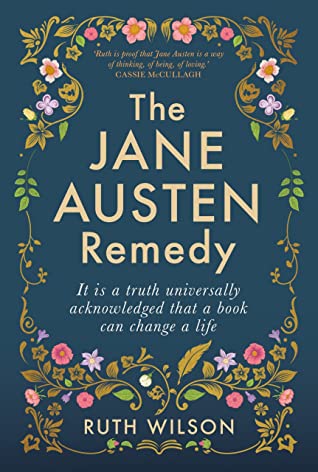
The Jane Austen Remedy – Ruth Wilson

The Jane Austen Remedy – Ruth Wilson

I heard about this book on a book podcast (ABC Book Shelf perhaps?) and I was super keen to read it.

Here’s the blurb

An uplifting and delightfully bookish memoir about an 89-year-old woman who reclaims her life by re-reading each of Jane Austen’s novels.

As she approached the age of seventy, Ruth Wilson began to have recurring dreams about losing her voice. Unable to dismiss her feelings of unexplainable sadness, she made the radical decision to retreat from her conventional life with her husband to a sunshine-yellow cottage in the Southern Highlands where she lived alone for the next decade.

Ruth had fostered a lifelong love of reading, and from the moment she first encountered Pride and Prejudice in the 1940s she had looked to Jane Austen’s heroines as her models for the sort of woman she wanted to become.

As Ruth settled into her cottage, she resolved to re-read Austen’s six novels and rediscover the heroines who had inspired her; to read between the lines of both the novels and her own life. And as she read, she began to reclaim her voice.

The Jane Austen Remedy is a beautiful, life-affirming memoir of love, self-acceptance and the curative power of reading. Published the year Ruth turns ninety, it is an inspirational account of the lessons learned from Jane Austen over nearly eight decades, as well as a timely reminder that it’s never too late to seize a second chance.

It was great – part memoir, part literary criticism. So many books were mentioned! It made me want to re-read all of Austen novels. My only criticism is that there wasn’t an index (or list) of all of the books mentioned.

A review.

A webage at the University of Sydney about Dr Wilson

Leave a Comment

Filed under 4, Memoir, Miscellaneous, Non-Fiction, Recommended

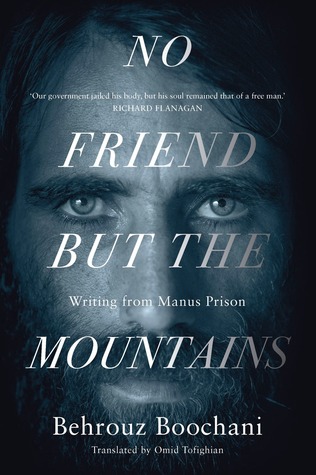
No Friend But the Mountain – Behrouz Boochani

Behrouz Boochani

This is my book club book for January, I had never heard of it.

Here’s the blurb

Where have I come from? From the land of rivers, the land of waterfalls, the land of ancient chants, the land of mountains…

In 2013, Kurdish journalist Behrouz Boochani was illegally detained on Manus Island. He has been there ever since.

People would run to the mountains to escape the warplanes and found asylum within their chestnut forests…

This book is the result. Laboriously tapped out on a mobile phone and translated from the Farsi. It is a voice of witness, an act of survival. A lyric first-hand account. A cry of resistance. A vivid portrait through five years of incarceration and exile.

Do Kurds have any friends other than the mountains? 

This is a very personal account of life in detention on Manus Island. Every Australian should read it. I knew it was terrible, but I didn’t know that it was designed to be terrible.

A review

Leave a Comment

Filed under 3, Memoir, Non-Fiction

Jane Austen – D A Miller

Jane Austen – D A Miller

I am a keen Janeite and when I read about this book in James Woods’ How Fiction Works, I ordered a copy straight away.

Here’s the blurb …

What is the world-historical importance of Jane Austen? An old maid writes with the detachment of a god. Here, the stigmatized condition of a spinster; there, a writer’s unequalled display of absolute, impersonal authority. In between, the secret work of Austen’s style: to keep at bay the social doom that would follow if she ever wrote as the person she is.

For no Jane Austen could ever appear in Jane Austen. Amid happy wives and pathetic old maids, we see no successfully unmarried woman, and, despite the multitude of girls seeking to acquire “accomplishments,” no artist either. What does appear is a ghostly No One, a narrative voice unmarked by age, gender, marital status, all the particulars that make a person–and might make a person peculiar. The Austen heroine must suppress her wit to become the one and not the other, to become, that is, a person fit to be tied in a conjugal knot. But for herself, Austen refuses personhood, with all its constraints and needs, and disappears into the sourceless anonymity of her style. Though often treasured for its universality, that style marks the specific impasse of a writer whose self-representation is impossible without the prospect of shame.

D.A. Miller argues this case not only through the close reading that Austen’s style always demands, but also through the close writing, the slavish imitation, that it sometimes inspires. 

This is a short book – only one hundred pages, but I struggled a bit. For me, it was not an easy read. Some sections I really enjoyed; the bits about Emma in particular (and D A Miller agrees with me that Emma is the best novel), but in other sections I lost the thread of the argument and I was just reading words with no true understanding.

Leave a Comment

Filed under Non-Fiction

The Fabric of Civilization – Virginia Postrel

The Fabric of Civilization – Virginia Postrel

See my review at my other blog (all about my crafting).

Leave a Comment

Filed under 4, Non-Fiction

The Story of the Bayeux Tapestry

The Story of the Bayeux Tapestry – David Musgrove and Michael Lewis

I am very keen to visit the Bayeux Tapestry. I planned to go in 2020, but we all know how that turned out. So i keep buying books about it. I first heard of this one on the History Extra podcast (worth listening to if you are at all interested in the tapestry – or even the Norman conquest).

Here’s the blurb …

Most people know that the Bayeux Tapestry depicts the moment when the last Anglo-Saxon king of England, Harold Godwinson, was defeated at the Battle of Hastings in 1066 by his Norman adversary William the Conqueror. However, there is much more to this historic treasure than merely illustrating the outcome of this famous battle. Full of intrigue and violence, the tapestry depicts everything from eleventh-century political and social life—including the political machinations on both sides of the English Channel in the years leading up to the Norman Conquest—to the clash of swords and stamp of hooves on the battle field.

Drawing on the latest historical and scientific research, authors David Musgrove and Michael Lewis have written the definitive book on the Bayeux Tapestry, taking readers through its narrative, detailing the life of the tapestry in the centuries that followed its creation, explaining how it got its name, and even offering a new possibility that neither Harold nor William were the true intended king of England. Featuring stunning, full- color photographs throughout, The Story of the Bayeux Tapestry explores the complete tale behind this medieval treasure that continues to amaze nearly one thousand years after its creation.

Firstly, this is a beautiful object with fabulous colour pictures of the tapestry – scene by scene and then altogether at the end (over several pages).

The opening two chapters are about the tapestry as a physical object – how did it survive, who commissioned it – and some information on the Normal Conquest.

The following 10 chapters are a detailed description (including images) of the scenes of the tapestry. I particularly enjoyed these chapters – the action in the main section is described as well as anything happening in the two borders. The authors have a lovely way of describing the action – they really bring the characters (actors?) to life.

The final chapter is about the tapestry’s legacy – will it ever get back to England?

I really enjoyed reading this (and it was easy to read) and I think anyone interested in textiles, early medieval history and even military history will find this a fascinating read.

Leave a Comment

Filed under 4, Non-Fiction, Recommended, Serious

How Fiction Works – James Woods

How Fiction Works – James Wood

I heard about this book on twitter (I think).

Here is the blurb …

Rediscover this deep, practical anatomy of the novel from ‘the strongest … literary critic we have’ (New York Review of Books) in this new revised 10th anniversary edition.

What do we mean when we say we ‘know’ a fictional character?

What constitutes a ‘telling’ detail?

When is a metaphor successful?

Is realism realistic?

Why do most endings of novels disappoint?

In the tradition of E. M. Forster’s Aspects of the Novel and Milan Kundera’s The Art of the NovelHow Fiction Works is a study of the main elements of fiction, such as narrative, detail, characterization, dialogue, realism, and style. In his first full-length book of criticism, one of the most prominent critics of our time takes the machinery of story-telling apart to ask a series of fundamental questions.

Wood ranges widely, from Homer to Beatrix Potter, from the Bible to John Le Carré, and his book is both a study of the techniques of fiction-making and an alternative history of the novel. Playful and profound, it incisively sums up two decades of bold, often controversial, and now classic critical work, and will be enlightening to writers, readers, and anyone interested in what happens on the page.

‘Should find a place on every novel-lover’s shelf. It has the quality all useful works of criticism should have: refined taste, keen observation, and the ability to make the reader argue, passionately, with it’ Financial Times

It’s great, if you’re at all interested in literature and how it works, then you will love this book. It has a conversational style and there are lots of examples.

Leave a Comment

Filed under Non-Fiction, Recommended

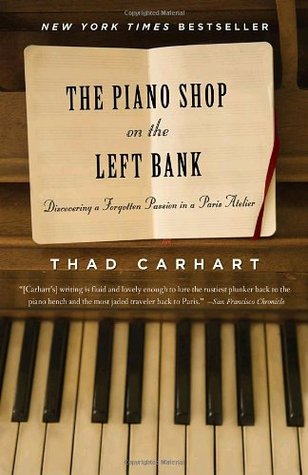
The Piano Shop on the Left Bank – Thad Carhart

The Piano Shop on the Left Bank – Thad Carhart

This was in the pile of books left by my neighbour and I picked it up thinking it was a novel. It’s not it’s non-fiction, bit memoir, bit piano history and a bit Parisian lifestyle.

Here’s the blurb …

Walking his two young children to school every morning, Thad Carhart passes an unassuming little storefront in his Paris neighborhood. Intrigued by its simple sign — Desforges Pianos — he enters, only to have his way barred by the shop’s imperious owner.

Unable to stifle his curiosity, he finally lands the proper introduction, and a world previously hidden is brought into view. Luc, the atelier’s master, proves an indispensable guide to the history and art of the piano. Intertwined with the story of a musical friendship are reflections on how pianos work, their glorious history, and stories of the people who care for them, from amateur pianists to the craftsmen who make the mechanism sing. The Piano Shop on the Left Bank is at once a beguiling portrait of a Paris not found on any map and a tender account of the awakening of a lost childhood passion

I liked it, it made me want to play the piano. It also made me appreciate the complexities of pianos.

Leave a Comment

Filed under 3, Non-Fiction

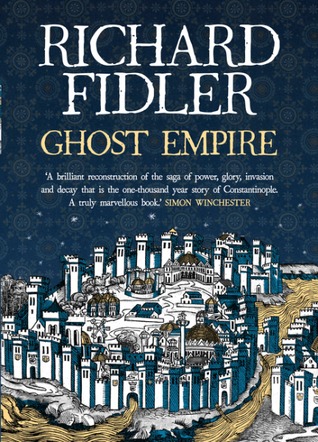
Ghost Empire – Richard Fidler

Ghost Empire – Richard Fidler

I bought this book solely for the cover and then ended up listening to it on Audible!

Here’s the blurb …

GHOST EMPIRE is a rare treasure – an utterly captivating blend of the historical and the contemporary, realised by a master storyteller.
In 2014, Richard Fidler and his son Joe made a journey to Istanbul. Fired by Richard’s passion for the rich history of the dazzling Byzantine Empire – centred around the legendary Constantinople – we are swept into some of the most extraordinary tales in history. The clash of civilizations, the fall of empires, the rise of Christianity, revenge, lust, murder. Turbulent stories from the past are brought vividly to life at the same time as a father navigates the unfolding changes in his relationship with his son.

GHOST EMPIRE is a revelation: a beautifully written ode to a lost civilization, and a warmly observed father-son adventure far from home

This book is part memoir, history and travel journal. It has a lovely story-telling feel to it – made all the better by Richard Fidler reading the audio version. I listened to it while running, gardening, knitting and cleaning – I grabbed any opportunity to listen (in fact my house is cleaner than normal because I manufactured tasks so I could listen).

A review here and this is Richard Fidler’s web page.

1 Comment

Filed under History, Memoir, Non-Fiction, Recommended

The Narcissist Test – Craig Malkin

The Narcissist Test – Dr Craig Malkin

I was fascinated by this book. It was very accessible – easy language and case studies to illustrate his points.

Here is the blurb …

What exactly is narcissism? An incurable disease set to ruin your future, a habit to be curbed, or a trait to be nurtured? And how can you tell if your partner, child, or even you are a narcissist? Dr Craig Malkin offers a new picture of narcissism, showing us why being called a ‘narcissist’ isn’t necessarily such a bad thing after all.

Narcissism is all around us. We are a selfie-obsessed generation, surviving on a steady diet of watching reality shows that celebrate attention-seeking know-and-do-nothings and posting a whopping 500 million tweets a day to document our every thought and whim. But is narcissism really as bad as we have been led to believe?

In this groundbreaking book, clinical psychologist Dr Craig Malkin offers a radically new picture of narcissism, defining it as a spectrum of self-importance, and explaining that everyone falls somewhere on the scale between utter selflessness and total arrogance. He reveals why it is essential to embrace some level of narcissism in order to maintain a healthy sense of self-worth. Feeling special, to a degree, can make us better lovers and partners, courageous leaders, and intrepid explorers.

As supportive as it is illuminating, The Narcissist Test is the first and only book to distinguish between healthy and unhealthy narcissism, and offers clear, step-by-step guidance on how to promote the healthy kind in your partner, children, and in yourself. From advice tailored to parents, social media users and even schools, this is the definitive text to help you overcome the bad – and embrace the good – about feeling special.

Dr Craig Malkin is a clinical psychologist hailing from Harvard with over two decades of experience helping individuals, couples and families.

Definitely worth a read if you or someone you know (work with) is a narcissist.


Leave a Comment

Filed under Non-Fiction

The Givenness Of Things – Marilynne Robinson

The Givenness of Things – Marilynne Robinson

I have enjoyed all of Ms Robinson’s novels and enjoyed listening to her on the BBC World Book Club. I was keen to read her essays.

Here is the description from Goodreads …

A profound essay collection from the beloved author of GileadHouskeeping and Lila, now including Marilynne Robinson’s conversation with President Barack Obama.

Robinson has plumbed the depths of the human spirit in her trilogy of novels – Pulitzer Prize-winning Gilead, Orange-Prize winning Home and National Book Critics Circle Award-winning Lila – and in her moving essay collection When I Was a Child I Read Books.

Now, in The Givenness of Things, she brings a profound sense of awe and an incisive mind to the essential questions of contemporary life and faith. Through fourteen essays of remarkable depth and insight, Robinson explores the dilemmas of our modern predicament. How has our so-called Christian nation strayed from so many of the teachings of Christ? How could the great minds of the past, Calvin and Locke-and Shakespeare-guide our lives? And what might the world look like if we could see the sacredness in each other?

Exquisite and bold, these essays are a necessary call for us to find wisdom and guidance in our cultural treasures, to seek humanity and compassion in each other. The Givenness of Thingsis a reminder of what a marvel our existence is in its grandeur – and its humility.

I will say from the outset that I am not a christian and I think most of the world’s ills are caused by white, christian men, but if anyone could convert me it would be Ms Robinson. And if all christians were christian like her the world would be a better place.

It took me a long time to read this book and I am not sure reading it cover to cover is the best way of reading it. Each essay required focus and concentration and it might be better to dip into it from time to time reading one essay at a time.

It is academic, thoughtful and thought-provoking.

More reviews …

https://www.theguardian.com/books/2016/oct/16/givenness-of-things-marylinne-robinson-review

https://www.nytimes.com/2015/12/13/books/review/marilynne-robinsons-the-givenness-of-things.html

Leave a Comment

Filed under Non-Fiction, Recommended, Serious