How is Anne Tyler still writing? And still writing well? I have been a fan for quite some time.
Here’s the blurb …
Gail Baines is having a bad day. To start with, she loses her job – or quits, depending who you ask. And then her ex-husband Max turns up at her door expecting to stay for their daughter’s wedding. He hasn’t even brought a suit. Instead, he brings with him memories, a calm maturity, a shared sense of humour – and a cat looking for a new home.
Over the course of the three busy days of the wedding, the past is stirred up for Gail, even as the future – in the shape of the happy couple Debbie and Kenneth – is already underway. But ‘happy’ takes many forms, and sometimes the younger generation has much to teach the older about secrets, acceptance and taking the rough with the smooth.
Told with deep sensitivity and a tart sense of humour, full of the joys and heartbreaks of love and marriage and family life, Three Days in June is a feast of a novel to savour in a single sitting.
People don’t tap their watches anymore; have you noticed?
This is the opening sentence and soon after we hear how Marilee has to have her heart re-started to get it beating correctly. There is definitely a theme of re-starts and second chances.
The story is told from Gail’s point of view, and unusually, I didn’t find her to be sympathetic, she is lacking empathy.
I wondered why it was that I had so many irritating people in my life.
Possibly it’s you Gail.
It’s beautifully written, with all of those ordinary things made extraordinary. Will Gail finally be able to express her feelings to Debbie and Max?
A rich, magical new book on belonging and identity, love and trauma, nature and renewal, from the Booker shortlisted author of 10 Minutes 38 Seconds in This Strange World.
Two teenagers, a Greek Cypriot and a Turkish Cypriot, meet at a taverna on the island they both call home. In the taverna, hidden beneath garlands of garlic, chili peppers and creeping honeysuckle, Kostas and Defne grow in their forbidden love for each other. A fig tree stretches through a cavity in the roof, and this tree bears witness to their hushed, happy meetings and eventually, to their silent, surreptitious departures. The tree is there when war breaks out, when the capital is reduced to ashes and rubble, and when the teenagers vanish. Decades later, Kostas returns. He is a botanist looking for native species, but really, he’s searching for lost love.
Years later a Ficus carica grows in the back garden of a house in London where Ada Kazantzakis lives. This tree is her only connection to an island she has never visited — her only connection to her family’s troubled history and her complex identity as she seeks to untangle years of secrets to find her place in the world.
A moving, beautifully written and delicately constructed story of love, division, transcendence, history and eco-consciousness, The Island of Missing Trees is Elif Shafak’s best work yet.
First, I knew nothing about Cyprus and the Greek and Turkish struggle over it. The writing is beautiful – how does someone write so well in a second language? I particularly enjoyed the chapters from the point of view of the fig. The story moves around in time, so what you think you know about the characters turns out to be a false assumption. We get to knows the characters slowly, like what would happen if you meet them in person. Ada’s mother has died, then we understand her mother was unwell, then that she drinks too much, and finally that her death might have been suicide.
Some of my favourite quotes
A map is a two-dimensional representation with arbitrary symbols and incised lines that decide who is to be our enemy and who is to be our friend, who deserves our love and who deserves our hatred and who, our sheer indifference.
Her voice was like a flying carpet that lifted her up and carried her against her will.
Because that is what migrations and relocations do to us: when you leave your home for unknown shores, you don’t simply carry on as before; a part of you dies inside so another part can start all over again.
If families resemble trees, as they say, arborescent structures with entangled roots and individual branches jutting out at awkward angles, family traumas are like thick, translucent resin dripping from a cut in the bark. They trickle down generations.
You don’t fall in love in the midst of a civil war, when you are hemmed in by carnage and by hatred on all sides. You run away as fast as your legs can carry your fears, seeking basic survival and nothing else. With borrowed wings you take to the sky and soar away into the distance. And if you cannot leave, then you search for shelter, find a safe place where you can withdraw into yourself because now that everything has failed, all diplomatic negotiations and political consultations, you know it can only be an eye for an eye, hurt for hurt, and it is not safe anywhere outside your own tribe.
Because in real life, unlike in history books, stories come to us not in their entirety but in bits and pieces, broken segments and partial echoes, a full sentence here, a fragment there, a clue hidden in between,
It’s a beautiful, engrossing story full of hope and love, but also sadness and acknowledgement of the terrible things people do to one another.
I have been a Katie Fforde fan for a long time – some are better than others.
Here’s the blurb …
It’s 1968 and it’s cold when Felicity arrives in London to stay with her mother, improve her English, do a secretarial course – and meet a suitable man.
She is already missing her home in Provence and her father and his new wife and their extended family. But it’s only for a year she tells herself – and then she can go back to France and do what she really wants and become a painter.
And then she bumps into Oliver who is quite the most interesting young man she has ever met. He lives on a barge for one thing and has a selection of jobs including looking for hidden treasures along the shores of the river Thames.
In a word he’s a mudlarker – and before long Felicity is mudlarking too. She is also pursuing her dreams and painting scenery for Oliver’s actor friends.
But is Oliver a Suitable Man of whom her mother will approve? Felicity knows she will not …
Love, tangled relationships, and a real life adventure lie at the heart of Katie’s Fforde’s heart-warming new novel.
This is not one of my favourites. I liked the two heroines, but I found the situations contrived, particularly the bit about Violet having to help Henry so that he could get a position at Oxford. And Felicity and Oliver’s falling out over the mudlarking incident seemed unrealistic.
Having said that, its cosy, warm and a bit retro, all things I like.
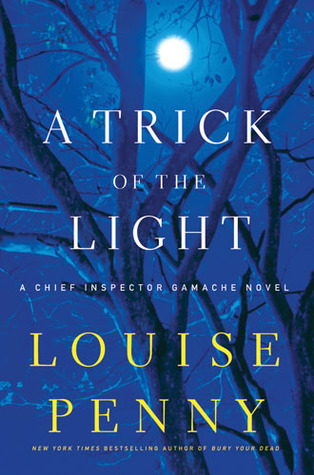
Another Chief Inspector Gamache book! I love these novels.
Here’s the blurb …
It is Winter Carnival in Quebec City, bitterly cold and surpassingly beautiful. Chief Inspector Armand Gamache has come not to join the revels but to recover from an investigation gone hauntingly wrong. But violent death is inescapable, even in the apparent sanctuary of the Literary and Historical Society – where an obsessive historian’s quest for the remains of the founder of Quebec, Samuel de Champlain, ends in murder. Could a secret buried with Champlain for nearly 400 years be so dreadful that someone would kill to protect it?
Although he is supposed to be on leave, Gamache cannot walk away from a crime that threatens to ignite long-smoldering tensions between the English and the French. Meanwhile, he is receiving disquieting letters from the village of Three Pines, where beloved Bistro owner Olivier was recently convicted of murder. “It doesn’t make sense,” Olivier’s partner writes every day. “He didn’t do it, you know.” As past and present collide in this astonishing novel, Gamache must relive the terrible event of his own past before he can bury his dead.
For this one Gamache and Beauvois, both recovering from terrible injuries, separate and solve different murders. Beauvois in Three Pines looking into the Hermit’s murder (A Brutal Telling), and Gamache gets swept up into an investigation in Quebec City. Once again, the descriptions are magnificent – I want to go to Quebec City now.
The structure of this one was interesting as well. We know something terrible has happened, Gamache and Beauvois are both on leave, but the story is unfolded gradually told from their different perspectives.
Another Chief Inspector Gamache novel – and I have started the next one! I really enjoy listening to these novels.
Here’s the blurb …
Chaos is coming, old son.
With those words the peace of Three Pines is shattered. As families prepare to head back to the city and children say goodbye to summer, a stranger is found murdered in the village bistro and antiques store. Once again, Chief Inspector Gamache and his team are called in to strip back layers of lies, exposing both treasures and rancid secrets buried in the wilderness.
No one admits to knowing the murdered man, but as secrets are revealed, chaos begins to close in on the beloved bistro owner, Olivier. How did he make such a spectacular success of his business? What past did he leave behind and why has he buried himself in this tiny village? And why does every lead in the investigation find its way back to him?
As Olivier grows more frantic, a trail of clues and treasures— from first editions of Charlotte’s Web and Jane Eyre to a spider web with the word “WOE” woven in it—lead the Chief Inspector deep into the woods and across the continent in search of the truth, and finally back to Three Pines as the little village braces for the truth and the final, brutal telling.
Once again, it’s a complicated murder with lots of twists and turns and suspects. But the best thing about these novels is the characters and the insight into their thoughts and motives.
The setting is always fabulous, and the descriptions of the food is mouth-watering.
I also enjoy the parts of the plot that involve the ‘extra’ characters. This one focused a bit on Clara and her solo show (not to mention Peter’s jealousy of her talent and now her opportunities).
This is the first novel I have read by Kate Grenville. I know of her, of course, she is a famous Australian author (which I think has put me off reading her, but the cover convinced me).
Here’s the blurb …
Harley Savage is a plain woman, a part-time museum curator and quilting expert with three failed marriages and a heart condition. Douglas Cheeseman is a shy, gawky engineer with jug-handle ears, one marriage gone sour, and a crippling lack of physical courage. They meet in the little Australian town of Karakarook, where Harley has arrived to help the town build a heritage museum and Douglas to demolish the quaint old Bent Bridge. From the beginning they are on a collision course until the unexpected sets them both free.
Elegantly and compassionately told, The Idea of Perfection is reminiscent of the work of Carol Shields and Annie Proulx and reveals Kate Grenville as “a writer of extraordinary talent” (The New York Times Book Review).
This was great, Harley and Douglas are fabulous characters – very believable. And I particularly liked Felicity Porcelline (and her fixation on winkles), and Freddy who sees himself as the lothario of Karakarook. This is a character driven novel (the best sort) and all of the characters have a lot of baggage. So it’s about happiness, trust and community.
The writing is beautiful and I agree with the above blurb – it is reminiscent of Carol Shields, and I would add Anne Tyler, however, the setting is very small town Australia (beautifully described – I could feel the heat, see the main street, and the local hotel).
This was published in 1999, but it is still very readable.
This is the selection for my four times a year book club. I really wanted There are Rivers in the Sky, but someone else had thought it too slow.
As you can see, I put in lots of post it notes (mostly just quotes I liked – I enjoyed the way the author put words together).
Here’s the blurb …
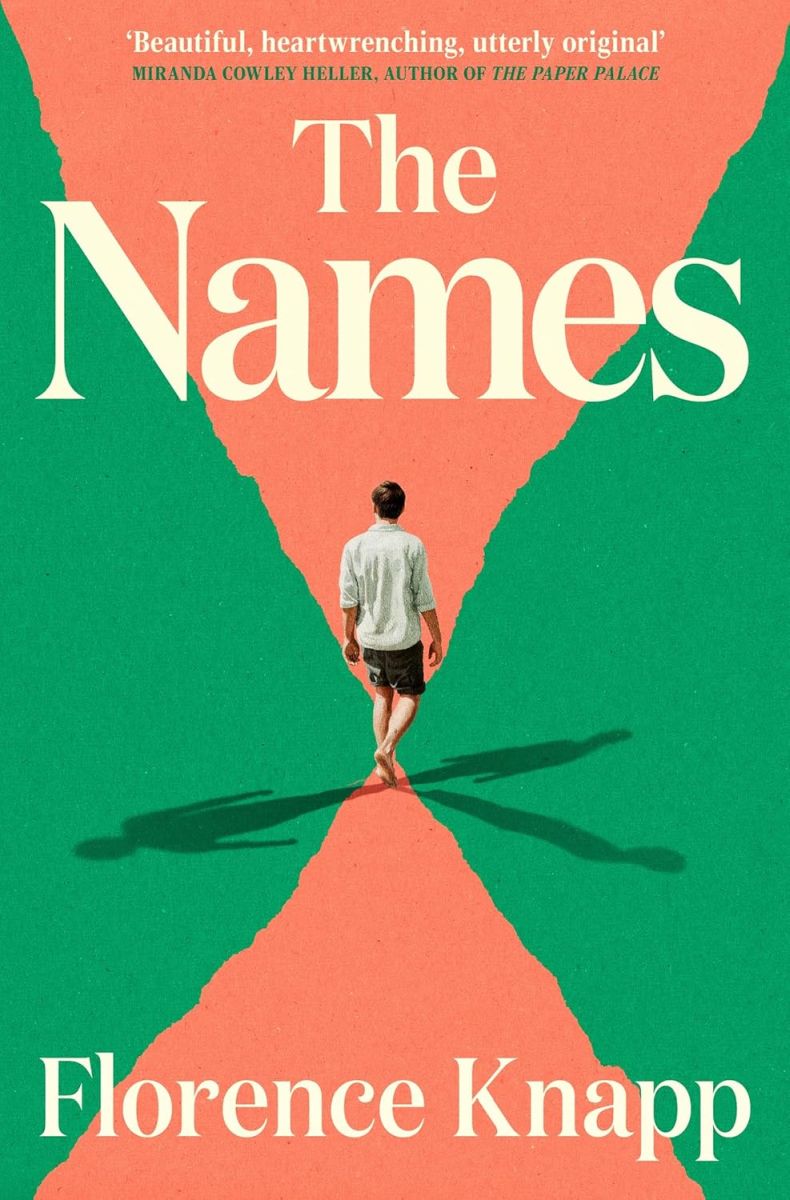
The Barnes family is in trouble. Dickie’s once-lucrative car business is going under?but rather than face the music, he’s spending his days in the woods, building an apocalypse-proof bunker with a renegade handyman. His wife Imelda is selling off her jewelry on eBay, while their teenage daughter Cass, formerly top of her class, seems determined to binge-drink her way through her final exams. And twelve-year-old PJ is putting the final touches to his grand plan to run away from home.
Where did it all go wrong? A patch of ice on the tarmac, a casual favor to a charming stranger, a bee caught beneath a bridal veil?can a single moment of bad luck change the direction of a life? And if the story has already been written?is there still time to find a happy ending?
This was shortlisted for the Booker prize in 2023 and won the Nero Book Award for Fiction in 2023.
It had a very interesting structure. Each of the family members (Cass, PJ, Imelda and Dickie) have a section, and these sections have different punctuation styles. For example, Imelda has no punctuation, just capitals which I took to be the start of a new sentence. And then, in what I am calling the second section, they each get another section, but now it’s in second person (still the same punctuation style).
This is the story of a family imploding – Cass, the daughter, is drinking too much and not studying for her A levels, PJ’s section is heart-breaking – he is wearing too small shoes because he knows they have no money, and who is he talking to on the internet?, Imelda married Dickie while in the throws of grief for his brother, and Dickie is hiding his true desires even from himself.
In the final section they all end up in the woods (it reminded me of the musical Into the Woods where everyone has to go into the woods
[ALL] Into the woods without delay But careful not to lose the way Into the woods, who knows what may Be lurking on the journey? Into the woods to get the thing That makes it worth the journeying
[STEPMOTHER & STEPSISTERS] Into the woods to see the King [JACK] To sell the cow
[BAKER] To make the potion [ALL] To see To sell To get To bring To make To lift To go to the Festival! Into the woods! (To see, to sell, to get, to bring) Into the woods! (To make, to lift, to go to the Festival) Into the woods, into the woods (To see, to sell, to get, to bring) Into the woods, into the woods (To make, to lift, to go to the Festival) Into the woods Then out of the woods (To see, to sell, to get, to bring) (To make, to lift, to go to the Festival) Into the woods Then out of the woods And home before dark!
Although will they all be home before dark?
The writing is beautiful, here are some of my favourite quotes
The Crisis had transformed Main Street into a mouthful of cavities.
When he smiled his handsomeness exploded into a million pieces of miraculous light. It was like being showered in radiant shrapnel.
As if Frank’s speed and his kicks and his ideal physique were just another part of him Like the enormous coat and the enormous car and the enormous house with its breakfast room and its sessile oak forest and its piano that no one played
[…] it was like drinking lightening, very slowly, from a wine glass.
Alas, rights are – as indeed people say of children themselves – only ever on loan to us. Where they become sufficiently inconvenient to the powerful, those rights can be revoked in an instant.
That’s quite appropriate for our times.
Yet sleepwalking was possible now as it had never seemed before. The world was made with this kind of life in mind, he came to realise. The world was a machine designed to sustain and perpetuate this kind of life – adult life, normal life.
It took me a long time to finish this novel, and while I liked it, it’s not going to be one of this year’s favourites – I still think we should have read There are Rivers in the Sky.
I have become a fan of Louise Penny’s Gamache novels. This is the fifth one I have read (for some reason I listened to number 12 first). I do like Armand and all of the recurring characters (maybe not Peter).
Here’s the blurb …
“What happened here last night isn’t allowed,” said Madame Dubois. It was such an extraordinary thing to say it stopped the ravenous Inspector Beauvoir from taking another bite of his roast beef on baguette. “You have a rule against murder?” he asked. “I do. When my husband and I bought the Bellechasse we made a pact….Everything that stepped foot on this land would be safe.”
It is the height of summer, and Armand and Reine-Marie Gamache are celebrating their wedding anniversary at Manoir Bellechasse, an isolated, luxurious inn not far from the village of Three Pines. But they’re not alone. The Finney family—rich, cultured, and respectable—has also arrived for a celebration of their own. The beautiful Manoir Bellechasse might be surrounded by nature, but there is something unnatural looming. As the heat rises and the humidity closes in, some surprising guests turn up at the family reunion, and a terrible summer storm leaves behind a dead body. It is up to Chief Inspector Gamache to unearth secrets long buried and hatreds hidden behind polite smiles. The chase takes him to Three Pines, into the dark corners of his own life, and finally to a harrowing climax.
These novels are beautifully written with a visceral sense of place. The crimes (murders) are the skeleton of the plot, but it’s fleshed out by more character-driven themes; family relationships, selfishness, kindness, etc. And the murders are ingenious.
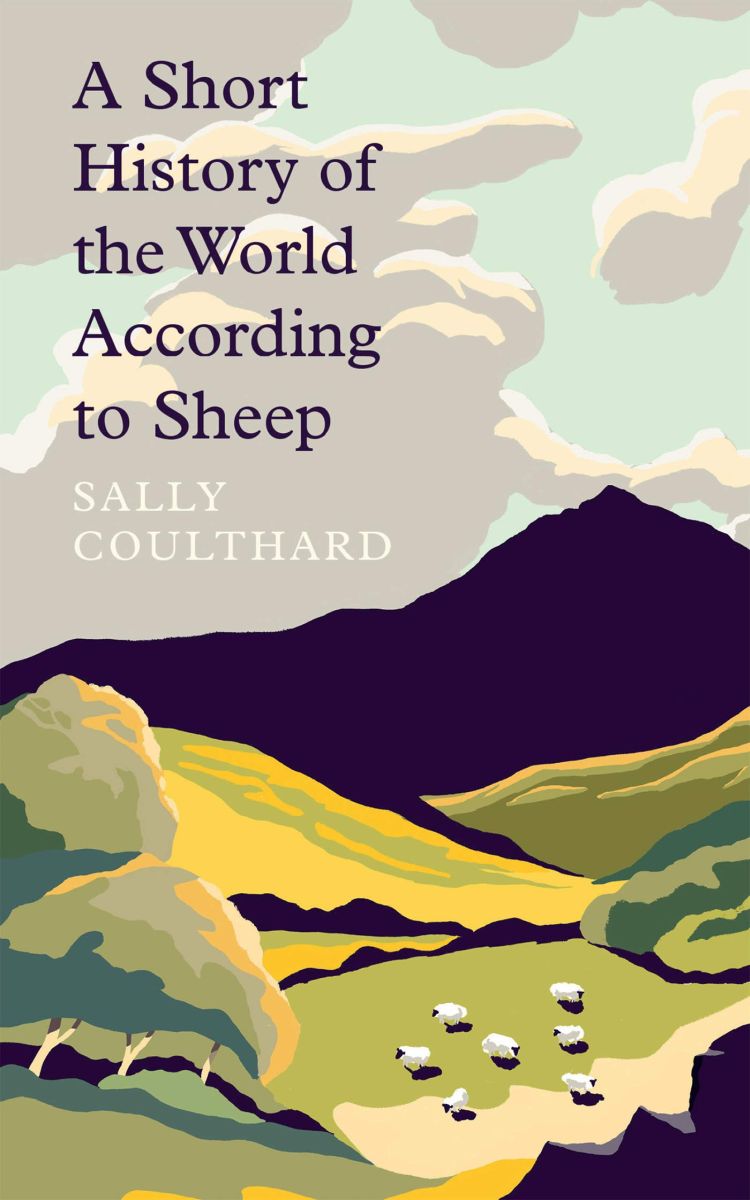
One of the women in my book club mentioned this book and as I thought I should be better informed about the Middle East, I decided to read it.
Here’s the blurb …
A stunning exploration of the Greater Middle East, where lasting stability has often seemed just out of reach but may hold the key to the shifting world order of the twenty-first century
The Greater Middle East, which Robert D. Kaplan defines as the vast region between the Mediterranean and China, encompassing much of the Arab world, parts of northern Africa, and Asia, existed for millennia as the crossroads of empire: Macedonian, Roman, Persian, Mongol, Ottoman, British, Soviet, American. But with the dissolution of empires in the twentieth century, postcolonial states have endeavored to maintain stability in the face of power struggles between factions, leadership vacuums, and the arbitrary borders drawn by exiting imperial rulers with little regard for geography or political groups on the ground. In the Loom of Time, Kaplan explores this broad, fraught space through reporting and travel writing to reveal deeper truths about the impacts of history on the present and how the requirements of stability over anarchy are often in conflict with the ideals of democratic governance.
In The Loom of Time, Kaplan makes the case for realism as an approach to the Greater Middle East. Just as Western attempts at democracy promotion across the Middle East have failed, a new form of economic imperialism is emerging today as China’s ambitions fall squarely within the region as the key link between Europe and East Asia. As in the past, the Greater Middle East will be a register of future great power struggles across the globe. And like in the past, thousands of years of imperial rule will continue to cast a long shadow on politics as it is practiced today.
To piece together the history of this remarkable place and what it suggests for the future, Kaplan weaves together classic texts, immersive travel writing, and a great variety of voices from every country that all compel the reader to look closely at the realities on the ground and to prioritize these facts over ideals on paper. The Loom of Time is a challenging, clear-eyed book that promises to reframe our vision of the global twenty-first century.
It is clear that Kaplan has spent a lot of time travelling in the Middle East (over a number of years), thinking about it and researching it. Although it was recently published, it was before Trump’s second presidency, which I think will have a profound impact on world politics.
I thought about anarchy and autocracy and how the latter might be preferred. There is information about the history – country by country – the revolutions, the ethnic groups, and the religions.
This was either a kindle daily deal or a prime monthly read from 2023. I finally ended up listening to it on Audible.
Here’s the blurb …
It seems lately that Poppy Lively is invisible to everyone but the IRS.
After her accountant absconded with her life savings, newly bankrupt Poppy is on the verge of losing her home when an old flame, now a hotshot producer, gives her a surprising way out: a job in costumes on a Hollywood film set. It’s a bold move to pack her bags, keep secrets from her daughter, and head to Los Angeles, but Poppy’s a capable person—how hard can a job in wardrobe be? It’s not like she has a choice; her life couldn’t get any worse. Even so, this midwesterner has a lot to learn about the fast and loose world of movie stars, iconic costumes, and back-lot intrigue.
As a single mom, she’s rarely had time for watching movies, she doesn’t sew, and she doesn’t know a thing about dressing the biggest names in the business. Floundering and overlooked, Poppy has one ally: Allen Carol, an ill-tempered movie star taken with Poppy’s unfiltered candor and general indifference to stardom.
When Poppy stumbles upon corruption, she relies on everyone underestimating her to discover who’s at the center of it, a revelation that shakes her belief in humanity. What she thought was a way to secure a future for her daughter becomes a spotlight illuminating the facts: Poppy is out of her league among the divas of Tinseltown.
Poppy must decide whether to keep her mouth shut, as she’s always done, or with the help of a scruffy dog, show the moviemakers that they need her unglamorous ways, whether the superstars like it or not.
At first I found reading this uncomfortable, Poppy had terrible self-esteem, her life was falling apart, and she was trying to keep everyone happy. However, I gradually started to warm to her – the one thing she did was to keep trying, putting one foot in front of the other, making it through each day. And she grew as a character to understand the emotional baggage from her childhood and to put her needs first.
I did enjoy all of the movie-making references – I have always been fascinated by costumes – the continuity issues, etc.
There’s a hint of romance, but mostly this is women’s fiction. There are witty moments (and I think it would make a good film), but also some moments with emotional depth. And now I know how to pronounce Milwaukee like a mid-westerner!