How the Light Gets In (#9) – Louise Penny

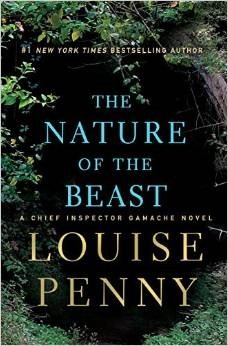
How The Light Gets In – Louise Penny

I love Inspector Gamache books and after the last one – The Beautiful Mystery – I had to read this one.

I wondered if this was the planned ending for these novels – it ends in a very satisfying manner (all mysteries solved and relationships sorted). As there is no gap in the publishing schedule, maybe this one was never intended to be the end (all good because I love them and I have about ten more to go).

Here’s the blurb …

Christmas is approaching, and in Québec it’s a time of dazzling snowfalls, bright lights, and gatherings with friends in front of blazing hearths. But shadows are falling on the usually festive season for Chief Inspector Armand Gamache of the Sûreté de Québec. Most of his best agents have left or been transferred out of the Homicide Department; his old friend and lieutenant Jean-Guy Beauvoir hasn’t spoken to him in months; and hostile forces are lining up against him.

When Gamache receives a message from Myrna Landers, in the village of Three Pines, he welcomes the chance to get away from the city for a few hours. Myrna’s longtime friend, who was due to spend Christmas in the village, has failed to arrive. When Chief Inspector Gamache presses for information, Myrna is reluctant to reveal her friend’s name. Mystified, Gamache soon discovers the missing woman was once one of the most famous people not just in North America but in the world, and now goes unrecognized by virtually everyone except the mad, brilliant poet Ruth Zardo.

As events come to a head at the Sûreté, Gamache is drawn ever deeper into the world of Three Pines. Increasingly, he is not only investigating the disappearance of Myrna’s friend but also seeking a safe place for himself and his still-loyal colleagues—if such a refuge exists amid mounting danger. Is there peace to be found even in Three Pines, and at what cost to Gamache and the people he holds dear?

Gamache is quite sneaky in this one and it is only at the end, you appreciate how sneaky he has been over several years – definitely playing the long game.

There is beautiful settings, the usual cast of characters (although Reine-Marie is in Paris) and an interesting case to solve as well as the shenanigans in the Sûreté.

A review.

1 Comment

Filed under 5, Audio, Crime, Fiction, Mystery, Recommended

An Academic Affair – Jodi McAlister

An Academic Affair – Jodi McAlister

I heard Jodi McAlister interviewed on That Rom Com Pod, and it sounded right up my alley. Dual point of view, rivals to lovers and a bit of a homage to Anne of Green Gables.

Here’s the blurb …

From the “masterly” (The New York Times) Jodi McAlister, a charming new romance about two English professors who embark on a fake relationship…only to discover that it may be harder to pretend than they realized.

Sadie Shaw and Jonah Fisher have been academic rivals since they first crossed paths as undergraduates in the literature department thirteen years ago. Now that a highly coveted teaching opportunity has come up, their rivalry hits epic proportions. Jonah needs the job to move closer to his recently divorced sister and her children, while Sadie needs the financial security and freedom of a full-time teaching position.

When Sadie notices that the job offers partner hire, however, she hatches a plot to get them both the job. All they must do is get legally married. It’s a simple win-win solution but when sparks begin to fly, it becomes clear that despite their education, these two may not have thought this whole thing through.

I really enjoyed it (although I did think it could have ended a bit earlier). It is well-written, witty, and both Sadie and Jonah have a bit of insight and they develop over the story. I loved the Australian setting, and I learned a new word ‘precariat’ (a social class characterized by precarious, insecure, and unstable work conditions, often lacking benefits and leading to a sense of social and economic vulnerability).

I loved all of Jonah’s footnotes.

There is also a marriage of convenience – how amazing is that in a modern novel?

From the podcast, I understand this is the first of a trilogy, so I am looking forward to the next two (I think I might even know who the protagonists are)

A review.

Leave a Comment

Filed under 5, Australian, Digital, Fiction, Romance

The Beautiful Mystery (#8) – Louise Penny

The Beautiful Mystery – Louise Penny

I do like Inspector Gamache books. I have been listening to this one – read by Adam Sims.

Here is the blurb …

No outsiders are ever admitted to the monastery of Saint-Gilbert-Entre-les-Loups, hidden deep in the wilderness of Québec, where two dozen cloistered monks live in peace and prayer. Ironically, for a community that has taken a vow of silence, the monks have become world-famous for their glorious voices, raised in ancient chants whose effect on both singer and listener is so profound it is known as “the beautiful mystery.”

But when the renowned choir director is murdered, the lock on the monastery’s massive wooden door is drawn back to admit Chief Inspector Armand Gamache and Jean-Guy Beauvoir of the Sûreté du Québec. There they discover disquiet beneath the silence, discord in the apparent harmony. But before finding the killer, before restoring peace, the Chief must first consider the divine, the human, and the cracks in between.

This one is not set in Three Pines, but in an isolated monastery (Saint-Gilbert-Entre-les-Loups). It has all things that I love about Gamache novels – great settings, interesting plot, and intriguing characters. There is some political intrigue in the Sûreté bureaucracy – Gamache didn’t get rid of all of the rot when he arrested Arnaud – I think it will continue for a few more novels. The way this one ended (no spoilers) made me a bit sad, so I have quickly started number 9.

A review.

1 Comment

Filed under 5, Audio, Crime, Fiction, Recommended

The Land in Winter – Andrew Miller

The Land in Winter – Andrew Miller

A very reliable friend recommended this, and then I saw it won the Walter Scott Prize for Historical fiction. I have also read and enjoyed Now we Shall be Entirely Free. I have a library copy, but I have ordered a copy from Boundless Books (trying to keep an independent book shop in business).

Here’s the blurb ..

December 1962, a small village near Bristol.

Eric and Irene and Bill and Rita. Two young couples living next to each other, the first in a beautiful cottage – suitable for a newly appointed local doctor – the second in a rundown, perennially under-heated farm. Despite their apparent differences, the two women (both pregnant) strike an easy friendship – a connection that comes as a respite from the surprising tediousness of married life, with its unfulfilled expectations, growing resentments and the ghosts of a recent past.

But as one of the coldest winters on record grips England in a never-ending frost and as the country is enveloped in a thick, soft, unmoving layer of snow, the two couples find themselves cut off from the rest of the world. And without the small distractions of everyday existence, suddenly old tensions and shocking new discoveries threaten to change the course of their lives forever.

This novel had a very interesting structure because the people we meet in the first chapter aren’t the people the rest of the novel focusses on. This novel is more about character than plot. We follow two married couples – Eric and Irene, and Bill and Rita. Both couples are recently married and now are expecting babies. There are class differences, the shadows of World War Two (Martin has been shattered by what he saw while liberating Belsen), and an extremely cold winter that brings the country to a grinding halt (quite literally – the trains and buses stop running). It is beautifully written, with a lot of period detail (there was a lot of drinking, smoking and drug taking even Irene and Rita), and domestic minutiae. It’s about people trying to live in a world recovering from devastation, evil and despair. There is mental illness, infidelity, kindness, sadness and resignation.

I need to think about this more, and possibly re-read it. I got caught up in the story and rushed through, without paying proper attention.

Some of my favourite quotes

[…] in the corridor there were lino tiles, geometries in bright colours. You had to be careful not to get lost on it, not try stepping only from green square to green square, or find yourself marooned on a red triangle.

Time would level it out, for that, he had learned (quite recently) was what time did.

When he heard her coming up the stairs he’d pushed it [photo album] back into the shadows under the bed and thought hos nice it was, what a relief, to be free of the past.

Is it possible to be free of the past?

And though he was not much given to thinking about love, did not much care for the word, thought it has been worn to a kind of uselessness, gutted by the advertising men and the crooners, and even by politicians, some of whom seemed, recently, to have discovered it, it struck him that in the end, it might just mean a willingness to imagine another’s life. To do that. To make the effort.

He was like a bird whose arrival heralded better weather.

This is wrote Andrew Miller wrote about it.

1 Comment

Filed under 4, Fiction, Historical Fiction, Paper, Recommended

War and Peace – Leo Tolstoy

War and Peace – Leo Tolstoy

I am just recording here that I listened to War and Peace. Thandiwe Newton is a fabulous narrator. This version was translated by Aylmer Maude.

1 Comment

Filed under 4, Audio, Fiction, Historical Fiction, Recommended

The Names – Florence Knapp

The Names – Florence Knapp

I know this author as a textile artist – I have her other book, so I was interested to read this one. And then there was a good review in The Australian.

Here’s the blurb …

The extraordinary novel that asks: Can a name change the course of a life?

In the wake of a catastrophic storm, Cora sets off with her nine-year-old daughter, Maia, to register her son’s birth. Her husband, Gordon, a local doctor, respected in the community but a terrifying and controlling presence at home, intends for her to name the infant after him. But when the registrar asks what she’d like to call the child, Cora hesitates…

Spanning thirty-five years, what follows are three alternate and alternating versions of Cora’s and her young son’s lives, shaped by her choice of name. In richly layered prose, The Names explores the painful ripple effects of domestic abuse, the messy ties of family, and the possibilities of autonomy and healing.

With exceptional sensitivity and depth, Knapp draws us into the story of one family, told through a prism of what-ifs, causing us to consider the “one . . . precious life” we are given. The book’s brilliantly imaginative structure, propulsive storytelling, and emotional, gut-wrenching power are certain to make The Names a modern classic.

This novel had a very interesting concept about names. Does our name effect our personality, life journey and the way other people treat us? There are lovely chapters on the various characters getting on with their lives – meeting people, finding a passion, etc.

I do think it should come with a trigger warning for domestic violence, and something happens to one of the versions of Cora’s son, which made me want to throw the book across the room. Originally I thought I would suggest it to my book club, but not now. Which isn’t to say it’s not beautifully written, moving and ultimately satisfying.

A review.

Leave a Comment

Filed under 4, Fiction, Paper

Jane Austen’s Book Shelf – Rebecca Romney

Jane Austen’s Bookshelf – Rebecca Romney

I am not sure where I first heard about this? Maybe a JASNA newsletter?

My random number generator selected it. There has been a bit of a Jane Austen theme for me this year.

Here’s the blurb …

Long before she was a rare book dealer, Rebecca Romney was a devoted reader of Jane Austen. She loved that Austen’s books took the lives of women seriously, explored relationships with wit and confidence, and always, allowed for the possibility of a happy ending. She read and reread them, often wishing Austen wrote just one more.

But Austen wasn’t a lone genius. She wrote at a time of great experimentation for women writers—and clues about those women, and the exceptional books they wrote, are sprinkled like breadcrumbs throughout Austen’s work. Every character in Northanger Abbey who isn’t a boor sings the praises of Ann Radcliffe. The play that causes such a stir in Mansfield Park is a real one by the playwright Elizabeth Inchbald. In fact, the phrase “pride and prejudice” came from Frances Burney’s second novel Cecilia. The women that populated Jane Austen’s bookshelf profoundly influenced her work; Austen looked up to them, passionately discussed their books with her friends, and used an appreciation of their books as a litmus test for whether someone had good taste. So where had these women gone? Why hadn’t Romney—despite her training—ever read them? Or, in some cases, even heard of them? And why were they no longer embraced as part of the wider literary canon?

Jane Austen’s Bookshelf investigates the disappearance of Austen’s heroes—women writers who were erased from the Western canon—to reveal who they were, what they meant to Austen, and how they were forgotten. Each chapter profiles a different writer including Frances Burney, Ann Radcliffe, Charlotte Lennox, Charlotte Smith, Hannah More, Elizabeth Inchbald, Hester Lynch Thrale Piozzi, and Maria Edgeworth—and recounts Romney’s experience reading them, finding rare copies of their works, and drawing on connections between their words and Austen’s. Romney collects the once-famed works of these forgotten writers, physically recreating Austen’s bookshelf and making a convincing case for why these books should be placed back on the to-be-read pile of all book lovers today. Jane Austen’s Bookshelf will encourage you to look beyond assigned reading lists, question who decides what belongs there, and build your very own collection of favorite novels.

I really enjoyed this – I promptly downloaded Evelina by Frances Burney, and I already have a copy of The Mysteries of Udolpho, and I will be sourcing the other authors as well.

Ms Romney has a lovely conversational style of writing. I always like a mixture of personal information and literary information, and her search for particular editions of novels was fascinating. How women authors have disappeared from the canon will make your blood boil.

A review.

Leave a Comment

Filed under 5, Digital, Memoir, Non-Fiction, Recommended

Lemon – Kwon Yeo-Sun

Lemon – Kwon Yeo-Sun

I won this book, and then it languished in the pile.

Here’s the blurb …

In the summer of 2002, when Korea is abuzz over hosting the FIFA World Cup, nineteen-year-old Kim Hae-on is killed in what becomes known as the High School Beauty Murder. Two suspects quickly emerge: rich kid Shin Jeongjun, whose car Hae-on was last seen in, and delivery boy Han Manu, who witnesses Hae-on in the passenger seat of Jeongjun’s car just a few hours before her death. But when Jeongjun’s alibi turns out to be solid, and no evidence can be pinned on Manu, the case goes cold.

Seventeen years pass without any resolution for those who knew and loved Hae-on, and the grief and uncertainty take a cruel toll on her younger sister, Da-on, in particular. Unable to move on with her life, Da-on tries in her own twisted way to recover some of what she’s lost, ultimately setting out to find the truth of what happened.

Told at different points in time from the perspectives of Da-on and two of Hae-on’s classmates, Lemon loosely follows the structure of a detective novel. But finding the perpetrator is not the main objective here. Instead, the work explores grief and trauma, raising important questions about guilt, retribution, and the meaning of death and life.

I don’t think I have read anything else like this. There are three narrators, but it can take a while to work out who is doing the narrating. For one of the narrators we have a one-sided conversation with a therapist or psychiatrist, and we can read between the lines. There are hints about who the murderer might be, and there might be another crime (well there is definitely another crime, but we might know who did it). However, mostly I would say it is about grief and trauma, and how to move on from terrible events. Two of the narrators Da-On and Yun Tareim are self-absorbed, selfish and obsessive about the murder.

A review.

Leave a Comment

Filed under 3, Crime, Fiction, Paper

A Short History of the World According to Sheep – Sally Coulthard

A Short History of the World According to Sheep – Sally Coulthard

Using a random number generator to select my books is going well. I wanted to read this, but I suspect it would have languished in the pile.

Here’s the blurb …

‘This book deserves a place in your bookcase next to Harari’s Sapiens. It’s every bit as fascinating and is surely destined to be just as successful’ Julian Norton From the plains of ancient Mesopotamia to the vast sheep farms of modern-day Australia, sheep have been central to the human story. Since our our Neolithic ancestors’ first forays into sheep-rearing nearly 11,000 years ago, these remarkable animals have fed us, clothed us, changed our diet and language and financed the conquest of large swathes of the earth.Sally Coulthard weaves this fascinating story into a vivid and colourful tapestry of engaging anecdotes and extraordinary ovine facts, whose multiple strands celebrate just how pivotal these woolly animals are to almost every aspect of human society and culture.This title was published also in the United States under the title Follow the Flock.‘A snappy, stimulating book, and certainly not just for shepherds’ Mail on Sunday‘Full of fascinating social history’ Independent‘You won’t look at a sheep in the same way again’ Country Living.

I am a knitter and I am fascinated by sheep. I would like to know the source of my yarn (although that seems impossible in Australia), what type of sheep it came from, etc.

This book has 14 chapters with different aspects of sheep history and evolution (breeding), the way humans have used sheep, and the way sheep have been fundamental to human development. Also, what should happen now? In this world of climate change? Wool is a wonder material, which must have a part to play in the future.

I found this a bit icky

The only way to do this [domesticate a sheep] would be to take a lamb from its mother as soon as it was born and breastfeed it. And so, astonishingly, the history of sheep may indeed have started with a woman nursing a newborn lamb.

And I guess this is the lot of archaeologists

At the end of the 1990s, archaeologists had the rather unusual privilege of being allowed to sift through the remains of a seventeenth-century toilet at Dudley Castle in the West Midlands.

They found sheep’s gut condoms.

A review.

Leave a Comment

Filed under 4, History, Non-Fiction, Paper

A Song for the Dark Times – Ian Rankin

A Song for the Dark Times – Ian Rankin

This has languished in the ‘pile of death’ as my daughter refers to my storage of unread books. And then its number was selected (number 190).

Here’s the blurb …

‘He’s gone…’

When his daughter Samantha calls in the dead of night, John Rebus knows it’s not good news. Her husband has been missing for two days.

Rebus fears the worst – and knows from his lifetime in the police that his daughter will be the prime suspect.

He wasn’t the best father – the job always came first – but now his daughter needs him more than ever. But is he going as a father or a detective?

As he leaves at dawn to drive to the windswept coast – and a small town with big secrets – he wonders whether this might be the first time in his life where the truth is the one thing he doesn’t want to find…

I have read and enjoyed other Rebus novels. Not all of them and not in order, but I don’t think it is necessary to read them in order. I like the characters and the world-building and the twisty plots. These are some of the best crime novels I have read.

A review

Leave a Comment

Filed under 4, Crime, Fiction, Paper