I heard Jodi McAlister interviewed on That Rom Com Pod, and it sounded right up my alley. Dual point of view, rivals to lovers and a bit of a homage to Anne of Green Gables.
Here’s the blurb …
From the “masterly” (The New York Times) Jodi McAlister, a charming new romance about two English professors who embark on a fake relationship…only to discover that it may be harder to pretend than they realized.
Sadie Shaw and Jonah Fisher have been academic rivals since they first crossed paths as undergraduates in the literature department thirteen years ago. Now that a highly coveted teaching opportunity has come up, their rivalry hits epic proportions. Jonah needs the job to move closer to his recently divorced sister and her children, while Sadie needs the financial security and freedom of a full-time teaching position.
When Sadie notices that the job offers partner hire, however, she hatches a plot to get them both the job. All they must do is get legally married. It’s a simple win-win solution but when sparks begin to fly, it becomes clear that despite their education, these two may not have thought this whole thing through.
I really enjoyed it (although I did think it could have ended a bit earlier). It is well-written, witty, and both Sadie and Jonah have a bit of insight and they develop over the story. I loved the Australian setting, and I learned a new word ‘precariat’ (a social class characterized by precarious, insecure, and unstable work conditions, often lacking benefits and leading to a sense of social and economic vulnerability).
I loved all of Jonah’s footnotes.
There is also a marriage of convenience – how amazing is that in a modern novel?
From the podcast, I understand this is the first of a trilogy, so I am looking forward to the next two (I think I might even know who the protagonists are)
I have been on a holiday, so I wanted some fun, light and easy reads.
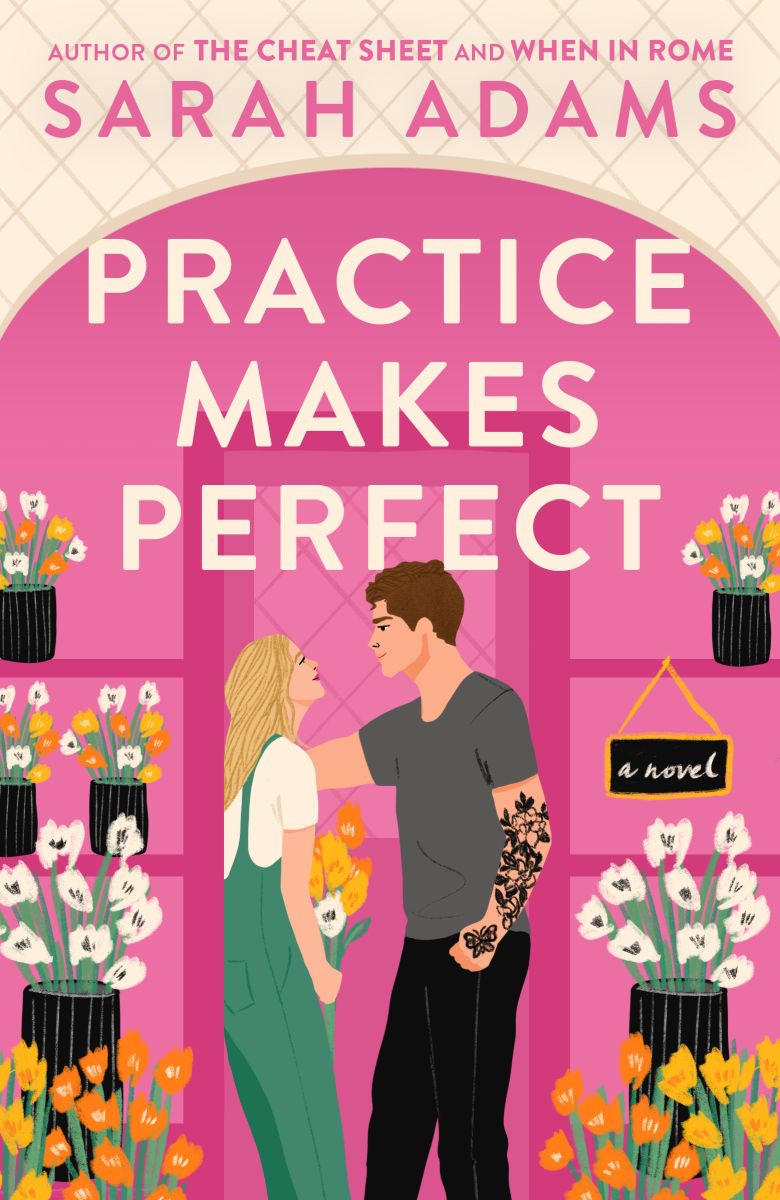
Here’s the blurb …
Annie Walker is on a quest to find her perfect match—someone who complements her happy, quiet life running the local flower shop in Rome, Kentucky. But finding her dream man may be harder than Annie imagined. Everyone knows everyone in her hometown, and the dating prospects are getting fewer by the day. After she overhears her latest date say she is “so unbelievably boring,” Annie starts to think the problem might be her. Is it too late to become flirtatious and fun like the leading ladies in her favorite romance movies? Maybe she only needs a little practice . . . and Annie has the perfect person in mind to be her tutor: Will Griffin.
Will—the sexy, tattooed, and absolutely gorgeous bodyguard—is temporarily back in Rome, providing security for Amelia Rose as excitement builds for her upcoming marriage to Noah Walker, Annie’s brother. He has one personal objective while on the job: stay away from Annie Walker and any other possible attachments to this sleepy town. But no sooner than he gets settled, Will finds himself tasked with helping Annie find the love of her life by becoming the next leading lady of Rome, Kentucky. Will wants no part in changing the sweet and lovely Annie. He knows for a fact that some stuffy, straitlaced guy won’t make her happy, but he doesn’t have the heart to say no.
Amid steamy practice dates and strictly “educational” tutoring lessons, Annie discovers there are more layers to Will’s usual stoic attitude. As the lines of their friendship become dangerously blurred, Annie reconsiders her dream guy. Maybe her love life doesn’t need to be perfect—it just needs to be real.
I haven’t read the first in this series – When in Rome, but it’s not necessary. This was fun, I enjoyed the banter between Will and Annie, and the set-up (Will being Annie’s dating coach). I did find it a bit long, and the reasons for keeping them apart a bit flimsy.
Having said that, it is just a mismatch between me and this novel. People must love it, it has four stars on goodreads.
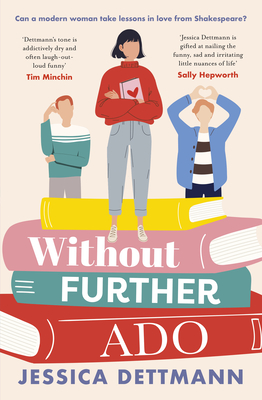
Can a modern woman take lessons in love from Shakespeare? Book Lovers meets 10 Things I Hate About You in this sparkling romantic comedy from beloved Aussie author Jessica Dettmann. ‘Sigh no more, ladies, sigh no more. Men were deceivers ever …’ Since she was sixteen, Willa’s curious touchstone in life and work has been the 1993 film Much Ado About Nothing . She’s always looking for The Feeling, the stirring in her heart – and loins – that she gets when watching the opening scenes. Now she’s navigating her mid-thirties, her career as a romance publisher in an unusual family business, and her determination to remain child-free, while quietly holding out for a love as big as Beatrice and Benedick’s. But when relationships start to get complicated between Willa, her cousin Imogen and the four sons of the family she works for, and the events of her own life begin to mirror the plot of her beloved comedy, Willa must consider whether there is such a thing as too much ado. A delightfully Shakespearean romantic comedy about modern love, women’s roles and how the films and stories we grow up with shape us. ‘An absolute delight! With its witty dialogue, relatable characters, and laugh-out-loud moments, this book is the perfect escape.
I am also a fan of Much Ado About Nothing, probably not as much as Willa. This does loosely follow the plot – I did spend a bit of time wondering who the ‘Benedick’ would be. I found Willa to be a bit more caustic than witty at times, but overall this is a fun, well-written novel. And it is always nice to read an Australian novel, set somewhere that I recognise.
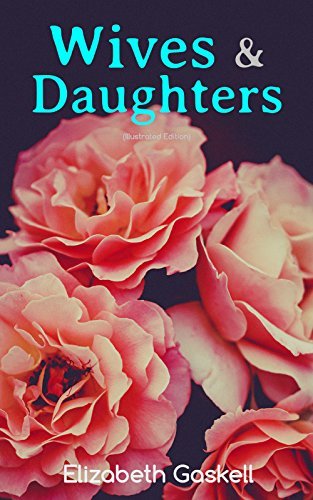
I have read this before and watched the BBC adaptation. The theme for my book club is ‘wives’ and so, this seemed an appropriate choice.
Here’s the blurb …
Molly Gibson is a young girl who has been raised by her widowed father. During a visit to the local aristocratic ‘great house’ of Lord and Lady Cumnor, she loses her way in the estate and falls asleep under a tree. When she wakes up, she gets distressed at the thought of spending the night at the mansion, but to her relief, her father arrives to collect her. Seven years later, Molly is an attractive and rather unworldly young woman, which arouses the interest of one of her father’s apprentices. Mr. Gibson discovers the young man’s secret affection and sends Molly to stay with the Hamleys of Hamley Hall. Molly falls in love with Roger, the younger son of Mrs. Hamley, but it appears that he is more interested in Cynthia, Molly’s new stepsister from her father’s second marriage. Elizabeth Gaskell (1810-1865) was an English novelist and short story writer. Her novels offer a detailed portrait of the lives of many strata of Victorian society, including the very poor, and are of interest to social historians as well as lovers of literature. Some of Gaskell’s best known novels are Cranford, North and South, and Wives and Daughters.
I listened to this, it was read by Prunella Scales, read very well, but I kept thinking of Fawlty Towers.
This was fabulous – the characters in particular. I think we all know people like Mrs. Kirkpatrick, and then Mrs. Gibson, self-serving and jealous, but with a veneer of kindness. The blustering Lady Cumnor who knows how everyone should live and tells them so (shades of Lady Catherine De Burgh, but much kinder). And then there are the lovely characters, Roger, Molly, Lady Harriet and Mrs Hamley. Kind and thoughtful.
The setting is good too – I could see Hamley Hall and The Towers, as well as the village of Hollingford.
What was it about? People chosing their life partners. Some of the partnerships were good – Lord and Lady Cumnor, Squire Hamley and his wife, the Browning sisters, but Dr and Mrs. Gibson were ill-suited. She wanted to be supported financially and he wanted a mother for his daughter. They didn’t get to know each other well enough to see how very ill-suited they were. Cynthia is a flirt and broke some hearts (including Roger), but might settle in the end. I think the key message is not to rush into anything, but take time to get to know someone well.
Two writers compete for the chance to tell the larger-than-life story of a woman with more than a couple of plot twists up her sleeve in this dazzling and sweeping new novel from Emily Henry.
Alice Scott is an eternal optimist still dreaming of her big writing break. Hayden Anderson is a Pulitzer-prize winning human thundercloud. And they’re both on balmy Little Crescent Island for the same reason: To write the biography of a woman no one has seen in years–or at least to meet with the octogenarian who claims to be the Margaret Ives. Tragic heiress, former tabloid princess, and daughter of one of the most storied (and scandalous) families of the 20th Century.
When Margaret invites them both for a one-month trial period, after which she’ll choose the person who’ll tell her story, there are three things keeping Alice’s head in the game.
One: Alice genuinely likes people, which means people usually like Alice—and she has a whole month to win the legendary woman over.
Two: She’s ready for this job and the chance to impress her perennially unimpressed family with a Serious Publication
Three: Hayden Anderson, who should have no reason to be concerned about losing this book, is glowering at her in a shaken-to-the core way that suggests he sees her as competition.
But the problem is, Margaret is only giving each of them pieces of her story. Pieces they can’t swap to put together because of an ironclad NDA and an inconvenient yearning pulsing between them every time they’re in the same room.
And it’s becoming abundantly clear that their story—just like the tale Margaret’s spinning—could be a mystery, tragedy, or love ballad…depending on who’s telling it.
What I like about Emily Henry’s novels is the guaranteed happy ending, but more than that I like that the thing that is keeping the couple separate is reasonable, not some villain or some made up conflict (‘you’re to good for me’). The writing is good, and there is some emotional heft to the story.
I just had a long weekend (ANZAC day on Friday) and I started and finished it. Easy reading, but very enjoyable.
Some quotes
“Clickbait,” I say. “before the advent of clicking.” “More or less,” she agrees. “That’s what my family used to make themselves very rich – and like Dove Franklin says, powerful too. But in the end, it doesn’t matter. Even if you’re the one to build the monster, you’re never going to be able to control it. It’ll gladly eat you alive and floss with your bones, once it’s finished with everyone else.
“No one knows how ‘normal’ or ‘strange’ their own life is until they see the alternative.”
How is Anne Tyler still writing? And still writing well? I have been a fan for quite some time.
Here’s the blurb …
Gail Baines is having a bad day. To start with, she loses her job – or quits, depending who you ask. And then her ex-husband Max turns up at her door expecting to stay for their daughter’s wedding. He hasn’t even brought a suit. Instead, he brings with him memories, a calm maturity, a shared sense of humour – and a cat looking for a new home.
Over the course of the three busy days of the wedding, the past is stirred up for Gail, even as the future – in the shape of the happy couple Debbie and Kenneth – is already underway. But ‘happy’ takes many forms, and sometimes the younger generation has much to teach the older about secrets, acceptance and taking the rough with the smooth.
Told with deep sensitivity and a tart sense of humour, full of the joys and heartbreaks of love and marriage and family life, Three Days in June is a feast of a novel to savour in a single sitting.
People don’t tap their watches anymore; have you noticed?
This is the opening sentence and soon after we hear how Marilee has to have her heart re-started to get it beating correctly. There is definitely a theme of re-starts and second chances.
The story is told from Gail’s point of view, and unusually, I didn’t find her to be sympathetic, she is lacking empathy.
I wondered why it was that I had so many irritating people in my life.
Possibly it’s you Gail.
It’s beautifully written, with all of those ordinary things made extraordinary. Will Gail finally be able to express her feelings to Debbie and Max?
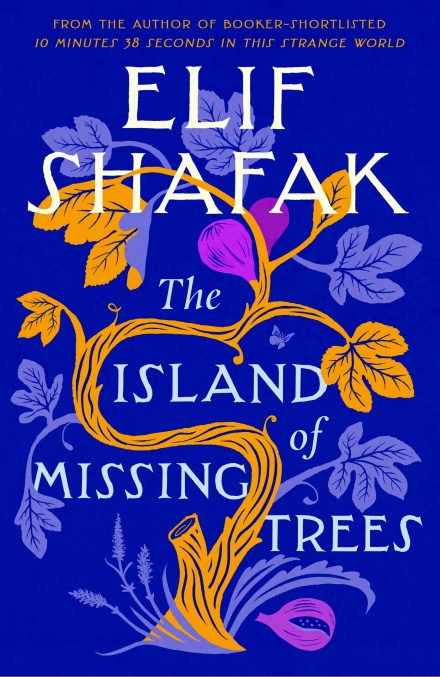
A rich, magical new book on belonging and identity, love and trauma, nature and renewal, from the Booker shortlisted author of 10 Minutes 38 Seconds in This Strange World.
Two teenagers, a Greek Cypriot and a Turkish Cypriot, meet at a taverna on the island they both call home. In the taverna, hidden beneath garlands of garlic, chili peppers and creeping honeysuckle, Kostas and Defne grow in their forbidden love for each other. A fig tree stretches through a cavity in the roof, and this tree bears witness to their hushed, happy meetings and eventually, to their silent, surreptitious departures. The tree is there when war breaks out, when the capital is reduced to ashes and rubble, and when the teenagers vanish. Decades later, Kostas returns. He is a botanist looking for native species, but really, he’s searching for lost love.
Years later a Ficus carica grows in the back garden of a house in London where Ada Kazantzakis lives. This tree is her only connection to an island she has never visited — her only connection to her family’s troubled history and her complex identity as she seeks to untangle years of secrets to find her place in the world.
A moving, beautifully written and delicately constructed story of love, division, transcendence, history and eco-consciousness, The Island of Missing Trees is Elif Shafak’s best work yet.
First, I knew nothing about Cyprus and the Greek and Turkish struggle over it. The writing is beautiful – how does someone write so well in a second language? I particularly enjoyed the chapters from the point of view of the fig. The story moves around in time, so what you think you know about the characters turns out to be a false assumption. We get to knows the characters slowly, like what would happen if you meet them in person. Ada’s mother has died, then we understand her mother was unwell, then that she drinks too much, and finally that her death might have been suicide.
Some of my favourite quotes
A map is a two-dimensional representation with arbitrary symbols and incised lines that decide who is to be our enemy and who is to be our friend, who deserves our love and who deserves our hatred and who, our sheer indifference.
Her voice was like a flying carpet that lifted her up and carried her against her will.
Because that is what migrations and relocations do to us: when you leave your home for unknown shores, you don’t simply carry on as before; a part of you dies inside so another part can start all over again.
If families resemble trees, as they say, arborescent structures with entangled roots and individual branches jutting out at awkward angles, family traumas are like thick, translucent resin dripping from a cut in the bark. They trickle down generations.
You don’t fall in love in the midst of a civil war, when you are hemmed in by carnage and by hatred on all sides. You run away as fast as your legs can carry your fears, seeking basic survival and nothing else. With borrowed wings you take to the sky and soar away into the distance. And if you cannot leave, then you search for shelter, find a safe place where you can withdraw into yourself because now that everything has failed, all diplomatic negotiations and political consultations, you know it can only be an eye for an eye, hurt for hurt, and it is not safe anywhere outside your own tribe.
Because in real life, unlike in history books, stories come to us not in their entirety but in bits and pieces, broken segments and partial echoes, a full sentence here, a fragment there, a clue hidden in between,
It’s a beautiful, engrossing story full of hope and love, but also sadness and acknowledgement of the terrible things people do to one another.
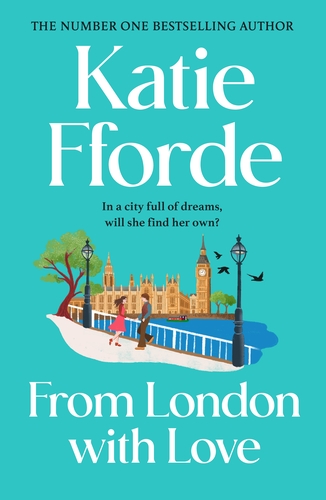
I have been a Katie Fforde fan for a long time – some are better than others.
Here’s the blurb …
It’s 1968 and it’s cold when Felicity arrives in London to stay with her mother, improve her English, do a secretarial course – and meet a suitable man.
She is already missing her home in Provence and her father and his new wife and their extended family. But it’s only for a year she tells herself – and then she can go back to France and do what she really wants and become a painter.
And then she bumps into Oliver who is quite the most interesting young man she has ever met. He lives on a barge for one thing and has a selection of jobs including looking for hidden treasures along the shores of the river Thames.
In a word he’s a mudlarker – and before long Felicity is mudlarking too. She is also pursuing her dreams and painting scenery for Oliver’s actor friends.
But is Oliver a Suitable Man of whom her mother will approve? Felicity knows she will not …
Love, tangled relationships, and a real life adventure lie at the heart of Katie’s Fforde’s heart-warming new novel.
This is not one of my favourites. I liked the two heroines, but I found the situations contrived, particularly the bit about Violet having to help Henry so that he could get a position at Oxford. And Felicity and Oliver’s falling out over the mudlarking incident seemed unrealistic.
Having said that, its cosy, warm and a bit retro, all things I like.
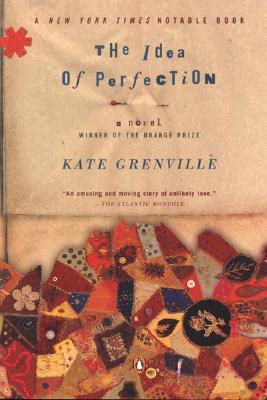
This is the first novel I have read by Kate Grenville. I know of her, of course, she is a famous Australian author (which I think has put me off reading her, but the cover convinced me).
Here’s the blurb …
Harley Savage is a plain woman, a part-time museum curator and quilting expert with three failed marriages and a heart condition. Douglas Cheeseman is a shy, gawky engineer with jug-handle ears, one marriage gone sour, and a crippling lack of physical courage. They meet in the little Australian town of Karakarook, where Harley has arrived to help the town build a heritage museum and Douglas to demolish the quaint old Bent Bridge. From the beginning they are on a collision course until the unexpected sets them both free.
Elegantly and compassionately told, The Idea of Perfection is reminiscent of the work of Carol Shields and Annie Proulx and reveals Kate Grenville as “a writer of extraordinary talent” (The New York Times Book Review).
This was great, Harley and Douglas are fabulous characters – very believable. And I particularly liked Felicity Porcelline (and her fixation on winkles), and Freddy who sees himself as the lothario of Karakarook. This is a character driven novel (the best sort) and all of the characters have a lot of baggage. So it’s about happiness, trust and community.
The writing is beautiful and I agree with the above blurb – it is reminiscent of Carol Shields, and I would add Anne Tyler, however, the setting is very small town Australia (beautifully described – I could feel the heat, see the main street, and the local hotel).
This was published in 1999, but it is still very readable.
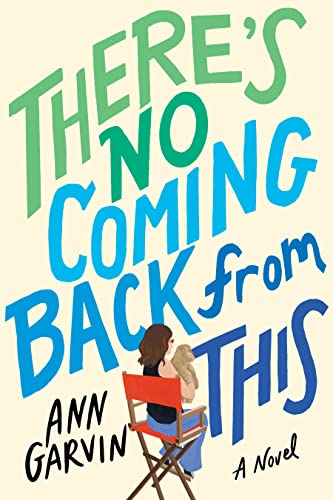
This was either a kindle daily deal or a prime monthly read from 2023. I finally ended up listening to it on Audible.
Here’s the blurb …
It seems lately that Poppy Lively is invisible to everyone but the IRS.
After her accountant absconded with her life savings, newly bankrupt Poppy is on the verge of losing her home when an old flame, now a hotshot producer, gives her a surprising way out: a job in costumes on a Hollywood film set. It’s a bold move to pack her bags, keep secrets from her daughter, and head to Los Angeles, but Poppy’s a capable person—how hard can a job in wardrobe be? It’s not like she has a choice; her life couldn’t get any worse. Even so, this midwesterner has a lot to learn about the fast and loose world of movie stars, iconic costumes, and back-lot intrigue.
As a single mom, she’s rarely had time for watching movies, she doesn’t sew, and she doesn’t know a thing about dressing the biggest names in the business. Floundering and overlooked, Poppy has one ally: Allen Carol, an ill-tempered movie star taken with Poppy’s unfiltered candor and general indifference to stardom.
When Poppy stumbles upon corruption, she relies on everyone underestimating her to discover who’s at the center of it, a revelation that shakes her belief in humanity. What she thought was a way to secure a future for her daughter becomes a spotlight illuminating the facts: Poppy is out of her league among the divas of Tinseltown.
Poppy must decide whether to keep her mouth shut, as she’s always done, or with the help of a scruffy dog, show the moviemakers that they need her unglamorous ways, whether the superstars like it or not.
At first I found reading this uncomfortable, Poppy had terrible self-esteem, her life was falling apart, and she was trying to keep everyone happy. However, I gradually started to warm to her – the one thing she did was to keep trying, putting one foot in front of the other, making it through each day. And she grew as a character to understand the emotional baggage from her childhood and to put her needs first.
I did enjoy all of the movie-making references – I have always been fascinated by costumes – the continuity issues, etc.
There’s a hint of romance, but mostly this is women’s fiction. There are witty moments (and I think it would make a good film), but also some moments with emotional depth. And now I know how to pronounce Milwaukee like a mid-westerner!