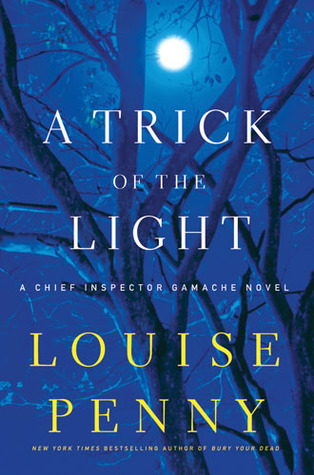
Another Inspector Gamache novel – number 7 (I still have plenty to go)
Here’s the blurb …
“Hearts are broken,” Lillian Dyson carefully underlined in a book. “Sweet relationships are dead.”
But now Lillian herself is dead. Found among the bleeding hearts and lilacs of Clara Morrow’s garden in Three Pines, shattering the celebrations of Clara’s solo show at the famed Musée in Montréal. Chief Inspector Gamache, the head of homicide at the Sûreté du Québec, is called to the tiny Québec village and there he finds the art world gathered, and with it a world of shading and nuance, a world of shadow and light. Where nothing is as it seems. Behind every smile there lurks a sneer. Inside every sweet relationship there hides a broken heart. And even when facts are slowly exposed, it is no longer clear to Gamache and his team if what they’ve found is the truth, or simply a trick of the light.
I do like these novels and all of the characters (well most of the characters – I still haven’t warmed to Peter (Clara’s husband)). I love the writing and the settings, and I am hoping for a bit of romance in the next one. For me these novels aren’t really about the crime, but how the characters live together with kindness and empathy.
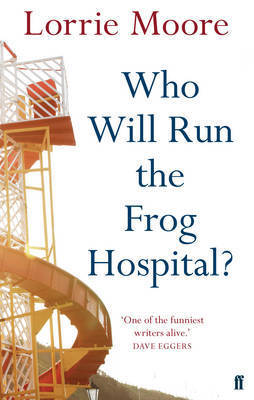
I had heard about this novel – who can forget that title? – and, so when I saw it at Readings I had to buy it.
Here’s the blurb …
In this moving, poignant novel by the bestselling author of Birds of America we share a grown woman’s bittersweet nostalgia for the wildness of her youth.
The summer Berie was fifteen, she and her best friend Sils had jobs at Storyland in upstate New York where Berie sold tickets to see the beautiful Sils portray Cinderella in a strapless evening gown. They spent their breaks smoking, joking, and gossiping. After work they followed their own reckless rules, teasing the fun out of small town life, sleeping in the family station wagon, and drinking borrowed liquor from old mayonnaise jars. But no matter how wild, they always managed to escape any real danger—until the adoring Berie sees that Sils really does need her help—and then everything changes.
First, this book is beautifully written – witty and thoughtful. For me, it was about the intense friendships and expectations of young women countered by the disillusions of middle-age. Ordinary people living their lives and have the occasional extraordinary experience. This is one of my favourite novels this year.
Here are some of my favourite quotes:
I often think that at the centre of me is a voice that at last did split, a house in my heart so invaded with other people and their speech, friends I believed I was devoted to, people whose lives I can only guess at now, that it leaves me with the impression I am simply a collection of them, that they all existed for themselves, but had inadvertently formed me, then vanished. But, what: Should I have been expected to create my own self, out of nothing, out of thin, thin air and alone?
In his iconic way our father remained very much ours, And in the long shadows of his neglect, we fashioned our own selves, quietly improvised our own rules, as kids did in America, in the fatherless fifties and sixties.
When later in life she [Sils] would appear – in a dream with a group of people; or in a thought about friends I never saw anymore, those I had consented to lose and live without…
She was, probably, the nicest person I had ever known. Yet in the years following, for myself, I abandoned even believing in niceness or being nice. I could scarcely control myself, wherever I was, from telling everyone, anyone, what I thought of them. It was an urge, a compulsion, my tongue bitten a futile blue.
I read in this article, that the novel’s title comes from a painting Ms Moore bought.
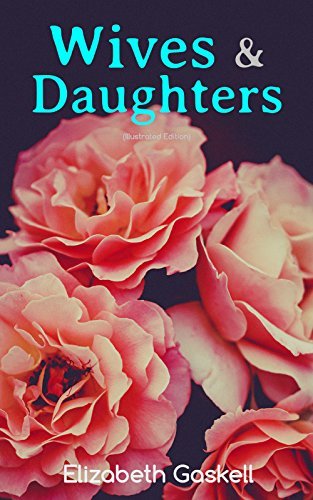
I have read this before and watched the BBC adaptation. The theme for my book club is ‘wives’ and so, this seemed an appropriate choice.
Here’s the blurb …
Molly Gibson is a young girl who has been raised by her widowed father. During a visit to the local aristocratic ‘great house’ of Lord and Lady Cumnor, she loses her way in the estate and falls asleep under a tree. When she wakes up, she gets distressed at the thought of spending the night at the mansion, but to her relief, her father arrives to collect her. Seven years later, Molly is an attractive and rather unworldly young woman, which arouses the interest of one of her father’s apprentices. Mr. Gibson discovers the young man’s secret affection and sends Molly to stay with the Hamleys of Hamley Hall. Molly falls in love with Roger, the younger son of Mrs. Hamley, but it appears that he is more interested in Cynthia, Molly’s new stepsister from her father’s second marriage. Elizabeth Gaskell (1810-1865) was an English novelist and short story writer. Her novels offer a detailed portrait of the lives of many strata of Victorian society, including the very poor, and are of interest to social historians as well as lovers of literature. Some of Gaskell’s best known novels are Cranford, North and South, and Wives and Daughters.
I listened to this, it was read by Prunella Scales, read very well, but I kept thinking of Fawlty Towers.
This was fabulous – the characters in particular. I think we all know people like Mrs. Kirkpatrick, and then Mrs. Gibson, self-serving and jealous, but with a veneer of kindness. The blustering Lady Cumnor who knows how everyone should live and tells them so (shades of Lady Catherine De Burgh, but much kinder). And then there are the lovely characters, Roger, Molly, Lady Harriet and Mrs Hamley. Kind and thoughtful.
The setting is good too – I could see Hamley Hall and The Towers, as well as the village of Hollingford.
What was it about? People chosing their life partners. Some of the partnerships were good – Lord and Lady Cumnor, Squire Hamley and his wife, the Browning sisters, but Dr and Mrs. Gibson were ill-suited. She wanted to be supported financially and he wanted a mother for his daughter. They didn’t get to know each other well enough to see how very ill-suited they were. Cynthia is a flirt and broke some hearts (including Roger), but might settle in the end. I think the key message is not to rush into anything, but take time to get to know someone well.
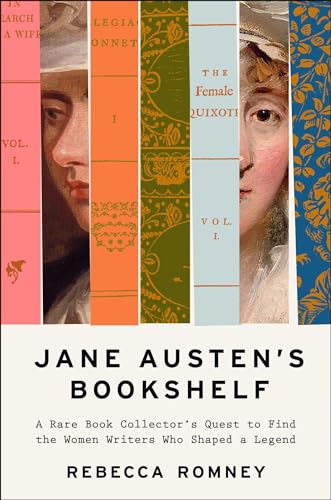
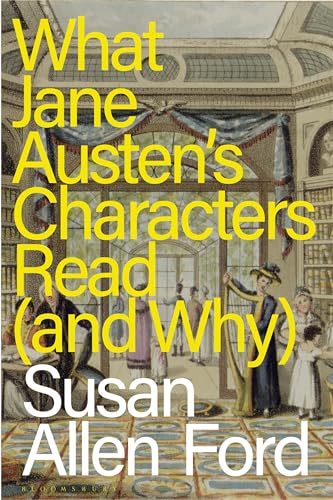
What Jane Austen’s Characters Read (and Why) – Susan Allen Ford
I must have read about this, or heard it on a podcast. I was very interested.
Here’s the blurb …
The first detailed account of Austen’s characters’ reading experience to date, this book explores both what her characters read and what their literary choices would have meant to Austen’s own readership, both at the time and today.
Jane Austen was a voracious and extensive reader, so it’s perhaps no surprise that many of her characters display a similar appetite for the written word, from Mr. Collins in Pride and Prejudice to Fanny Price in Mansfield Park. Beginning by looking at Austen’s own reading as well as her interest in readers’ responses to her work, the book then focuses on each of her novels, looking at the particular works that her characters read and unpacking the multiple (and often surprising) ways in which these inform the reading of Austen’s works. In doing so, it uses Austen’s own love of reading to invite us to rethink the way in which she thought about her characters and their lives beyond the novels.
This was fascinating. There is a chapter on each Austen novel (Mansfield Park gets two!). And the author describes how Austen is using contemporary literature in her novels. Ideas that the readers of the time would appreciate, and which add nuance to the novels. For example, in the chapter on Pride and Prejudice, Allen Ford discusses Conduct Literature – Fordyce’s Sermons, among others.
It is extraordinary and if I could only bring myself to read these books, I would have a greater insight into Austen’s novels.
It was very easy to read, no academic jargon, and Allen Ford has a conversational style.
I have put all of my unread books into a spreadsheet (all 240!) and I am using a random number generator to select a book to read. If I don’t want to read it, then I have to move it on.
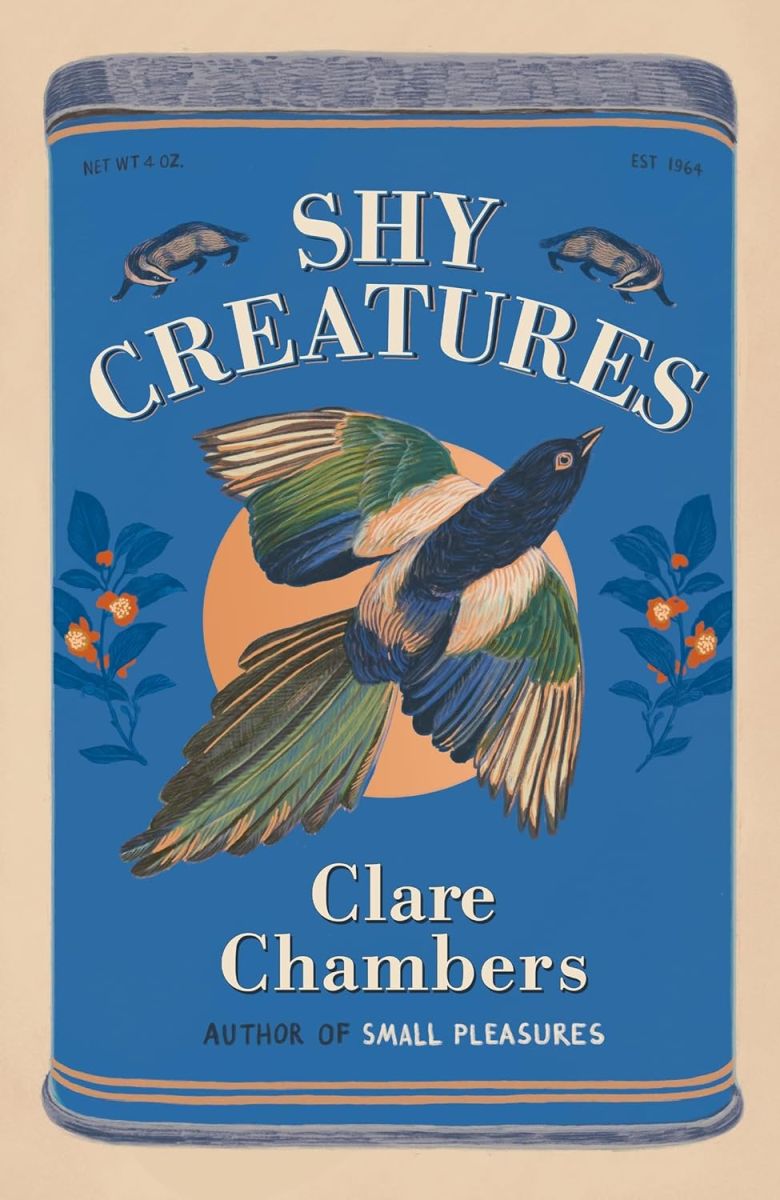
Shy Creatures was selected first. I enjoyed Small Pleasures, and so happily bought a large paperback version of this one.
Here’s the blurb …
In all failed relationships there is a point that passes unnoticed at the time, which can later be identified as the beginning of the decline. For Helen it was the weekend that the Hidden Man came to Westbury Park.
Croydon, 1964. Helen Hansford is in her thirties and an art therapist in a psychiatric hospital where she has been having a long love affair with a charismatic, married doctor. One spring afternoon they receive a call about a disturbance from a derelict house not far from Helen’s home. A mute, thirty-seven-year-old man called William Tapping, with a beard down to his waist, has been discovered along with his elderly aunt. It is clear he has been shut up in the house for decades, but when it emerges that William is a talented artist, Helen is determined to discover his story.
Shy Creatures is a life-affirming novel about all the different ways we can be confined, how ordinary lives are built of delicate layers of experience, the joy of freedom and the transformative power of kindness.
This was an interesting book, I enjoyed the insight into mental hospitals in the 1960s – it seemed a nice place to stay and the staff were kind (no Nurse Ratched!).
There was casual misogyny (as you would expect) and a bit of judgement around mental illness.
‘You mean a mental asylum?’ her mother had said when Helen called to tell her about her new appointment at Westbury Park. ‘Oh Helen.’
The characters are complex – Gil kind thoughtful and caring to his patients thinks nothing of cheating on his wife. William’s aunts, who obviously had their own issues, were trying to keep him safe, but denied him a normal life.
I think it is about our duty to fellow humans, to be kind and not to judge too quickly.
Here is one of my favourite quotes:
It surprised him how much time was taken up with the business of living; half the morning gone already and he hadn’t picked up a book or pencil. He experienced a belated appreciation for the many invisible offices performed without thanks by Aunt Elsie and Aunt Louisa. The jobs women did weren’t difficult, but they certainly ate up the hours.
How is Anne Tyler still writing? And still writing well? I have been a fan for quite some time.
Here’s the blurb …
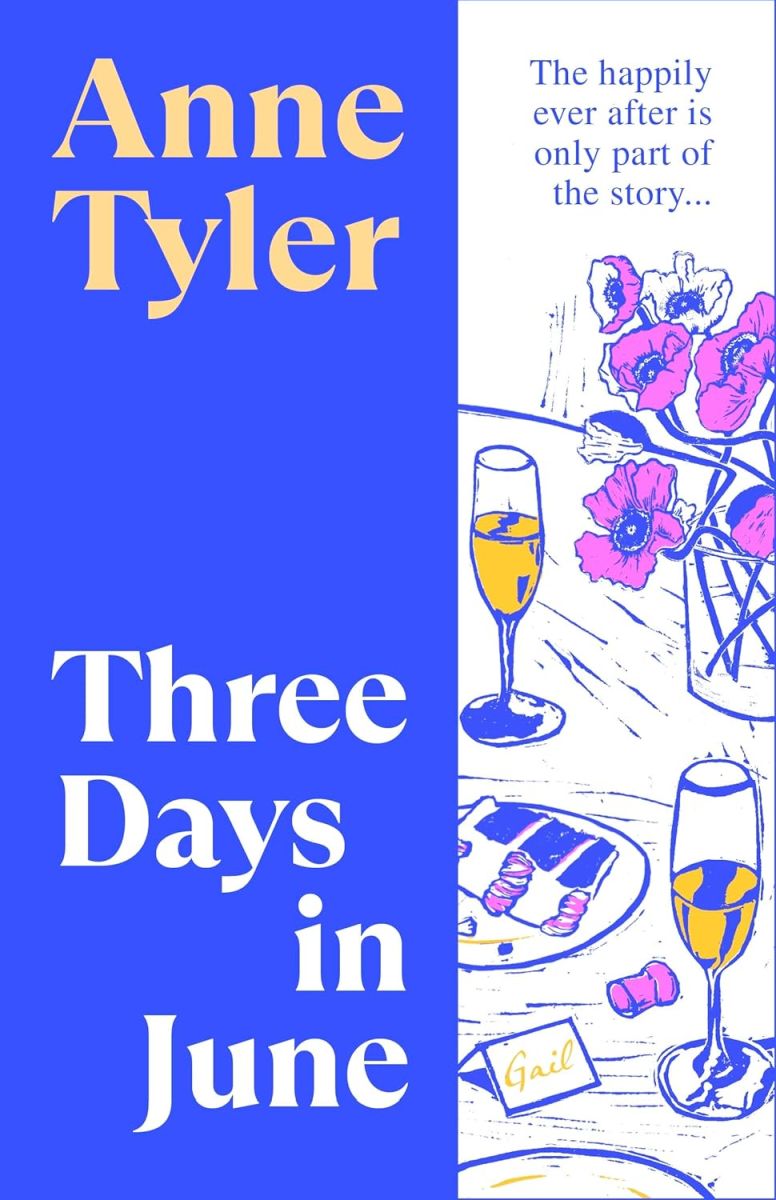
Gail Baines is having a bad day. To start with, she loses her job – or quits, depending who you ask. And then her ex-husband Max turns up at her door expecting to stay for their daughter’s wedding. He hasn’t even brought a suit. Instead, he brings with him memories, a calm maturity, a shared sense of humour – and a cat looking for a new home.
Over the course of the three busy days of the wedding, the past is stirred up for Gail, even as the future – in the shape of the happy couple Debbie and Kenneth – is already underway. But ‘happy’ takes many forms, and sometimes the younger generation has much to teach the older about secrets, acceptance and taking the rough with the smooth.
Told with deep sensitivity and a tart sense of humour, full of the joys and heartbreaks of love and marriage and family life, Three Days in June is a feast of a novel to savour in a single sitting.
People don’t tap their watches anymore; have you noticed?
This is the opening sentence and soon after we hear how Marilee has to have her heart re-started to get it beating correctly. There is definitely a theme of re-starts and second chances.
The story is told from Gail’s point of view, and unusually, I didn’t find her to be sympathetic, she is lacking empathy.
I wondered why it was that I had so many irritating people in my life.
Possibly it’s you Gail.
It’s beautifully written, with all of those ordinary things made extraordinary. Will Gail finally be able to express her feelings to Debbie and Max?
A rich, magical new book on belonging and identity, love and trauma, nature and renewal, from the Booker shortlisted author of 10 Minutes 38 Seconds in This Strange World.
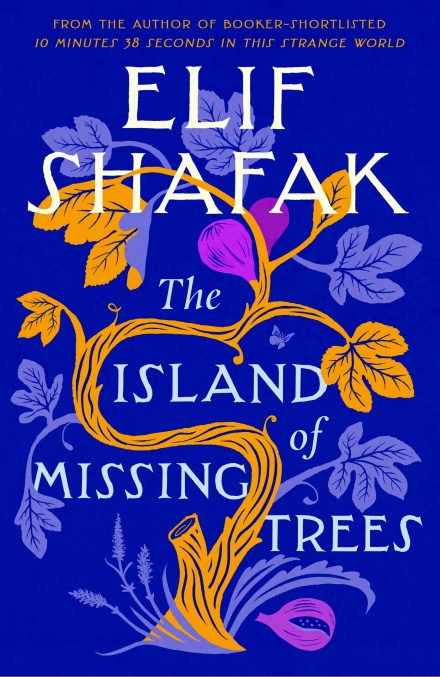
Two teenagers, a Greek Cypriot and a Turkish Cypriot, meet at a taverna on the island they both call home. In the taverna, hidden beneath garlands of garlic, chili peppers and creeping honeysuckle, Kostas and Defne grow in their forbidden love for each other. A fig tree stretches through a cavity in the roof, and this tree bears witness to their hushed, happy meetings and eventually, to their silent, surreptitious departures. The tree is there when war breaks out, when the capital is reduced to ashes and rubble, and when the teenagers vanish. Decades later, Kostas returns. He is a botanist looking for native species, but really, he’s searching for lost love.
Years later a Ficus carica grows in the back garden of a house in London where Ada Kazantzakis lives. This tree is her only connection to an island she has never visited — her only connection to her family’s troubled history and her complex identity as she seeks to untangle years of secrets to find her place in the world.
A moving, beautifully written and delicately constructed story of love, division, transcendence, history and eco-consciousness, The Island of Missing Trees is Elif Shafak’s best work yet.
First, I knew nothing about Cyprus and the Greek and Turkish struggle over it. The writing is beautiful – how does someone write so well in a second language? I particularly enjoyed the chapters from the point of view of the fig. The story moves around in time, so what you think you know about the characters turns out to be a false assumption. We get to knows the characters slowly, like what would happen if you meet them in person. Ada’s mother has died, then we understand her mother was unwell, then that she drinks too much, and finally that her death might have been suicide.
Some of my favourite quotes
A map is a two-dimensional representation with arbitrary symbols and incised lines that decide who is to be our enemy and who is to be our friend, who deserves our love and who deserves our hatred and who, our sheer indifference.
Her voice was like a flying carpet that lifted her up and carried her against her will.
Because that is what migrations and relocations do to us: when you leave your home for unknown shores, you don’t simply carry on as before; a part of you dies inside so another part can start all over again.
If families resemble trees, as they say, arborescent structures with entangled roots and individual branches jutting out at awkward angles, family traumas are like thick, translucent resin dripping from a cut in the bark. They trickle down generations.
You don’t fall in love in the midst of a civil war, when you are hemmed in by carnage and by hatred on all sides. You run away as fast as your legs can carry your fears, seeking basic survival and nothing else. With borrowed wings you take to the sky and soar away into the distance. And if you cannot leave, then you search for shelter, find a safe place where you can withdraw into yourself because now that everything has failed, all diplomatic negotiations and political consultations, you know it can only be an eye for an eye, hurt for hurt, and it is not safe anywhere outside your own tribe.
Because in real life, unlike in history books, stories come to us not in their entirety but in bits and pieces, broken segments and partial echoes, a full sentence here, a fragment there, a clue hidden in between,
It’s a beautiful, engrossing story full of hope and love, but also sadness and acknowledgement of the terrible things people do to one another.
Another Chief Inspector Gamache book! I love these novels.
Here’s the blurb …
It is Winter Carnival in Quebec City, bitterly cold and surpassingly beautiful. Chief Inspector Armand Gamache has come not to join the revels but to recover from an investigation gone hauntingly wrong. But violent death is inescapable, even in the apparent sanctuary of the Literary and Historical Society – where an obsessive historian’s quest for the remains of the founder of Quebec, Samuel de Champlain, ends in murder. Could a secret buried with Champlain for nearly 400 years be so dreadful that someone would kill to protect it?
Although he is supposed to be on leave, Gamache cannot walk away from a crime that threatens to ignite long-smoldering tensions between the English and the French. Meanwhile, he is receiving disquieting letters from the village of Three Pines, where beloved Bistro owner Olivier was recently convicted of murder. “It doesn’t make sense,” Olivier’s partner writes every day. “He didn’t do it, you know.” As past and present collide in this astonishing novel, Gamache must relive the terrible event of his own past before he can bury his dead.
For this one Gamache and Beauvois, both recovering from terrible injuries, separate and solve different murders. Beauvois in Three Pines looking into the Hermit’s murder (A Brutal Telling), and Gamache gets swept up into an investigation in Quebec City. Once again, the descriptions are magnificent – I want to go to Quebec City now.
The structure of this one was interesting as well. We know something terrible has happened, Gamache and Beauvois are both on leave, but the story is unfolded gradually told from their different perspectives.
One of the women in my book club mentioned this book and as I thought I should be better informed about the Middle East, I decided to read it.
Here’s the blurb …
A stunning exploration of the Greater Middle East, where lasting stability has often seemed just out of reach but may hold the key to the shifting world order of the twenty-first century
The Greater Middle East, which Robert D. Kaplan defines as the vast region between the Mediterranean and China, encompassing much of the Arab world, parts of northern Africa, and Asia, existed for millennia as the crossroads of empire: Macedonian, Roman, Persian, Mongol, Ottoman, British, Soviet, American. But with the dissolution of empires in the twentieth century, postcolonial states have endeavored to maintain stability in the face of power struggles between factions, leadership vacuums, and the arbitrary borders drawn by exiting imperial rulers with little regard for geography or political groups on the ground. In the Loom of Time, Kaplan explores this broad, fraught space through reporting and travel writing to reveal deeper truths about the impacts of history on the present and how the requirements of stability over anarchy are often in conflict with the ideals of democratic governance.
In The Loom of Time, Kaplan makes the case for realism as an approach to the Greater Middle East. Just as Western attempts at democracy promotion across the Middle East have failed, a new form of economic imperialism is emerging today as China’s ambitions fall squarely within the region as the key link between Europe and East Asia. As in the past, the Greater Middle East will be a register of future great power struggles across the globe. And like in the past, thousands of years of imperial rule will continue to cast a long shadow on politics as it is practiced today.
To piece together the history of this remarkable place and what it suggests for the future, Kaplan weaves together classic texts, immersive travel writing, and a great variety of voices from every country that all compel the reader to look closely at the realities on the ground and to prioritize these facts over ideals on paper. The Loom of Time is a challenging, clear-eyed book that promises to reframe our vision of the global twenty-first century.
It is clear that Kaplan has spent a lot of time travelling in the Middle East (over a number of years), thinking about it and researching it. Although it was recently published, it was before Trump’s second presidency, which I think will have a profound impact on world politics.
I thought about anarchy and autocracy and how the latter might be preferred. There is information about the history – country by country – the revolutions, the ethnic groups, and the religions.
I was going to Tasmania for a holiday and I wanted to read a Tasmanian author (I think Robbie Arnott is from Launceston). I read The Rain Heron, so I was familiar with his work.
Here’s the blurb …
In the distant highlands, a puma named Dusk is killing shepherds. Down in the lowlands, twins Iris and Floyd are out of work, money and friends. When they hear that a bounty has been placed on Dusk, they reluctantly decide to join the hunt. As they journey up into this wild, haunted country, they discover there’s far more to the land and people of the highlands than they imagined. And as they close in on their prey, they’re forced to reckon with conflicts both ancient and deeply personal.
This is set in Australia because there are kangaroos, but I couldn’t say where. I laughed about the pumas being imported to hunt something else introduced, but preferring to eat the sheep instead – very Australian, cane toads anyone?
The descriptions of the landscape are magnificent, and I particularly enjoyed Iris’s connection to the highlands (her sense of peace and stillness).
The conflict between pastoralists and nature, pastoralists and the first people is a feature of this novel, but not in an overt manner (we’re not being beaten over the head here).
It does have an ambiguous ending, but I am imagining everyone happily living in Brazil.
Some quotes
And perhaps it was this mixture of wine and song; perhaps it was the hours spent in the company of cold mountains and still water, perhaps it was her lingering awareness of the ghostly grove surrounding the tavern; perhaps it was because she was momentarily free of Floyd, while knowing he was safe; perhaps it was the fatigue at the end of a hard day; perhaps it was all of it combined that made Iris lean back on her stool and feel a thin but taut connection to these things that were new to her, that were bright and strange, that she did not understand.
But it was not a claustrophobic feeling; there was pleasure in moving through it all, as if she was slowly discovering the right way – or perhaps just her way – to move through an old world.
She felt like a broom had been pulled through her, stiff bristles raking her straight, clean, her mind filling with a sense of unhurried purpose.
That last one in particular! How good is he at putting words together?