Category Archives: 5

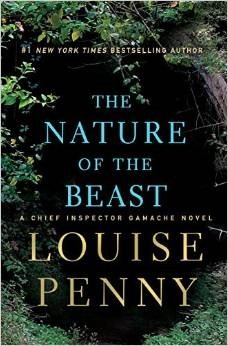
How the Light Gets In (#9) – Louise Penny

How The Light Gets In – Louise Penny

I love Inspector Gamache books and after the last one – The Beautiful Mystery – I had to read this one.

I wondered if this was the planned ending for these novels – it ends in a very satisfying manner (all mysteries solved and relationships sorted). As there is no gap in the publishing schedule, maybe this one was never intended to be the end (all good because I love them and I have about ten more to go).

Here’s the blurb …

Christmas is approaching, and in Québec it’s a time of dazzling snowfalls, bright lights, and gatherings with friends in front of blazing hearths. But shadows are falling on the usually festive season for Chief Inspector Armand Gamache of the Sûreté de Québec. Most of his best agents have left or been transferred out of the Homicide Department; his old friend and lieutenant Jean-Guy Beauvoir hasn’t spoken to him in months; and hostile forces are lining up against him.

When Gamache receives a message from Myrna Landers, in the village of Three Pines, he welcomes the chance to get away from the city for a few hours. Myrna’s longtime friend, who was due to spend Christmas in the village, has failed to arrive. When Chief Inspector Gamache presses for information, Myrna is reluctant to reveal her friend’s name. Mystified, Gamache soon discovers the missing woman was once one of the most famous people not just in North America but in the world, and now goes unrecognized by virtually everyone except the mad, brilliant poet Ruth Zardo.

As events come to a head at the Sûreté, Gamache is drawn ever deeper into the world of Three Pines. Increasingly, he is not only investigating the disappearance of Myrna’s friend but also seeking a safe place for himself and his still-loyal colleagues—if such a refuge exists amid mounting danger. Is there peace to be found even in Three Pines, and at what cost to Gamache and the people he holds dear?

Gamache is quite sneaky in this one and it is only at the end, you appreciate how sneaky he has been over several years – definitely playing the long game.

There is beautiful settings, the usual cast of characters (although Reine-Marie is in Paris) and an interesting case to solve as well as the shenanigans in the Sûreté.

A review.

1 Comment

Filed under 5, Audio, Crime, Fiction, Mystery, Recommended

An Academic Affair – Jodi McAlister

An Academic Affair – Jodi McAlister

I heard Jodi McAlister interviewed on That Rom Com Pod, and it sounded right up my alley. Dual point of view, rivals to lovers and a bit of a homage to Anne of Green Gables.

Here’s the blurb …

From the “masterly” (The New York Times) Jodi McAlister, a charming new romance about two English professors who embark on a fake relationship…only to discover that it may be harder to pretend than they realized.

Sadie Shaw and Jonah Fisher have been academic rivals since they first crossed paths as undergraduates in the literature department thirteen years ago. Now that a highly coveted teaching opportunity has come up, their rivalry hits epic proportions. Jonah needs the job to move closer to his recently divorced sister and her children, while Sadie needs the financial security and freedom of a full-time teaching position.

When Sadie notices that the job offers partner hire, however, she hatches a plot to get them both the job. All they must do is get legally married. It’s a simple win-win solution but when sparks begin to fly, it becomes clear that despite their education, these two may not have thought this whole thing through.

I really enjoyed it (although I did think it could have ended a bit earlier). It is well-written, witty, and both Sadie and Jonah have a bit of insight and they develop over the story. I loved the Australian setting, and I learned a new word ‘precariat’ (a social class characterized by precarious, insecure, and unstable work conditions, often lacking benefits and leading to a sense of social and economic vulnerability).

I loved all of Jonah’s footnotes.

There is also a marriage of convenience – how amazing is that in a modern novel?

From the podcast, I understand this is the first of a trilogy, so I am looking forward to the next two (I think I might even know who the protagonists are)

A review.

Leave a Comment

Filed under 5, Australian, Digital, Fiction, Romance

The Beautiful Mystery (#8) – Louise Penny

The Beautiful Mystery – Louise Penny

I do like Inspector Gamache books. I have been listening to this one – read by Adam Sims.

Here is the blurb …

No outsiders are ever admitted to the monastery of Saint-Gilbert-Entre-les-Loups, hidden deep in the wilderness of Québec, where two dozen cloistered monks live in peace and prayer. Ironically, for a community that has taken a vow of silence, the monks have become world-famous for their glorious voices, raised in ancient chants whose effect on both singer and listener is so profound it is known as “the beautiful mystery.”

But when the renowned choir director is murdered, the lock on the monastery’s massive wooden door is drawn back to admit Chief Inspector Armand Gamache and Jean-Guy Beauvoir of the Sûreté du Québec. There they discover disquiet beneath the silence, discord in the apparent harmony. But before finding the killer, before restoring peace, the Chief must first consider the divine, the human, and the cracks in between.

This one is not set in Three Pines, but in an isolated monastery (Saint-Gilbert-Entre-les-Loups). It has all things that I love about Gamache novels – great settings, interesting plot, and intriguing characters. There is some political intrigue in the Sûreté bureaucracy – Gamache didn’t get rid of all of the rot when he arrested Arnaud – I think it will continue for a few more novels. The way this one ended (no spoilers) made me a bit sad, so I have quickly started number 9.

A review.

1 Comment

Filed under 5, Audio, Crime, Fiction, Recommended

Jane Austen’s Book Shelf – Rebecca Romney

Jane Austen’s Bookshelf – Rebecca Romney

I am not sure where I first heard about this? Maybe a JASNA newsletter?

My random number generator selected it. There has been a bit of a Jane Austen theme for me this year.

Here’s the blurb …

Long before she was a rare book dealer, Rebecca Romney was a devoted reader of Jane Austen. She loved that Austen’s books took the lives of women seriously, explored relationships with wit and confidence, and always, allowed for the possibility of a happy ending. She read and reread them, often wishing Austen wrote just one more.

But Austen wasn’t a lone genius. She wrote at a time of great experimentation for women writers—and clues about those women, and the exceptional books they wrote, are sprinkled like breadcrumbs throughout Austen’s work. Every character in Northanger Abbey who isn’t a boor sings the praises of Ann Radcliffe. The play that causes such a stir in Mansfield Park is a real one by the playwright Elizabeth Inchbald. In fact, the phrase “pride and prejudice” came from Frances Burney’s second novel Cecilia. The women that populated Jane Austen’s bookshelf profoundly influenced her work; Austen looked up to them, passionately discussed their books with her friends, and used an appreciation of their books as a litmus test for whether someone had good taste. So where had these women gone? Why hadn’t Romney—despite her training—ever read them? Or, in some cases, even heard of them? And why were they no longer embraced as part of the wider literary canon?

Jane Austen’s Bookshelf investigates the disappearance of Austen’s heroes—women writers who were erased from the Western canon—to reveal who they were, what they meant to Austen, and how they were forgotten. Each chapter profiles a different writer including Frances Burney, Ann Radcliffe, Charlotte Lennox, Charlotte Smith, Hannah More, Elizabeth Inchbald, Hester Lynch Thrale Piozzi, and Maria Edgeworth—and recounts Romney’s experience reading them, finding rare copies of their works, and drawing on connections between their words and Austen’s. Romney collects the once-famed works of these forgotten writers, physically recreating Austen’s bookshelf and making a convincing case for why these books should be placed back on the to-be-read pile of all book lovers today. Jane Austen’s Bookshelf will encourage you to look beyond assigned reading lists, question who decides what belongs there, and build your very own collection of favorite novels.

I really enjoyed this – I promptly downloaded Evelina by Frances Burney, and I already have a copy of The Mysteries of Udolpho, and I will be sourcing the other authors as well.

Ms Romney has a lovely conversational style of writing. I always like a mixture of personal information and literary information, and her search for particular editions of novels was fascinating. How women authors have disappeared from the canon will make your blood boil.

A review.

Leave a Comment

Filed under 5, Digital, Memoir, Non-Fiction, Recommended

A Trick of the Light – Louise Penny

A Trick of the Light – Louise Penny

Another Inspector Gamache novel – number 7 (I still have plenty to go)

Here’s the blurb …

“Hearts are broken,” Lillian Dyson carefully underlined in a book. “Sweet relationships are dead.”

But now Lillian herself is dead. Found among the bleeding hearts and lilacs of Clara Morrow’s garden in Three Pines, shattering the celebrations of Clara’s solo show at the famed Musée in Montréal. Chief Inspector Gamache, the head of homicide at the Sûreté du Québec, is called to the tiny Québec village and there he finds the art world gathered, and with it a world of shading and nuance, a world of shadow and light. Where nothing is as it seems. Behind every smile there lurks a sneer. Inside every sweet relationship there hides a broken heart. And even when facts are slowly exposed, it is no longer clear to Gamache and his team if what they’ve found is the truth, or simply a trick of the light.

I do like these novels and all of the characters (well most of the characters – I still haven’t warmed to Peter (Clara’s husband)). I love the writing and the settings, and I am hoping for a bit of romance in the next one. For me these novels aren’t really about the crime, but how the characters live together with kindness and empathy.

A review

Leave a Comment

Filed under 5, Audio, Crime, Fiction, Recommended

Who Will Run the Frog Hospital – Lorrie Moore

Who Will Run the Frog Hospital – Lorrie Moore

I had heard about this novel – who can forget that title? – and, so when I saw it at Readings I had to buy it.

Here’s the blurb …

In this moving, poignant novel by the bestselling author of Birds of America we share a grown woman’s bittersweet nostalgia for the wildness of her youth.
 
The summer Berie was fifteen, she and her best friend Sils had jobs at Storyland in upstate New York where Berie sold tickets to see the beautiful Sils portray Cinderella in a strapless evening gown. They spent their breaks smoking, joking, and gossiping. After work they followed their own reckless rules, teasing the fun out of small town life, sleeping in the family station wagon, and drinking borrowed liquor from old mayonnaise jars. But no matter how wild, they always managed to escape any real danger—until the adoring Berie sees that Sils really does need her help—and then everything changes.

First, this book is beautifully written – witty and thoughtful. For me, it was about the intense friendships and expectations of young women countered by the disillusions of middle-age. Ordinary people living their lives and have the occasional extraordinary experience. This is one of my favourite novels this year.

Here are some of my favourite quotes:

I often think that at the centre of me is a voice that at last did split, a house in my heart so invaded with other people and their speech, friends I believed I was devoted to, people whose lives I can only guess at now, that it leaves me with the impression I am simply a collection of them, that they all existed for themselves, but had inadvertently formed me, then vanished. But, what: Should I have been expected to create my own self, out of nothing, out of thin, thin air and alone?

In his iconic way our father remained very much ours, And in the long shadows of his neglect, we fashioned our own selves, quietly improvised our own rules, as kids did in America, in the fatherless fifties and sixties.

When later in life she [Sils] would appear – in a dream with a group of people; or in a thought about friends I never saw anymore, those I had consented to lose and live without…

She was, probably, the nicest person I had ever known. Yet in the years following, for myself, I abandoned even believing in niceness or being nice. I could scarcely control myself, wherever I was, from telling everyone, anyone, what I thought of them. It was an urge, a compulsion, my tongue bitten a futile blue.

I read in this article, that the novel’s title comes from a painting Ms Moore bought.

Leave a Comment

Filed under 5, Fiction, Paper, Recommended

Wives and Daughters – ELizabeth Gaskell

Wives and Daughters – Elizabeth Gaskell

I have read this before and watched the BBC adaptation. The theme for my book club is ‘wives’ and so, this seemed an appropriate choice.

Here’s the blurb …

Molly Gibson is a young girl who has been raised by her widowed father. During a visit to the local aristocratic ‘great house’ of Lord and Lady Cumnor, she loses her way in the estate and falls asleep under a tree. When she wakes up, she gets distressed at the thought of spending the night at the mansion, but to her relief, her father arrives to collect her. Seven years later, Molly is an attractive and rather unworldly young woman, which arouses the interest of one of her father’s apprentices. Mr. Gibson discovers the young man’s secret affection and sends Molly to stay with the Hamleys of Hamley Hall. Molly falls in love with Roger, the younger son of Mrs. Hamley, but it appears that he is more interested in Cynthia, Molly’s new stepsister from her father’s second marriage.
Elizabeth Gaskell (1810-1865) was an English novelist and short story writer. Her novels offer a detailed portrait of the lives of many strata of Victorian society, including the very poor, and are of interest to social historians as well as lovers of literature. Some of Gaskell’s best known novels are Cranford, North and South, and Wives and Daughters.

I listened to this, it was read by Prunella Scales, read very well, but I kept thinking of Fawlty Towers.

This was fabulous – the characters in particular. I think we all know people like Mrs. Kirkpatrick, and then Mrs. Gibson, self-serving and jealous, but with a veneer of kindness. The blustering Lady Cumnor who knows how everyone should live and tells them so (shades of Lady Catherine De Burgh, but much kinder). And then there are the lovely characters, Roger, Molly, Lady Harriet and Mrs Hamley. Kind and thoughtful.

The setting is good too – I could see Hamley Hall and The Towers, as well as the village of Hollingford.

What was it about? People chosing their life partners. Some of the partnerships were good – Lord and Lady Cumnor, Squire Hamley and his wife, the Browning sisters, but Dr and Mrs. Gibson were ill-suited. She wanted to be supported financially and he wanted a mother for his daughter. They didn’t get to know each other well enough to see how very ill-suited they were. Cynthia is a flirt and broke some hearts (including Roger), but might settle in the end. I think the key message is not to rush into anything, but take time to get to know someone well.

There is a read-along happening here.

Leave a Comment

Filed under 5, Audio, Fiction, Recommended, Romance, Serious

What Jane Austen’s Characters Read (and Why) – Susan Allen Ford

What Jane Austen’s Characters Read (and Why) – Susan Allen Ford

I must have read about this, or heard it on a podcast. I was very interested.

Here’s the blurb …

The first detailed account of Austen’s characters’ reading experience to date, this book explores both what her characters read and what their literary choices would have meant to Austen’s own readership, both at the time and today.

Jane Austen was a voracious and extensive reader, so it’s perhaps no surprise that many of her characters display a similar appetite for the written word, from Mr. Collins in Pride and Prejudice to Fanny Price in Mansfield Park. Beginning by looking at Austen’s own reading as well as her interest in readers’ responses to her work, the book then focuses on each of her novels, looking at the particular works that her characters read and unpacking the multiple (and often surprising) ways in which these inform the reading of Austen’s works. In doing so, it uses Austen’s own love of reading to invite us to rethink the way in which she thought about her characters and their lives beyond the novels.

This was fascinating. There is a chapter on each Austen novel (Mansfield Park gets two!). And the author describes how Austen is using contemporary literature in her novels. Ideas that the readers of the time would appreciate, and which add nuance to the novels. For example, in the chapter on Pride and Prejudice, Allen Ford discusses Conduct Literature – Fordyce’s Sermons, among others.

It is extraordinary and if I could only bring myself to read these books, I would have a greater insight into Austen’s novels.

It was very easy to read, no academic jargon, and Allen Ford has a conversational style.

A review.

1 Comment

Filed under 5, Non-Fiction, Paper, Recommended

Great Big Beautiful Life – Emily Henry

Great Big Beautiful Life – Emily Henry

I pre-ordered this one, having been a fan since 2022.

Here’s the blurb …

Two writers compete for the chance to tell the larger-than-life story of a woman with more than a couple of plot twists up her sleeve in this dazzling and sweeping new novel from Emily Henry.

Alice Scott is an eternal optimist still dreaming of her big writing break. Hayden Anderson is a Pulitzer-prize winning human thundercloud. And they’re both on balmy Little Crescent Island for the same reason: To write the biography of a woman no one has seen in years–or at least to meet with the octogenarian who claims to be the Margaret Ives. Tragic heiress, former tabloid princess, and daughter of one of the most storied (and scandalous) families of the 20th Century.

When Margaret invites them both for a one-month trial period, after which she’ll choose the person who’ll tell her story, there are three things keeping Alice’s head in the game.

One: Alice genuinely likes people, which means people usually like Alice—and she has a whole month to win the legendary woman over.

Two: She’s ready for this job and the chance to impress her perennially unimpressed family with a Serious Publication

Three: Hayden Anderson, who should have no reason to be concerned about losing this book, is glowering at her in a shaken-to-the core way that suggests he sees her as competition.

But the problem is, Margaret is only giving each of them pieces of her story. Pieces they can’t swap to put together because of an ironclad NDA and an inconvenient yearning pulsing between them every time they’re in the same room.

And it’s becoming abundantly clear that their story—just like the tale Margaret’s spinning—could be a mystery, tragedy, or love ballad…depending on who’s telling it.

What I like about Emily Henry’s novels is the guaranteed happy ending, but more than that I like that the thing that is keeping the couple separate is reasonable, not some villain or some made up conflict (‘you’re to good for me’). The writing is good, and there is some emotional heft to the story.

I just had a long weekend (ANZAC day on Friday) and I started and finished it. Easy reading, but very enjoyable.

Some quotes

“Clickbait,” I say. “before the advent of clicking.”
“More or less,” she agrees. “That’s what my family used to make themselves very rich – and like Dove Franklin says, powerful too. But in the end, it doesn’t matter. Even if you’re the one to build the monster, you’re never going to be able to control it. It’ll gladly eat you alive and floss with your bones, once it’s finished with everyone else.

“No one knows how ‘normal’ or ‘strange’ their own life is until they see the alternative.”

A review

Leave a Comment

Filed under 5, Fiction, Paper, Romance

Shy Creatures – Clare Chambers

Shy Creatures – Clare Chambers

I have put all of my unread books into a spreadsheet (all 240!) and I am using a random number generator to select a book to read. If I don’t want to read it, then I have to move it on.

Shy Creatures was selected first. I enjoyed Small Pleasures, and so happily bought a large paperback version of this one.

Here’s the blurb …

In all failed relationships there is a point that passes unnoticed at the time, which can later be identified as the beginning of the decline. For Helen it was the weekend that the Hidden Man came to Westbury Park.

Croydon, 1964. Helen Hansford is in her thirties and an art therapist in a psychiatric hospital where she has been having a long love affair with a charismatic, married doctor.
One spring afternoon they receive a call about a disturbance from a derelict house not far from Helen’s home. A mute, thirty-seven-year-old man called William Tapping, with a beard down to his waist, has been discovered along with his elderly aunt. It is clear he has been shut up in the house for decades, but when it emerges that William is a talented artist, Helen is determined to discover his story.

Shy Creatures is a life-affirming novel about all the different ways we can be confined, how ordinary lives are built of delicate layers of experience, the joy of freedom and the transformative power of kindness.

This was an interesting book, I enjoyed the insight into mental hospitals in the 1960s – it seemed a nice place to stay and the staff were kind (no Nurse Ratched!).

There was casual misogyny (as you would expect) and a bit of judgement around mental illness.

‘You mean a mental asylum?’ her mother had said when Helen called to tell her about her new appointment at Westbury Park. ‘Oh Helen.’

The characters are complex – Gil kind thoughtful and caring to his patients thinks nothing of cheating on his wife. William’s aunts, who obviously had their own issues, were trying to keep him safe, but denied him a normal life.

I think it is about our duty to fellow humans, to be kind and not to judge too quickly.

Here is one of my favourite quotes:

It surprised him how much time was taken up with the business of living; half the morning gone already and he hadn’t picked up a book or pencil. He experienced a belated appreciation for the many invisible offices performed without thanks by Aunt Elsie and Aunt Louisa. The jobs women did weren’t difficult, but they certainly ate up the hours.

A review

Leave a Comment

Filed under 5, Fiction, Historical Fiction, Paper, Recommended