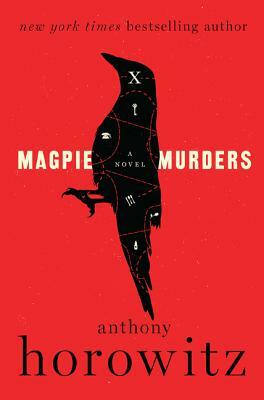
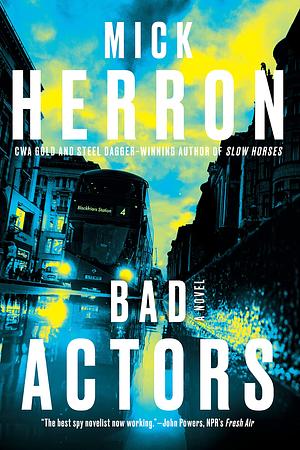
I have been making my way through Mick Herron’s Slow Horses series and when I saw the adaptation of this on Apple, I decided to give it a go.
Here’s the blurb …
CWA Gold Dagger winner Mick Herron’s debut novel introduces Sarah Tucker, whose search for a missing child unravels a murderous conspiracy.
When a house explodes in a quiet Oxford suburb and a young girl disappears in the aftermath, Sarah Tucker—a young married woman, bored and unhappy with domestic life—becomes obsessed with finding her. Accustomed to dull chores in a childless household and hosting her husband’s wearisome business clients for dinner, Sarah suddenly finds herself questioning everything she thought she knew, as her investigation reveals that people long believed dead are still among the living, while the living are fast joining the dead. What begins in a peaceful neighborhood reaches its climax on a remote, unwelcoming Scottish island as the search puts Sarah in league with a man who finds himself being hunted down by murderous official forces.
I didn’t realise this was his debut novel – it is certainly very good, with all of his trademarks. Self-serving spooks, witty dialogue and no character is safe (there is no plot armour).
It’s twisty and turny and there was one very unexpected event (no spoilers). I am looking forward to watching the adaptation now.
Last year I read all of the Booker prize short listed novels and my plan was to try to do that again this year. However, I only read one (The Land in Winter) before the winner was announced (Flesh). I saw the short films the Booker prize people made for each of the short listed novels, and this one appealed to me.
Here’s the blurb …
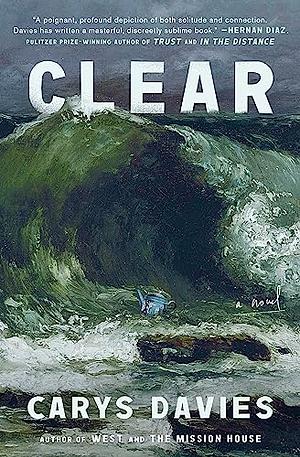
One woman, the performance of a lifetime. Or two. An exhilarating, destabilising Möbius strip of a novel that asks whether we ever really know the people we love.
Two people meet for lunch in a Manhattan restaurant. She’s an accomplished actress in rehearsals for an upcoming premiere. He’s attractive, troubling, young – young enough to be her son. Who is he to her, and who is she to him? In this compulsively readable, brilliantly constructed novel, two competing narratives unspool, rewriting our understanding of the roles we play every day – partner, parent, creator, muse – and the truths every performance masks, especially from those who think they know us most intimately.
I don’t want to spoil this for anyone, so I am just going to write that it is a novel in two parts, and the second part upends everything you thought you knew from part one.
There is a single narrator – a middle aged woman – whose name we don’t know. There is no exposition. She doesn’t give us information like who is Tomas? (her husband it turns out). There is a fabulous sense of place – it felt like a witty New York movie. And I enjoyed all of her musings on the craft of acting.
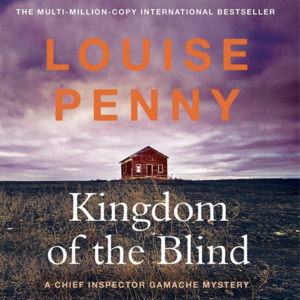
I do like a Gamache story (I think there is 20 of them!).
Here’s the blurb for this one…
When a mysterious figure appears in Three Pines one cold November day, Armand Gamache and the rest of the villagers are at first curious. Then wary. Through rain and sleet, the figure stands unmoving, staring ahead.
From the moment the creature’s shadow falls over the village, Gamache, now Chief Superintendent of the Sûreté du Quebec, suspects it has deep roots and a dark purpose. Yet he does nothing. What can he do? Only watch and wait. And hope his mounting fears are not realized.
But when the figure vanishes overnight and a body is discovered, it falls to Gamache to discover if a debt has been paid or levied.
Months later, on a steamy July day, as the trial for the accused begins in Montréal, Chief Superintendent Gamache continues to struggle with actions he set in motion that bitter November from which there is no going back. More than the accused is on trial. Gamache’s own conscience is standing in judgment.
In her latest utterly gripping book, number-one New York Times bestselling author Louise Penny shatters the conventions of the crime novel to explore what Gandhi called the court of conscience. A court that supersedes all others.
This story is told over two time-frames. When the murder occurred (around Halloween) and when the murderer went on trial (July the following year). There are sneaky things afoot – a hidden door, perjury, feigned incompetence and a few red herrings as well.
Like all of the Gamache novels, it is beautifully written and we learn a bit about Cobradors (here is an article about them), although our Cobrador is more of a conscience than a debt collector.
I watched the 2011 TV adaptation (which is great), then I read a paper copy, and now I have listened to it. Clearly a bit of a favourite.
Here’s the blurb …
Winifred Holtby’s masterpiece is a rich evocation of the lives and relationships of the characters of South Riding. Sarah Burton, the fiery young headmistress of the local girls’ school; Mrs Beddows, the district’s first alderwoman—based on Holtby’s own mother; and Robert Carne, the conservative gentleman-farmer locked in a disastrous marriage—with whom the radical Sarah Burton falls in love. Showing how public decisions can mold the individual, this story offers a panoramic and unforgettable view of Yorkshire life.
I really enjoyed this novel. I think it shows a slice of rural life in England between the wars. The machinations of the local council, the living conditions of the poor (lack of sanitation, not to mention birth control), the lack of welfare services (I am thinking of Lydia having to leave school to look after her siblings after her mother dies), but there is also community spirit and a hope that things will improve.
I always like a reading memoir and I follow Daisy on substack. Clearly, I was going to want this book.
Here’s the blurb …
Daisy Buchanan doesn’t have the answer – but she’s found something to soothe her incessant questioning. When Daisy first felt worry consume her as a child, she turned to the wonder of reading. Somehow, as a grown-up (or a person trying to be one) she turned to food, alcohol and online shopping instead, but these momentary highs made her feel lower still. Eventually diagnosed with General Anxiety Disorder, she returned to reading and soon discovered that losing herself in a good book helped her find so much her confidence through characters, her sexuality through racy romps and more and more peace with every page.
In READ YOURSELF HAPPY, Daisy Buchanan – writer, broadcaster and host of the You’re Booked podcast – combines her own journey, the wisdom of the characters, writers and literary worlds she has loved and the advice of experts to help you read yourself calmer, read yourself romantic, read yourself free from addiction and so much more. This book will help you form one of the healthiest habits you already have at your fingertips.
This was a really personal journey about reading and how books can heal us and help us in a myriad of ways – show us different ways of living and being.
I enjoyed the first Peter Wimsey story, so when I was looking for something easy to listen to (after Villette), I chose this one. I am very keen to get to Gaudy Night, but that is book number 10.
Here’s the blurb …
Rustic old Riddlesdale Lodge was a Wimsey family retreat filled with country pleasures and the thrill of the hunt — until the game turned up human and quite dead. He lay among the chrysanthemums, wore slippers and a dinner jacket and was Lord Peter’s brother-in-law-to-be. His accused murderer was Wimsey’s own brother, and if murder set all in the family wasn’t enough to boggle the unflappable Lord Wimsey, perhaps a few twists of fate would be — a mysterious vanishing midnight letter from Egypt…a grieving fiancee with suitcase in hand…and a bullet destined for one very special Wimsey.
I love everything about these novels. The settings, the language, the way of life, the characters – Lord Peter, Bunter and Inspector Parker (clearly in love with Lady Mary). I like how the crimes are solved. But it’s not just a cozy mystery they have some emotional heft to them.
This was long listed for the Women’s Prize for non-fiction in 2024. I promptly bought it and I have just finished it.
Here’s the blurb …
The gripping story of three young women who came of age and into power in a world dominated by men.
Orphaned from infancy, Catherine de’Medici endured a tumultuous childhood. Married to King Henry II of France, she was widowed by forty, only to become the power behind the throne during a period of intense civil strife. In 1546 Catherine gave birth to a daughter, Elisabeth de Valois, who would become Queen of Spain. Two years later Catherine welcomed to her nursery the beguiling young Mary, Queen of Scots, who would become her daughter-in-law.
These years at the French court bound Catherine, Elisabeth and Mary to one another through blood and marriage, alliance and friendship, love and filial piety – bonds that were tested when they were forced to part and take on new roles in different kingdoms. As queens, they lived through the sea changes that transformed sixteenth century Europe; a time of expanding empires, religious discord and popular revolt. They would learn that to rule was to wage a constant war against the deeply entrenched attitudes of their time. A crown could exalt a young women equally it could destroy her.
This was fascinating. I already knew a bit about Mary, Queen of Scots, having read Embroidering Her Truth by Clare Hunter, and I had heard of Catherine de’Medici (and I have watched a bit of The Serpent Queen), but I had never even heard of Elizabeth de Valois.
This book has a nice easy style (conversational almost), not burdened by jargon. The writing is good and the events so compelling, and sometimes exciting, it’s like reading an historical fiction novel.
I reserved this at the library, it took about a year for it to be my turn, but once I got started, I knew I needed my own copy.
Here is the blurb …
Phoebe Stone arrives at a grand beachside hotel in Rhode Island wearing her best dress and her least comfortable shoes. Immediately she is mistaken for one of the wedding people – but she is actually the only guest at the Cornwall Inn who isn’t here for the big event.
When the bride discovers her elaborate destination wedding could be ruined by a divorced and depressed stranger, she is furious. Lila has spent months accounting for every detail and every possible disaster – except for, well, Phoebe… Soon both women find their best laid plans derailed and an unlikely confidante in one another.
I have been trialing a new approach to reading – to ensure that I am actually taking things in – I have been writing chapter summaries (after reading each chapter twice) along with my thoughts and comments.
A snapshot of my summaries (I am using OneNote)
It did occur to me when I got to the end of this novel that I should have uploaded my summaries one at a time – or at least my thoughts on that chapter. Don’t worry, I am not going to inflict them all on you now.
This novel resonanted with me, the characters were incredibly life-like in all of their messy, kind and ordinary ways.
It was about honesty – being honest with ourselves and others. About having the confidence to choose the bigger life rather than drifting.
Phoebe is devasted by her divorce (to the point of suicide). She realises over the days of the wedding (yes days!) that her life has been contained – always trying to do the right thing, and to not be too much. When she no longer cares what people think she starts speaking her truth. I think many women would identify with this – trying to be good, all things to all people.
Lila wants the wedding to be perfect because then her life, and her marriage will be perfect.
And Gary? Well he’s just standing by letting Lila make all of the plans.
There are some funny moments and some very poignant ones.
All in all a very satisfying novel.
Some of my favourite quotes
Her whole life felt like work now. Even the parts that used to be the most fun, like reading over the summer or orgasming during sex or having conversations with her husband at dinner. They felt like things she had to be really good at now, in order to prove that everything was normal.
“I don’t know. It’s just what I believe,” Phoebe says. One of the few things Nietzsche wrote that she agreed with in graduate school. “Seems more plausible that Hell is some revenge fantasy concocted by unhappy people so they could punish all the happy people in their minds.”
But that is how it happens, she realises. One moment of pretending to be great leads to the next moment of pretending to be great, and ten years later, she realises she has spent her entire life just pretending to be great.
She doesn’t have to be anything, ever. Her husband is not watching. Her father is not watching. Nobody was ever really watching, except Phoebe. Phoebe was the only person waiting in the dark to condemn herself for every single thing when the day was over.
And it was perfect. It really was. But life is strange, always thinking this one thing is going to make you happy, because then you get it, and then maybe you’re not as happy as you imagined you would be, because every day is still just every day. Like the happiness becomes so big, you have no choice but to live inside of it, until you can no longer see it or feel it. And so you start to fixate on something else – you want a child, and then the child is here, and that happiness is so big, it begins to feel like nothing. Like just the air around you.
You do things in the moment for the person you hope you might be two years from now. You don’t kill yourself when you’re sad because one day you might not be sad, and you might want to go surfing with a man you really like?
To collect is to care more than most. But it is also to hoard. To take things out of the world and make them only yours.
As you’re probably all aware, this novel has been long-listed for the Booker Prize. It sounded appealing so I bought a kindle copy (it’s not available in paper in Australia yet) and an audible copy. In the end I listened to it.
Here’s the blurb …
Trinidad, 1980: Dawn Bishop, aged 16, leaves her home and journeys across the sea to Venezuela. There, she gives birth to a baby girl, and leaves her with nuns to be given up for adoption.
Dawn tries to carry on with her life – a move to England, a marriage, a career, two sons, a divorce – but through it all, she still thinks of the child she had in Venezuela, and of what might have been.
Then, forty years later, a woman from an internet forum gets in touch. She says that she might be Dawn’s long-lost daughter, stirring up a complicated mix of feelings: could this be the person to give form to all the love and care a mother has left to offer?
This was beautiful. Dawn is telling us her story with lots of tangents and interesting side stories. The story unfolds slowly with gaps that get filled in later. It’s about parents, children, family life, the immigrant experience, and mistakes made when young.
Sarah Perry mentioned reading this book and I was intrigued. I studied physics (as part of my Maths degree), but I am not in any way an expert.
Here’s the blurb …
This playful, entertaining, and mind-bending introduction to modern physics briskly explains Einstein’s general relativity, quantum mechanics, elementary particles, gravity, black holes, the complex architecture of the universe, and the role humans play in this weird and wonderful world. Carlo Rovelli, a renowned theoretical physicist, is a delightfully poetic and philosophical scientific guide. He takes us to the frontiers of our knowledge: to the most minute reaches of the fabric of space, back to the origins of the cosmos, and into the workings of our minds. The book celebrates the joy of discovery. “Here, on the edge of what we know, in contact with the ocean of the unknown, shines the mystery and the beauty of the world,” Rovelli writes. “And it’s breathtaking.”
There are seven chapters, lessons,
The Most Beautiful of Theories
Quanta
The Architecture of the Cosmos
Particles
Grains of Space
Probability, Time and Heat of Black Holes
Ourselves
It’s beautifully written and I think easy to understand even if you don’t have a science background. If you have ever wondered about the nature of time, Einstein’s theories, space or atoms, then this book will fascinate you. Rovelli manages to translate complicated physics ideas into simple understandable language.