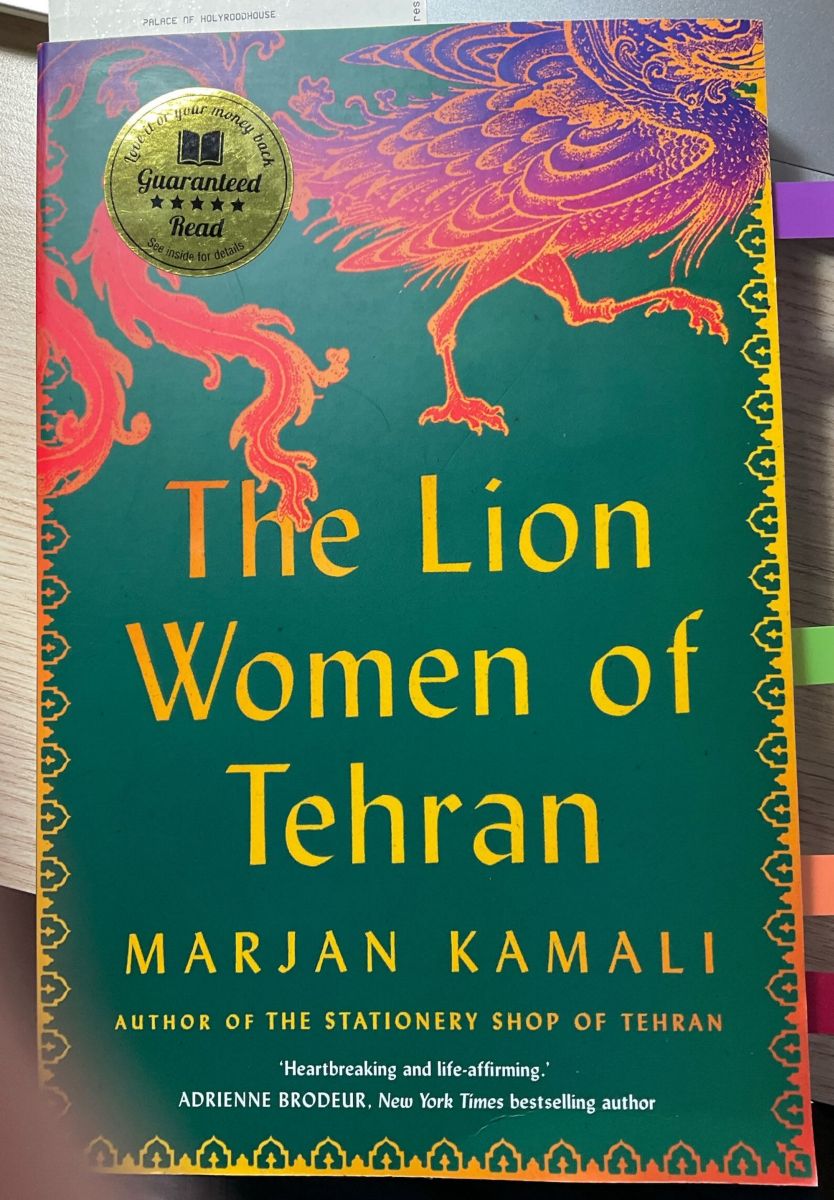
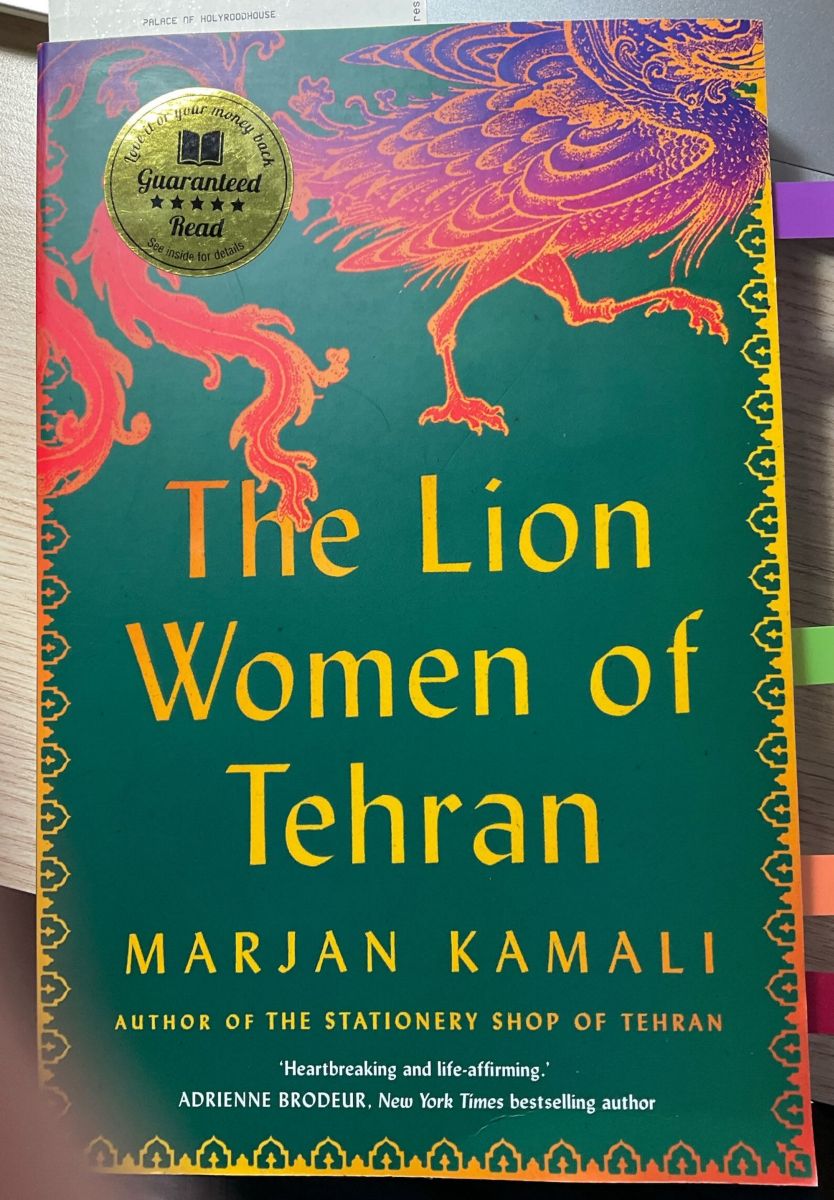
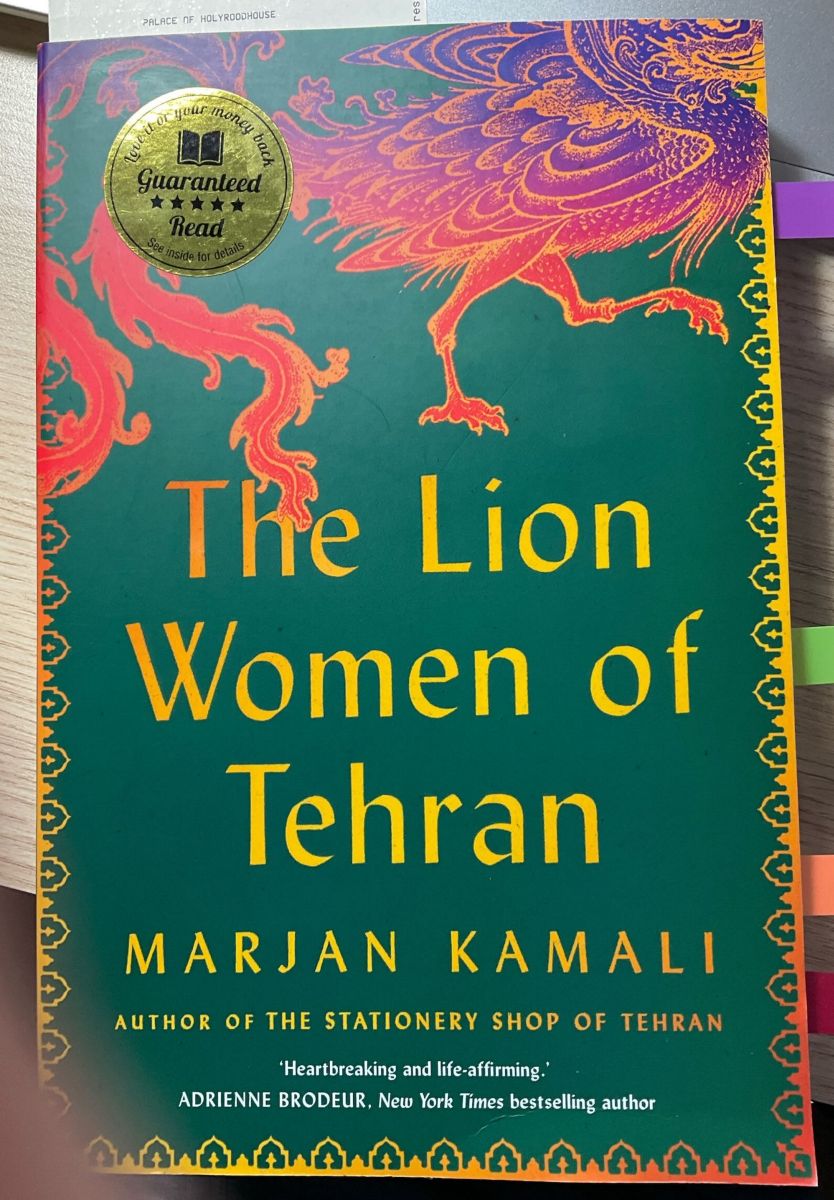
Ellie starts school. She walks herself to school following the directions of Uncle Massoud (is her mother depressed? sad? or just useless). She is hoping to meet an amazing girl who will become her best friend. She just meets an annoying girl.
Five weeks later, on a Wednesday, she is heading home for lunch (they get 2 hours!). Her mother makes her pick the stones and grit out of the rice (apparently the mother’s eyes don’t work very well from all of the crying). And then the mother is too tired to prepare anything else, so they have rice and yogurt. On the way back to school she meets the annoying girl, Homa, who, after calling her a donkey asks her to play – hopscotch, 5 stones. They race back to school (Ellie enjoys the running).
This is still a setting the scene chapter. Homa has just been introduced, any sympathy for the mother is declining and Uncle Massoud is taking at least minimal care of them.
It’s 1950, Ellie is 7 and her dad has just died from tuberculosis.
Her uncle (father’s brother) makes them move out of their mansion and into an apartment in the ‘slums’. There is an implication that this move is a punishment because Ellie’s mother has refused to marry him.
Ellie is going to start school and she is hoping to make friends.
We learn her mother is descended from Qajar royalty.
This is my latest book club book, which (I am embarrased to say), I already had in my pile.
As per my previous post, I am going to talk about chapter 1 – heaps of spoilers.
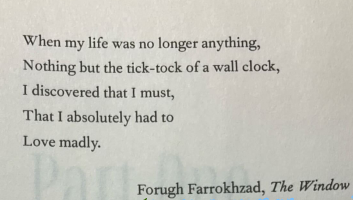
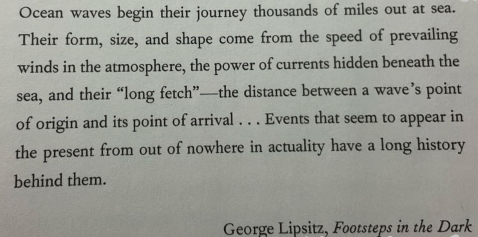
There are two quotes before the book starts
I googled Forugh Farrokhzad she was a poet and film maker who died when she was 32 in a car accident. She was divorced and had little access to her son (apparently because of all of her affairs). A strong feminist voice.
and
I believe Footsteps in the Dark is an academic text, the subtitle is The Hidden Histories of Popular Music.
Ok, on to chapter 1.
Chapter 1 (December 1981 New York)
We have a narrator – Ellie. She’s living in New York selling perfume (one of those people who want to squirt you as you walk through a department store).
I am thinking this chapter might be a bit of a framing device.
Ellie is from Iran. Her husband is an academic and they left Iran before the revolution. She had a friend, Homa, and it appears that Ellie did something terrible to her and they have been estranged for 17 years.
Out of the blue a letter arrives from Homa – breezy and full of news, but giving her phone number and requesting and urgent call.
Will Ellie call her?
On the way to catch the train home after work, Ellie gives her slice of pizza and all of her cash to an old beggar woman. Why is this in the book? Are we meant to see Ellie in a kind light (so we think better of her when we know what she did)
The bitter, sour notes would forever remind me of one long-ago night in Iran. The night when an act of betrayal changed the entire course of my friendship with Homa and both of our lives.
At the end of my shift, I removed my name pin, put it in the counter drawer, then pulled on my warm camel coat and striped leg warmers
After my success at listening to War and Peace, I decided to try Anna Karenina, and this version is read by Maggie Gyllenhaal (what could be better?).
Here is the Goodreads blurb …
Acclaimed by many as the world’s greatest novel, Anna Karenina provides a vast panorama of contemporary life in Russia and of humanity in general. In it Tolstoy uses his intense imaginative insight to create some of the most memorable characters in all of literature. Anna is a sophisticated woman who abandons her empty existence as the wife of Karenin and turns to Count Vronsky to fulfil her passionate nature – with tragic consequences. Levin is a reflection of Tolstoy himself, often expressing the author’s own views and convictions.
Throughout, Tolstoy points no moral, merely inviting us not to judge but to watch. As Rosemary Edmonds comments, ‘He leaves the shifting patterns of the kaleidoscope to bring home the meaning of the brooding words following the title, ‘Vengeance is mine, and I will repay.
I am sure that everyone knows the story of Anna Karenina. And I have watched several adaptations; this one – with Keira Knightley, this one – with Sophie Marceau and Sean Bean as Vronsky, and a modern Australian version, The Beautiful Lie – with Sarah Snook.
Given that I felt I knew the story, I was pleasantly surprised by the novel. I have always thought that Karenin and Vronsky dashing and heroic, and Anna makes really bad decisions. However, now I think Karenin was good, but too christian, and Vronsky is a cad, and Anna still makes really bad decisions.
Although to be fair to Anna, this was the time before divorce, and she was stuck in a marriage with an old boring man, and she had nothing to do.
Vronsky should not have pursued her so relentlessly. He was selfish and self-centred.
Anna reminded me of Madame Bovary – that need for drama, romance and love. Not to mention blowing up their own lives. Madame Bovary was serialised in 1856 and Anna Karenina was published in 1878. Was Tolstoy having a conversation with Flaubert? Or is this a common type of woman in the 19th Century?
I did, however, like Levin and Kitty. They made up for all of the awful, selfish characters.
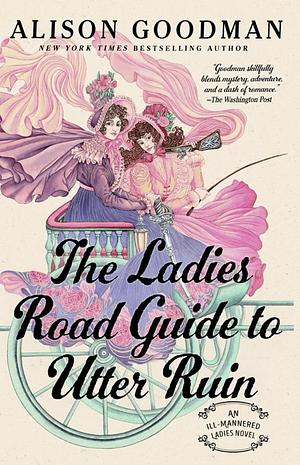
Miss A got this from Dymocks as an advanced reader copy. It languished on my pile until a friend read it, and then I finally dug it out. I have read the first one, and I think it is better if you read the first one before this one.
Here’s the blurb …
To most of Regency high society, forty-two-year-old Lady Augusta Colebrook, or Gus, and her twin sister, Julia, are just unmarried ladies of a certain age—hardly worth a second glance. But the Colebrook twins are far from useless old maids. They are secretly protecting women and children ignored by society and the law.
When Lord Evan—a charming escaped convict who has won Gus’s heart—needs to hide his sister and her lover from their vindictive brother, Gus and Julia take the two women into their home. They know what it is like to have a powerful and overbearing brother. But Lord Evan’s complicated past puts them all in danger. Gus knows they must clear his name of murder if he is to survive the thieftakers who hunt him. But it is no easy task—the fatal duel was twenty years ago and a key witness is nowhere to be found.
In a deadly cat-and-mouse game, Gus, Julia, and Lord Evan must dodge their pursuers and investigate Lord Evan’s past. They will be thrust into the ugly underworld of Georgian gentlemen’s clubs, spies, and ruthless bounty hunters, not to mention the everyday threat of narrow-minded brothers. Will the truth be found in time, or will the dangerous secrets from the past destroy family bonds and rip new love and lives apart?
These novels are adventurous romps. They’re full of period detail, but the heroines and heroes have modern sensibilities (at least as to how they view women). The villains are despicable and evil, and then there are the men (and women) who have extremely conservative views (Lord Duffy for instance).
There is an occasional reference to Austen – one of the characters is reading Sense and Sensibility and another character is given the false name of Miss Dashwood.
He glared at me. “I do not take my leave of you, Augusta. You will not receive my courtesy until you behave in the manner of a gentle woman and a sister.”
Very Lady Catherine De Burgh.
These are lots of fun and the end sets up the next one.
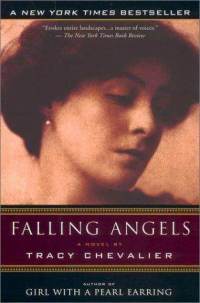
The theme for my book club is ‘Democracy’. I thought of the suffragettes and this was suggested (by google) as a book about suffragettes – is it though?
Here’s the blurb …
In her New York Times bestselling follow-up, Tracy Chevalier once again paints a distant age with a rich and provocative palette of characters. Told through a variety of shifting perspectives- wives and husbands, friends and lovers, masters and their servants, and a gravedigger’s son-Falling Angels follows the fortunes of two families in the emerging years of the twentieth century.
I am a fan of Tracy Chevalier’s novels. My favourites being The Lady and the Unicorn, and A Single Thread (neither of which I have blogged about).
This has all of the hallmarks of a Chevalier novel – well-researched, beautifully written, and focussing on women. It’s about two privileged families at the turn of the century navigating the societal and cultural changes. It’s about women and how little control they had over their bodies, money, and time. Some women no longer want to be ‘the angel in the home’.
I have been wanting to read this book for ages, but it was difficult to find a copy. I just checked and there is a kindle version, so I am not sure what my problem was, but in the end I ordered it from Stefan’s Books.
Here’s the blurb …
Maisie Dobbs, Psychologist and Investigator, began her working life at the age of thirteen as a servant in a Belgravia mansion, only to be discovered reading in the library by her employer, Lady Rowan Compton. Fearing dismissal, Maisie is shocked when she discovers that her thirst for education is to be supported by Lady Rowan and a family friend, Dr. Maurice Blanche. But The Great War intervenes in Maisie’s plans, and soon after commencement of her studies at Girton College, Cambridge, Maisie enlists for nursing service overseas. Years later, in 1929, having apprenticed to the renowned Maurice Blanche, a man revered for his work with Scotland Yard, Maisie sets up her own business. Her first assignment, a seemingly tedious inquiry involving a case of suspected infidelity, takes her not only on the trail of a killer, but back to the war she had tried so hard to forget.
I do enjoy things set in the early 20th century. This was delightful. Full of lovely historical detail with good characters and an intriguing mystery/crime to solve.
I believe there is eighteen books in the series, so that will keep me going for a while (plus I am still making my way through the Gamache series).
I am not sure why I selected this book. There are quotes by Miranda Cowley Heller and Yale van der Wouden, two authors I like, so maybe that was why?
Here’s the blurb …
An extraordinarily moving and expansive debut novel that follows three generations of women from New York to rural Ireland and back again.
It is late September in 2001 and the walls of New York are papered over with photos of the missing. Cora Brady’s father is there, the poster she made taped to columns and bridges. Her mother died long ago and now, orphaned on the cusp of adulthood, Cora is adrift and alone. Soon, a letter will arrive with the offer of a new life: far out on the ragged edge of Ireland, in the town where her parents were young, an estranged aunt can provide a home and fulfil a long-forgotten promise. There the story of her family is hidden, and in her presence will begin to unspool…
An essential, immersive debut from an astonishing new voice, Confessions traces the arc of three generations of women as they experience in their own time the irresistible gravity of the past: its love and tragedy, its mystery and redemption, and, in all things intended and accidental, the beauty and terrible shade of the things we do.
This is a female driven narrative told from several points of view. Probably my favourite type of novel. Mostly it is first person, but there is a second person section and an epistolary section – so interesting structurally. Time is not linear either – it moves forwards and backwards, depending on whose perspective we have. It touches on events in the wider world – 9/11, the abortion debate in Ireland, and gay marriage, but mostly it is about relationships – female relationships, sisters, friends, lovers, mothers, etc. The story unfolds gradually, I feel that the author trusts that the reader will understand and appreciate the subtlety and the nuance.
A superb debut! I look forward to reading more of her work.
Eric and Irene and Bill and Rita. Two young couples living next to each other, the first in a beautiful cottage – suitable for a newly appointed local doctor – the second in a rundown, perennially under-heated farm. Despite their apparent differences, the two women (both pregnant) strike an easy friendship – a connection that comes as a respite from the surprising tediousness of married life, with its unfulfilled expectations, growing resentments and the ghosts of a recent past.
But as one of the coldest winters on record grips England in a never-ending frost and as the country is enveloped in a thick, soft, unmoving layer of snow, the two couples find themselves cut off from the rest of the world. And without the small distractions of everyday existence, suddenly old tensions and shocking new discoveries threaten to change the course of their lives forever.
This novel had a very interesting structure because the people we meet in the first chapter aren’t the people the rest of the novel focusses on. This novel is more about character than plot. We follow two married couples – Eric and Irene, and Bill and Rita. Both couples are recently married and now are expecting babies. There are class differences, the shadows of World War Two (Martin has been shattered by what he saw while liberating Belsen), and an extremely cold winter that brings the country to a grinding halt (quite literally – the trains and buses stop running). It is beautifully written, with a lot of period detail (there was a lot of drinking, smoking and drug taking even Irene and Rita), and domestic minutiae. It’s about people trying to live in a world recovering from devastation, evil and despair. There is mental illness, infidelity, kindness, sadness and resignation.
I need to think about this more, and possibly re-read it. I got caught up in the story and rushed through, without paying proper attention.
Some of my favourite quotes
[…] in the corridor there were lino tiles, geometries in bright colours. You had to be careful not to get lost on it, not try stepping only from green square to green square, or find yourself marooned on a red triangle.
Time would level it out, for that, he had learned (quite recently) was what time did.
When he heard her coming up the stairs he’d pushed it [photo album] back into the shadows under the bed and thought hos nice it was, what a relief, to be free of the past.
Is it possible to be free of the past?
And though he was not much given to thinking about love, did not much care for the word, thought it has been worn to a kind of uselessness, gutted by the advertising men and the crooners, and even by politicians, some of whom seemed, recently, to have discovered it, it struck him that in the end, it might just mean a willingness to imagine another’s life. To do that. To make the effort.
He was like a bird whose arrival heralded better weather.