I have been wanting to read this book for ages, but it was difficult to find a copy. I just checked and there is a kindle version, so I am not sure what my problem was, but in the end I ordered it from Stefan’s Books.
Here’s the blurb …
Maisie Dobbs, Psychologist and Investigator, began her working life at the age of thirteen as a servant in a Belgravia mansion, only to be discovered reading in the library by her employer, Lady Rowan Compton. Fearing dismissal, Maisie is shocked when she discovers that her thirst for education is to be supported by Lady Rowan and a family friend, Dr. Maurice Blanche. But The Great War intervenes in Maisie’s plans, and soon after commencement of her studies at Girton College, Cambridge, Maisie enlists for nursing service overseas. Years later, in 1929, having apprenticed to the renowned Maurice Blanche, a man revered for his work with Scotland Yard, Maisie sets up her own business. Her first assignment, a seemingly tedious inquiry involving a case of suspected infidelity, takes her not only on the trail of a killer, but back to the war she had tried so hard to forget.
I do enjoy things set in the early 20th century. This was delightful. Full of lovely historical detail with good characters and an intriguing mystery/crime to solve.
I believe there is eighteen books in the series, so that will keep me going for a while (plus I am still making my way through the Gamache series).
I am not sure why I selected this book. There are quotes by Miranda Cowley Heller and Yale van der Wouden, two authors I like, so maybe that was why?
Here’s the blurb …
An extraordinarily moving and expansive debut novel that follows three generations of women from New York to rural Ireland and back again.
It is late September in 2001 and the walls of New York are papered over with photos of the missing. Cora Brady’s father is there, the poster she made taped to columns and bridges. Her mother died long ago and now, orphaned on the cusp of adulthood, Cora is adrift and alone. Soon, a letter will arrive with the offer of a new life: far out on the ragged edge of Ireland, in the town where her parents were young, an estranged aunt can provide a home and fulfil a long-forgotten promise. There the story of her family is hidden, and in her presence will begin to unspool…
An essential, immersive debut from an astonishing new voice, Confessions traces the arc of three generations of women as they experience in their own time the irresistible gravity of the past: its love and tragedy, its mystery and redemption, and, in all things intended and accidental, the beauty and terrible shade of the things we do.
This is a female driven narrative told from several points of view. Probably my favourite type of novel. Mostly it is first person, but there is a second person section and an epistolary section – so interesting structurally. Time is not linear either – it moves forwards and backwards, depending on whose perspective we have. It touches on events in the wider world – 9/11, the abortion debate in Ireland, and gay marriage, but mostly it is about relationships – female relationships, sisters, friends, lovers, mothers, etc. The story unfolds gradually, I feel that the author trusts that the reader will understand and appreciate the subtlety and the nuance.
A superb debut! I look forward to reading more of her work.
Eric and Irene and Bill and Rita. Two young couples living next to each other, the first in a beautiful cottage – suitable for a newly appointed local doctor – the second in a rundown, perennially under-heated farm. Despite their apparent differences, the two women (both pregnant) strike an easy friendship – a connection that comes as a respite from the surprising tediousness of married life, with its unfulfilled expectations, growing resentments and the ghosts of a recent past.
But as one of the coldest winters on record grips England in a never-ending frost and as the country is enveloped in a thick, soft, unmoving layer of snow, the two couples find themselves cut off from the rest of the world. And without the small distractions of everyday existence, suddenly old tensions and shocking new discoveries threaten to change the course of their lives forever.
This novel had a very interesting structure because the people we meet in the first chapter aren’t the people the rest of the novel focusses on. This novel is more about character than plot. We follow two married couples – Eric and Irene, and Bill and Rita. Both couples are recently married and now are expecting babies. There are class differences, the shadows of World War Two (Martin has been shattered by what he saw while liberating Belsen), and an extremely cold winter that brings the country to a grinding halt (quite literally – the trains and buses stop running). It is beautifully written, with a lot of period detail (there was a lot of drinking, smoking and drug taking even Irene and Rita), and domestic minutiae. It’s about people trying to live in a world recovering from devastation, evil and despair. There is mental illness, infidelity, kindness, sadness and resignation.
I need to think about this more, and possibly re-read it. I got caught up in the story and rushed through, without paying proper attention.
Some of my favourite quotes
[…] in the corridor there were lino tiles, geometries in bright colours. You had to be careful not to get lost on it, not try stepping only from green square to green square, or find yourself marooned on a red triangle.
Time would level it out, for that, he had learned (quite recently) was what time did.
When he heard her coming up the stairs he’d pushed it [photo album] back into the shadows under the bed and thought hos nice it was, what a relief, to be free of the past.
Is it possible to be free of the past?
And though he was not much given to thinking about love, did not much care for the word, thought it has been worn to a kind of uselessness, gutted by the advertising men and the crooners, and even by politicians, some of whom seemed, recently, to have discovered it, it struck him that in the end, it might just mean a willingness to imagine another’s life. To do that. To make the effort.
He was like a bird whose arrival heralded better weather.
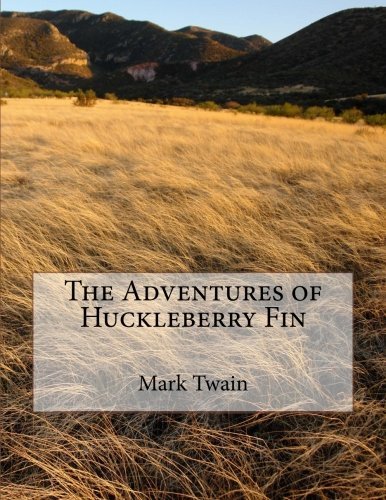
My book club is reading James by Percival Everett. I have already read it (as part of my Booker short list reading), so I thought I would listen to Huckleberry Finn and see how they were connected.
Here is the Wikipedia summary
Commentators readily distinguish three parts in The Adventures of Huckleberry Finn. In the first, the author believes he is writing a children’s entertainment, a sequel to The Adventures of Tom Sawyer. Then, at the beginning of Chapter XVI, he experiences difficulties and stops writing. It is at this point that his hero questions the notions of good and evil that he has been taught. It will take Twain seven years before he regains his creative momentum. Finally, in a third part— a highly controversial “burlesque about-face —the character of Tom Sawyer reappears, selfish, cruel, and unconscious. Huck falls under his influence again, and the author returns to the “Tom Sawyer” spirit of the beginning.
This is not my favourite book – I know it is an American classic, but it wore me down. The constant use of the N word, and the bit at the end when they play at rescuing Jim was excruciatingly awful. The sections where it was Huck and Jim having adventures were enjoyable and interesting.
I know it is meant to be a satire and we see characters that are more like caricatures, and Huck grapples with the morality, first of helping a slave escape and then secondly of slavery itself. But I feel it has not aged well, and James does a much better job of show casing the awfulness of slavery and the selfishness (and ignorance) of the people white people.
I have put all of my unread books into a spreadsheet (all 240!) and I am using a random number generator to select a book to read. If I don’t want to read it, then I have to move it on.
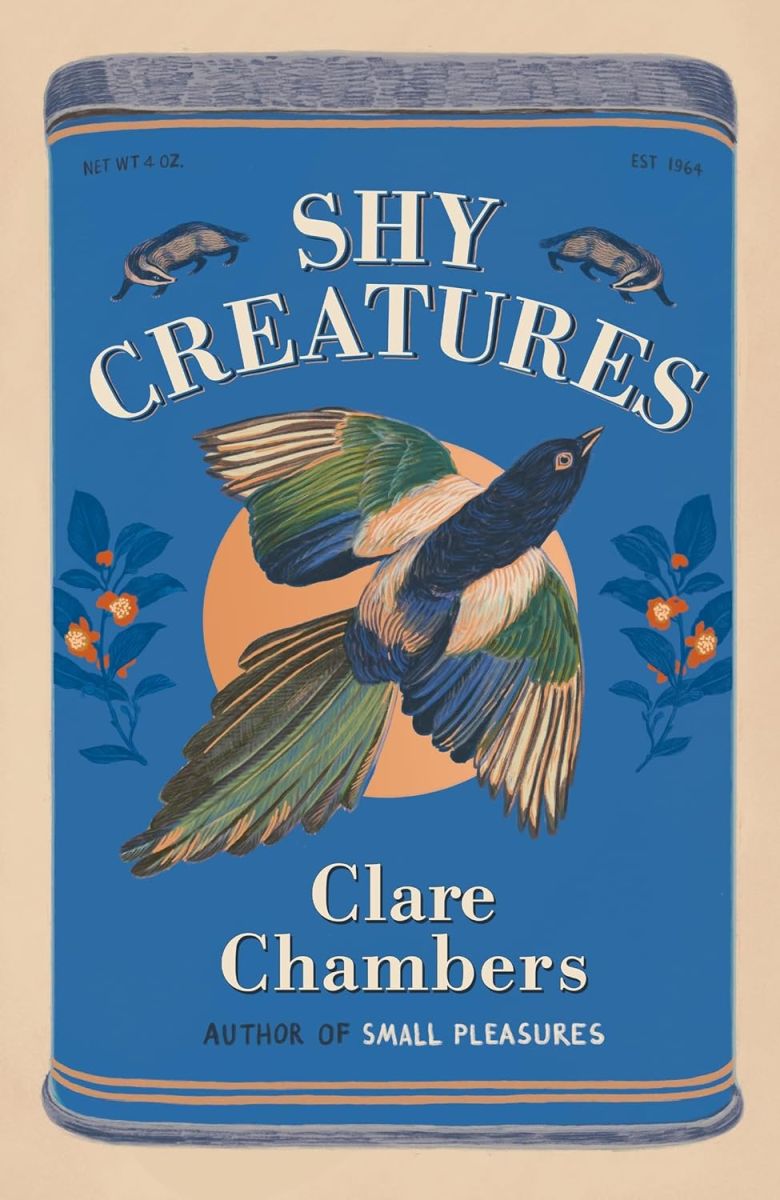
Shy Creatures was selected first. I enjoyed Small Pleasures, and so happily bought a large paperback version of this one.
Here’s the blurb …
In all failed relationships there is a point that passes unnoticed at the time, which can later be identified as the beginning of the decline. For Helen it was the weekend that the Hidden Man came to Westbury Park.
Croydon, 1964. Helen Hansford is in her thirties and an art therapist in a psychiatric hospital where she has been having a long love affair with a charismatic, married doctor. One spring afternoon they receive a call about a disturbance from a derelict house not far from Helen’s home. A mute, thirty-seven-year-old man called William Tapping, with a beard down to his waist, has been discovered along with his elderly aunt. It is clear he has been shut up in the house for decades, but when it emerges that William is a talented artist, Helen is determined to discover his story.
Shy Creatures is a life-affirming novel about all the different ways we can be confined, how ordinary lives are built of delicate layers of experience, the joy of freedom and the transformative power of kindness.
This was an interesting book, I enjoyed the insight into mental hospitals in the 1960s – it seemed a nice place to stay and the staff were kind (no Nurse Ratched!).
There was casual misogyny (as you would expect) and a bit of judgement around mental illness.
‘You mean a mental asylum?’ her mother had said when Helen called to tell her about her new appointment at Westbury Park. ‘Oh Helen.’
The characters are complex – Gil kind thoughtful and caring to his patients thinks nothing of cheating on his wife. William’s aunts, who obviously had their own issues, were trying to keep him safe, but denied him a normal life.
I think it is about our duty to fellow humans, to be kind and not to judge too quickly.
Here is one of my favourite quotes:
It surprised him how much time was taken up with the business of living; half the morning gone already and he hadn’t picked up a book or pencil. He experienced a belated appreciation for the many invisible offices performed without thanks by Aunt Elsie and Aunt Louisa. The jobs women did weren’t difficult, but they certainly ate up the hours.
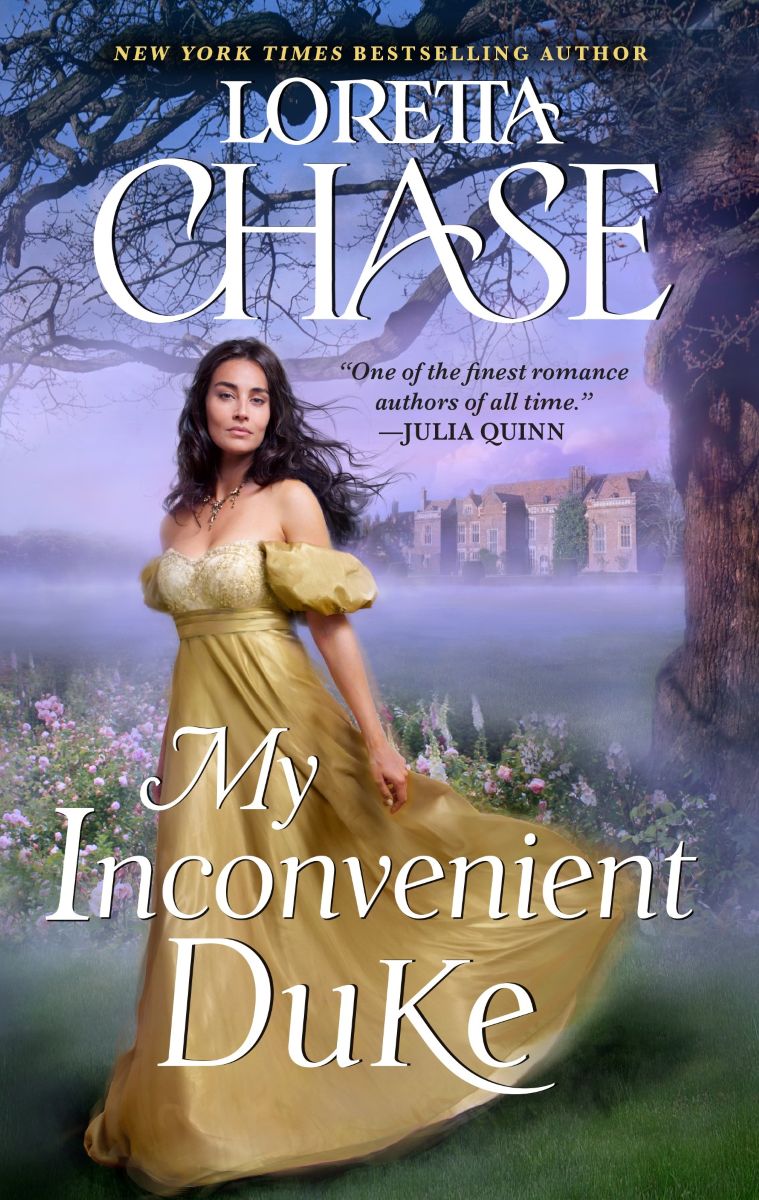
I was very keen to read this novel (I pre-ordered it) I enjoyed the first two books in the series (A Duke in Shining Armour and Ten Things I Hate about the Duke). In these books Alice and Blackwood are estranged (or appear to be so) and I wanted to know their story.
Here’s the blurb …
Of all the dukes in all the world, why does it have to be him?
Lady Alice Ancaster needs a husband, and fast, because her reckless brother is going to get himself killed, leaving the dukedom—and her future—in their repellent cousin’s clutches.
The Duke of Blackwood has known Alice since childhood, and they’ve always had a special connection. But years ago he broke it, when he chose a riotous life with his two best friends instead of a reasonable one with her.
The trouble is, the tall, dark, sardonic rogue keeps turning up exactly when needed, and ready—though he sometimes needs a push—to play the hero, if only for as long as it takes.
Being irresistibly drawn to the Wrong Man is not convenient, but when events come to a crisis, Alice has to make a choice. The question is, can she live with it?
This is not the novel I was expecting (which is not a bad thing). The first two thirds are before the first two novels and it shows the start of their relationship and their marriage. The last third shows that they were never really estranged they were both just busy with other duties that took them away from each other.
It’s witty, well-written, and well-researched. If you’re not familiar with the first two novels, then I think you will enjoy this one, but I was hoping for a book about a relationship that had gone sour being re-ignited.
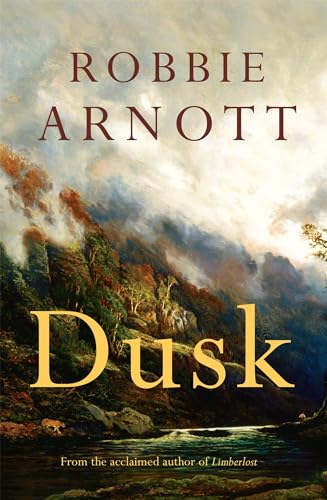
I was going to Tasmania for a holiday and I wanted to read a Tasmanian author (I think Robbie Arnott is from Launceston). I read The Rain Heron, so I was familiar with his work.
Here’s the blurb …
In the distant highlands, a puma named Dusk is killing shepherds. Down in the lowlands, twins Iris and Floyd are out of work, money and friends. When they hear that a bounty has been placed on Dusk, they reluctantly decide to join the hunt. As they journey up into this wild, haunted country, they discover there’s far more to the land and people of the highlands than they imagined. And as they close in on their prey, they’re forced to reckon with conflicts both ancient and deeply personal.
This is set in Australia because there are kangaroos, but I couldn’t say where. I laughed about the pumas being imported to hunt something else introduced, but preferring to eat the sheep instead – very Australian, cane toads anyone?
The descriptions of the landscape are magnificent, and I particularly enjoyed Iris’s connection to the highlands (her sense of peace and stillness).
The conflict between pastoralists and nature, pastoralists and the first people is a feature of this novel, but not in an overt manner (we’re not being beaten over the head here).
It does have an ambiguous ending, but I am imagining everyone happily living in Brazil.
Some quotes
And perhaps it was this mixture of wine and song; perhaps it was the hours spent in the company of cold mountains and still water, perhaps it was her lingering awareness of the ghostly grove surrounding the tavern; perhaps it was because she was momentarily free of Floyd, while knowing he was safe; perhaps it was the fatigue at the end of a hard day; perhaps it was all of it combined that made Iris lean back on her stool and feel a thin but taut connection to these things that were new to her, that were bright and strange, that she did not understand.
But it was not a claustrophobic feeling; there was pleasure in moving through it all, as if she was slowly discovering the right way – or perhaps just her way – to move through an old world.
She felt like a broom had been pulled through her, stiff bristles raking her straight, clean, her mind filling with a sense of unhurried purpose.
That last one in particular! How good is he at putting words together?
This was my book flood book. I have read The Dressmaker and scene the movie (Kate Winslet is fabulous – best Australian accent I have heard).
Here’s the blurb …
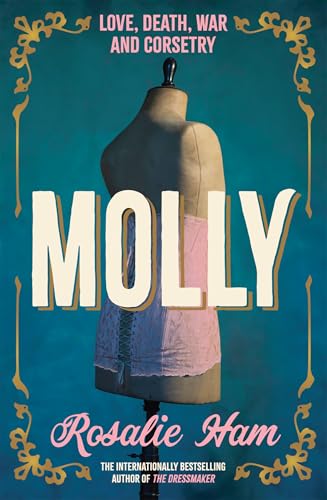
It’s 1914 and Molly Dunnage wants to see at home, at work and in underwear.
Her burgeoning corsetry business is starting to take off, thanks to some high-profile supporters. She’s marching with Melbourne’s suffragists for better conditions for women everywhere. And her family – her eccentric, confounding, adored father and aunt – are turning their minds to country retirement.
But as the clouds of war gather and an ominous figure starts skulking in the shadows of her life, Molly’s dreams begin to falter. Then, when true love drops out of the sky and into her arms, her hopes for her life and the world are entirely upended.
With the dark humour, richly detailed settings and vividly drawn characters we’ve come to expect from Rosalie Ham, this prequel to the international bestseller The Dressmaker is an unforgettable story of hopes lost, love found – and corsets loosened.
From The Dressmaker, we know the end of Molly’s story, so I was interested in the start. Her family (father and aunt) are delightful, but life is tough, and despite being talented and ambitious, things don’t go well for Molly. I was captivated by the story – the descriptions of poverty, but also joy and comfort, the corsets and costumes, the suffragette movement, the lovely Leander, the flamboyant Horatio, and finally the small mindedness and cruelty of rural Australia. Rosalie Ham is a great writer and this shows a slice of Australia in the early twentieth century just prior to World War One.
This quote really stuck with me, I have a friend who always says ‘you just need someone to love you’.
As I read and enjoyed The Offing, I was keen to read this one.
Here’s the blurb …
Cuddy is a bold and experimental retelling of the story of the hermit St. Cuthbert, unofficial patron saint of the North of England. Incorporating poetry, prose, play, diary and real historical accounts to create a novel like no other, Cuddy straddles historical eras – from the first Christian-slaying Viking invaders of the holy island of Lindisfarne in the 8th century to a contemporary England defined by class and austerity. Along the way we meet brewers and masons, archers and academics, monks and labourers, their visionary voices and stories echoing through their ancestors and down the ages. And all the while at the centre sits Durham Cathedral and the lives of those who live and work around this place of pilgrimage – their dreams, desires, connections and communities.
This is definitely experimental – each section is written in a different style.
The first part is like the image above, plus there are quotes from (genuine) history books – that are ordered in a way that keeps the story moving.
There’s a section that’s in second person, a play, a diary, and contemporary fiction.
I think it’s successful, an alternative history of Durham Cathedral through the eyes of some of the people involved in its long history.
The writing is beautiful, here are some of my favourite quotes;
Down there, getting grubby on the bed of waxen leaves. Drunk on the flavour. Dizzy on the fist of it. Sweaty in the grip of it. Biting on the bone of it.
Sanctury is granted and the Galilee bell rung to mark the moment, and the seeker then made to wear a robe that bears the yellow sign of our Cuthbert sewn onto one shoulder to show the world the generosity of our saint who offers his home without judgement. The fugitive is then given quarters and food and the time in which to pray for forgiveness, give confession and make peace with himself, then say farewell to the city, for then he is made to leave and guaranteed safe passage by a chaperone acting on the king’s orders.
He made this for you, over many hours, days, many weeks, maybe. You have never before been given something that serves no purpose other than to express – what exactly? Love? His love for you?
Counting imposes a system of order and breaks the day into increments. Counting is a form of control. It is calming, like prayer.
I was a little bit disappointed it the ending. I wanted more for Michael, but I guess that is the point, events (history) moves inexorably forward. This is a fabulous book, full of great detail, characters and descriptions. Written (successfully) in a variety of styles.