Homa and Ellie buy lunch together at the famed Cafe Andre and eat in the park. Ellie learns that Homa’s father is in prison. The rest of the family have jobs to make ends meet.
Their relationship is just like it was before.
Chapter 13 1960 October
Everyone likes Homa. She wants to change the world for better, particularly for women. Ellie also wants the world to change but she wants someone else to do it.
Ellie attends a party at Afarin’s house (Her beehive is as large as a cantaloup). Mehrdad is there, they dance together. Ellie is not sure if university is for her – maybe she will just get married. Homa opens the world for her, but makes her feel less than. Mehrdad also opens the world for her but he makes her feel more than.
Knowing what happens in Iran to women makes this chapter hard to read. Homa with her ambition to be a judge and to improve the status of women.
Chapter 14 1960 October
Ellie and Homa have lunch together. Homa wants to be Mehrdad properly, to look into his soul and see if he is right for Ellie.
Homa confesses that she is indifferent to relationships.
Ellie is planning on taking the exams and attending uni. Mehrdad has made it clear that he will marry a woman with a university degree. It is obvious from the conversation that she is only doing it to be with Mehrdad. She mentions hiking in the mountains Friday mornings (as a reason to attend university). Mehrdad already does this with his school mates. Homa makes a plan. They will also hike on a Friday and she will meet Merhdad.
I haven’t been very good about updating my blog – in ‘real’ time, I am up to chapter 46, but I have been writing my summaries.
Part Two
Chapter 9 Late Summer 1960
Ellie is seventeen. She is in her final year at school. She’s popular and beautiful (her words). She’s met the boy her will become her husband.
The coup d’état in 1953 has made no difference to them.
And Homa? They did write and met twice. Ellie’s mother wouldn’t allow them in the house and it was too hard for a ten year old to go ‘downtown’. Ellie wore the necklace for three years.
Ellie is worried about Homa’s father during the coup (he is a communist).
She thinks her mother and uncle love one another.
I promised so that she’d stop lecturing more than anything else. But like the embers of a fire, her words nestled into the crevices of my body. I internalised them and grew to believe that I needed to protect what was rightfully mine. Why shouldn’t I have it all? I deserved the best.
Chapter 10 Spring 1960
This is a flashback to when Ellie met Mehrdad. They were in Year 11. It was the Iranian new year (they celebrate it on the Spring Equinox). On day 13 everyone heads to the outdoors, parks etc.
For the celebration Ellie grew lentils. Now she needs to tie the blades together, drop it in the river, and wish for a husband.
Mehrdad is at the river’s edge and they chat.
Chapter 11 1960 September
We are at Ellie’s school. There is a queen bee Afarin, Ellie wants her power.
A new student is joining the school – Homa!
Homa is the same – confident and enthusiastic. Ellie is mortified. Homa tells a rambling story about how her and Ellie are ‘bestest’ friends. Afarin loves, and following her lead, so do others. Ellie tries to leave for lunch quickly, but Homa catches up. She joins them for lunch and wins over Ellie’s friends. Ellie’s better side emerges.
I enjoyed the first Peter Wimsey story, so when I was looking for something easy to listen to (after Villette), I chose this one. I am very keen to get to Gaudy Night, but that is book number 10.
Here’s the blurb …
Rustic old Riddlesdale Lodge was a Wimsey family retreat filled with country pleasures and the thrill of the hunt — until the game turned up human and quite dead. He lay among the chrysanthemums, wore slippers and a dinner jacket and was Lord Peter’s brother-in-law-to-be. His accused murderer was Wimsey’s own brother, and if murder set all in the family wasn’t enough to boggle the unflappable Lord Wimsey, perhaps a few twists of fate would be — a mysterious vanishing midnight letter from Egypt…a grieving fiancee with suitcase in hand…and a bullet destined for one very special Wimsey.
I love everything about these novels. The settings, the language, the way of life, the characters – Lord Peter, Bunter and Inspector Parker (clearly in love with Lady Mary). I like how the crimes are solved. But it’s not just a cozy mystery they have some emotional heft to them.
The girls get a detention. Ellie wins ‘first in class’. There is a crowning ceremony and a lunch. She excitedly tells her mother who is calmly (icily) happy for her, but seems more interested in the fact that Ellie won’t be home for lunch.
After the crowning ceremony the girls get the afternoon off. Ellie returns unexpectedly to the house to find her mother in bed with her uncle (I thought this was going to happen).
Is the mother doing this because she thinks this is the only way she can saw Ellie?
Chapter 8 1953 June
The mother and Uncle Massoud are getting married and they are all moving ‘uptown’.
Ellie asks her mother why she accepted him when she use to say that she couldn’t stand him.
You sacrifice yourself for others.
She has to say goodbye to Homa. Homa gives her a necklace with a Homa bird pendant. Ellie gives Homa a notebook.
Ellie goes to Homa’s house after school. Ellie’s mother won’t have Homa in her house (I tell you this woman is awful).
Homa’s mother is lovely. Homa has a baby sister Sarah. They play hopscotch, jump rope and eat amazing pastries. Ellie wants Homa’s life, she is jealous of her.
Chapter Five – November 1950
Ellie and Homa become firm friends. Homa’s mother teaches them how to cook. At home Ellie’s mother is letting her do more cooking.
Ellie can’t understand how Homa’s family can afford so much food. It turns out that Homa’s father is the head waiter at a restaurant and he brings home the excess.
Chapter 6 May 1953
We’ve jumped in time (thankfully it was beginning to feel a bit slow). Both girls are doing well at school. They have skipped a grade.
Towards the end of the year Homa convinces Ellie to skip school. The go to the Grand Bazaar and eat ice cream and have nuts. They return for lunch at home.
Ellie’s mother knows she has skipped school – they were seen by one of the neighbours. There is a nasty argument about Homa.
[…] her father waits on people all day like a servant. Her mother is illiterate. They are vermin in the alley, my dear. They are nobodies who come from nobodies.
Ellie responds with
So the fact that you are his descendent [the qajar king] basically makes you the great-grand daughter of a whore.
Something is brewing. This chapter marks a turning point for the mother. She seems to have made a decision (is she going to marry Uncle Massoud?)
Ellie starts school. She walks herself to school following the directions of Uncle Massoud (is her mother depressed? sad? or just useless). She is hoping to meet an amazing girl who will become her best friend. She just meets an annoying girl.
Five weeks later, on a Wednesday, she is heading home for lunch (they get 2 hours!). Her mother makes her pick the stones and grit out of the rice (apparently the mother’s eyes don’t work very well from all of the crying). And then the mother is too tired to prepare anything else, so they have rice and yogurt. On the way back to school she meets the annoying girl, Homa, who, after calling her a donkey asks her to play – hopscotch, 5 stones. They race back to school (Ellie enjoys the running).
This is still a setting the scene chapter. Homa has just been introduced, any sympathy for the mother is declining and Uncle Massoud is taking at least minimal care of them.
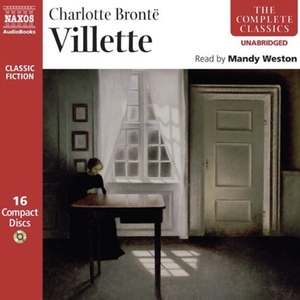
I have tried to read Villette many times. I usually get to the part when Lucy is desperately lonely and visits the catholic church. However, this time I made it all the way to the end (and it has a happy ending (well maybe a happy ending) – who knew? I thought it was going to be miserable).
Here’s the wikipedia summary
Villette begins with its protagonist and unreliable narrator, Lucy Snowe, aged 13, staying at the home of her godmother Mrs. Bretton in “the clean and ancient town of Bretton”, in England. Also in residence are Mrs. Bretton’s teenaged son, John Graham Bretton (whom the family calls Graham), and a young visitor, Paulina Home (who is called Polly), who is aged 6. Polly’s mother, who neglected her daughter, has recently died and her father is recommended by doctors to travel to improve his spirits. Polly is invited by Mrs. Bretton to stay. Polly is a serious little girl, who is described as unlike normal children.
Polly soon develops a deep devotion to Graham, who showers her with attention. But Polly’s visit is cut short when her father arrives to summon her to live with him abroad.
For reasons that are not stated, Lucy leaves Mrs. Bretton’s home a few weeks after Polly’s departure. Some years pass, during which an unspecified family tragedy leaves Lucy without family, home, or means. After some initial hesitation, she is hired as a caregiver by Miss Marchmont, a rheumatic crippled woman. Lucy is soon accustomed to her work and has begun to feel content with her quiet, frugal lifestyle.
The night of a dramatic storm, Miss Marchmont regains all her energy and feels young again. She shares with Lucy her sad love story of 30 years ago, and concludes that she should treat Lucy better and be a better person. She believes that death will reunite her with her dead lover. The next morning, Lucy finds Miss Marchmont died in the night.
Newspaper illustration from abridged version of Villette, 1909
Lucy then leaves the English countryside and goes to London. At the age of 22, she boards a ship for Labassecour despite knowing very little French. On the ship, she meets Ginevra Fanshawe, who tells Lucy that the directress of her boarding school for girls (based upon the Hegers’ Brussels pensionnat) she is attending, Madame Beck, needs a bonne for her children. She travels to the city of Villette in Labassecour where Madame Beck’s school is located. After a time, she is hired to teach English at the school, in addition to having to mind Madame Beck’s three children. She thrives despite Madame Beck’s constant spying on the staff and students.
“Dr. John,” a handsome English doctor, frequently visits the school at the behest of Madame Beck, and deepens his affection for the coquette Ginevra Fanshawe. In one of Villette’s famous plot twists, “Dr. John” is later revealed to be John Graham Bretton, a fact that Lucy has known since he once asked her why she was staring at him, but has deliberately concealed from the reader.
During the school holidays, all the teachers and pupils have either gone to travel abroad or gone back to their families. The school is completely empty except for a disabled child whom Lucy is supposed to take care of. After the disabled child is fetched away, Lucy is extremely lonely and becomes both mentally and physically ill. She goes to a Catholic church (despite being a Protestant) to confess to a priest. On the way back to the school, she collapses due to fever and mental exhaustion. Dr. John brings her to his home, which he shares with his mother, Mrs. Bretton.
Graham recognises Lucy only after she is brought to Mrs. Bretton’s home. After Dr. John (i.e., Graham) discovers Ginevra’s true character while at the theatre, he turns his attention to Lucy, and they become close friends. She values this friendship highly despite her usual emotional reserve. Lucy soon develops feelings for Dr. John and treasures the letters he sends her once she returns to the pensionnat.
Lucy and Graham meet Polly (Paulina Home) again at the same theatre after a fire, in which Polly is injured. Polly’s father has inherited the title “de Bassompierre” and is now a Count; thus her name is now Paulina Mary Home de Bassompierre. Polly and Graham soon discover that they knew each other in the past and slowly renew their friendship. They fall in love and eventually marry despite the initial reluctance of Polly’s father.
Lucy becomes progressively closer to a colleague, the irascible, autocratic, and confrontational professeur, M. Paul Emanuel, a relative of Mme. Beck. Lucy gradually realises that his apparent antagonism is actually helping her to overcome her weaknesses and to grow. She and Paul eventually fall in love.
However, a group of conspiring antagonists, including Madame Beck, the priest Père Silas, and the relatives of M. Paul’s long-dead fiancée, work to keep the two apart, on the grounds that a union between a Catholic and a Protestant is impossible. They finally succeed in forcing M. Paul’s departure for Guadeloupe to oversee a plantation there. He nonetheless declares his love for Lucy before his departure and arranges for her to live independently as the headmistress of her own day school, which she later expands into a pensionnat.
During the course of the novel, Lucy has three encounters with the figure of a nun — which may be the ghost of a nun who was buried alive on the school’s grounds as punishment for breaking her vow of chastity. In a highly symbolic scene near the end of the novel, she discovers the “nun’s” habit in her bed and destroys it. She later finds out that it was a disguise worn by Ginevra’s amour, Alfred de Hamal, placed in Lucy’s bed as a prank. The episodes with the nun no doubt contributed substantially to the novel’s reputation as a gothic novel. Ginevra keeps in contact with Lucy through letters that show the young coquette has not changed and expects to live off of her uncle’s (Basompierre’s) good graces.
Villette’s final pages are ambiguous. Although Lucy says that she wants to leave the reader free to imagine a happy ending, she hints strongly that M. Paul’s ship was destroyed by a storm during his return journey from the West Indies. She says that, “M. Emanuel was away three years. Reader, they were the three happiest years of my life.” This passage suggests that he was drowned by the “destroying angel of tempest.”
There is not much of a plot to this novel, it’s more about Lucy’s progress through life. Her loneliness, her self-possession, the impact other people have on her (both well-meaning and not so well-meaning – Madame Beck and her surveillance). The story is told from Lucy’s point of view. She is a solitary creature who longs for human connection. It is definitely from the 19th century, there is a lot of thinking, religion, and discussions about duty.
It’s 1950, Ellie is 7 and her dad has just died from tuberculosis.
Her uncle (father’s brother) makes them move out of their mansion and into an apartment in the ‘slums’. There is an implication that this move is a punishment because Ellie’s mother has refused to marry him.
Ellie is going to start school and she is hoping to make friends.
We learn her mother is descended from Qajar royalty.
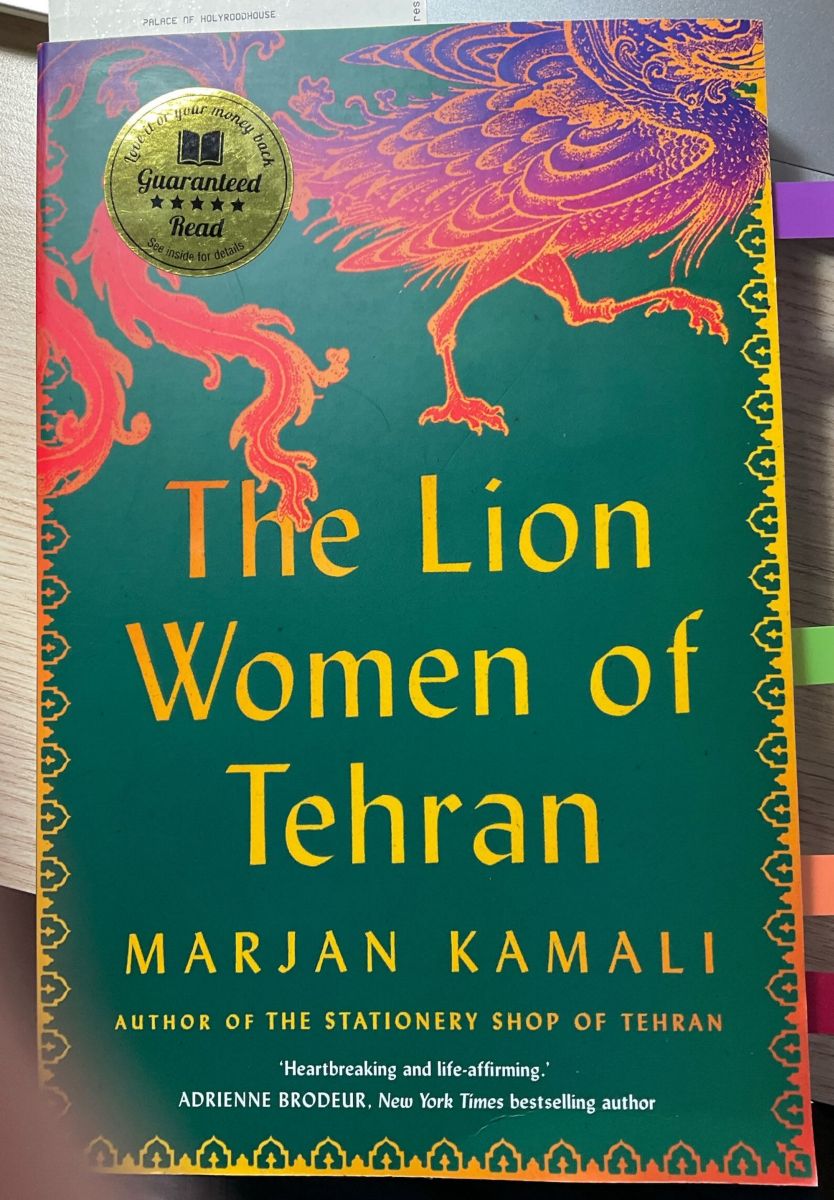
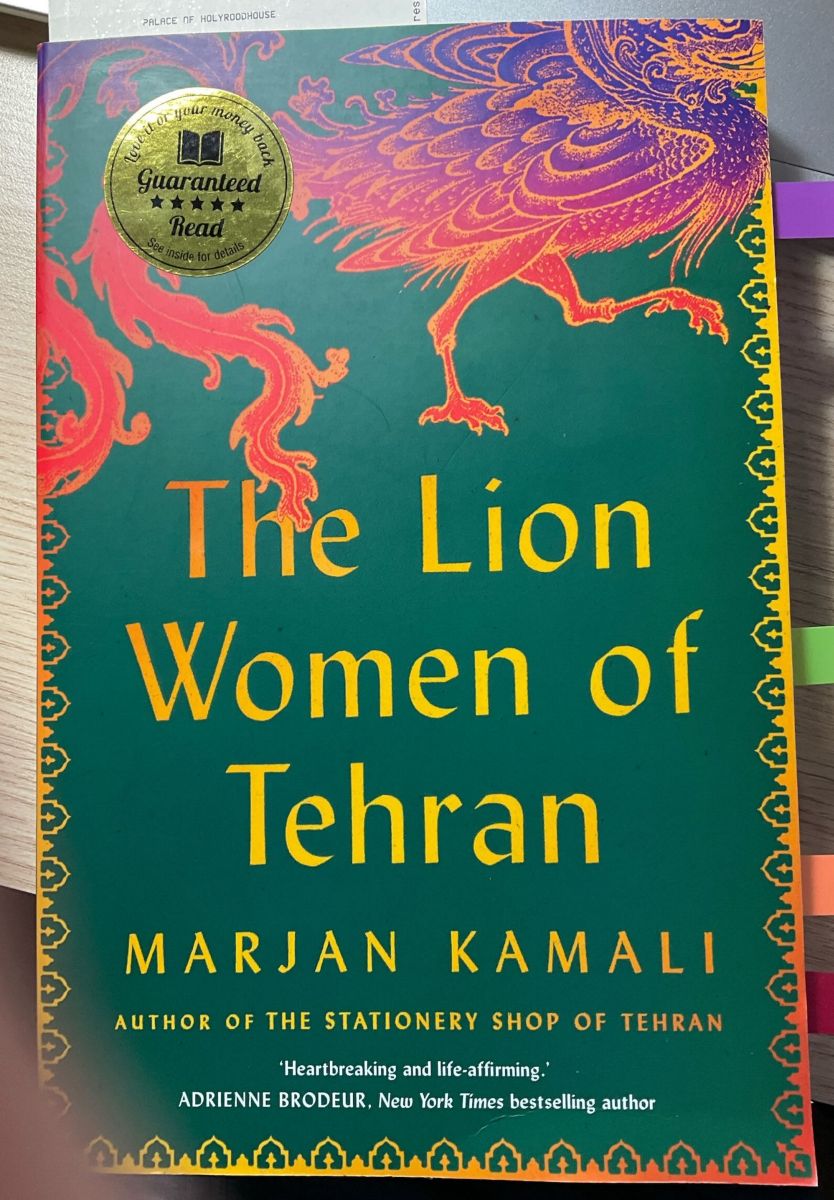
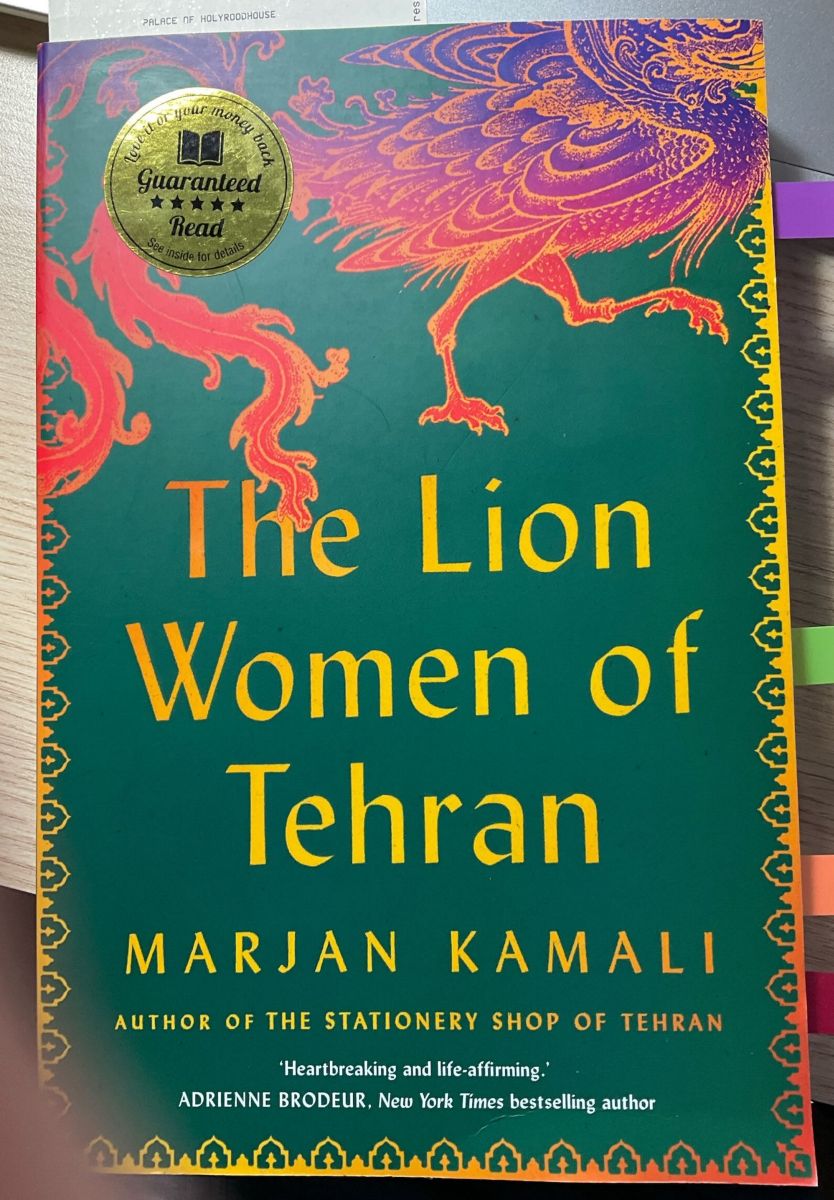
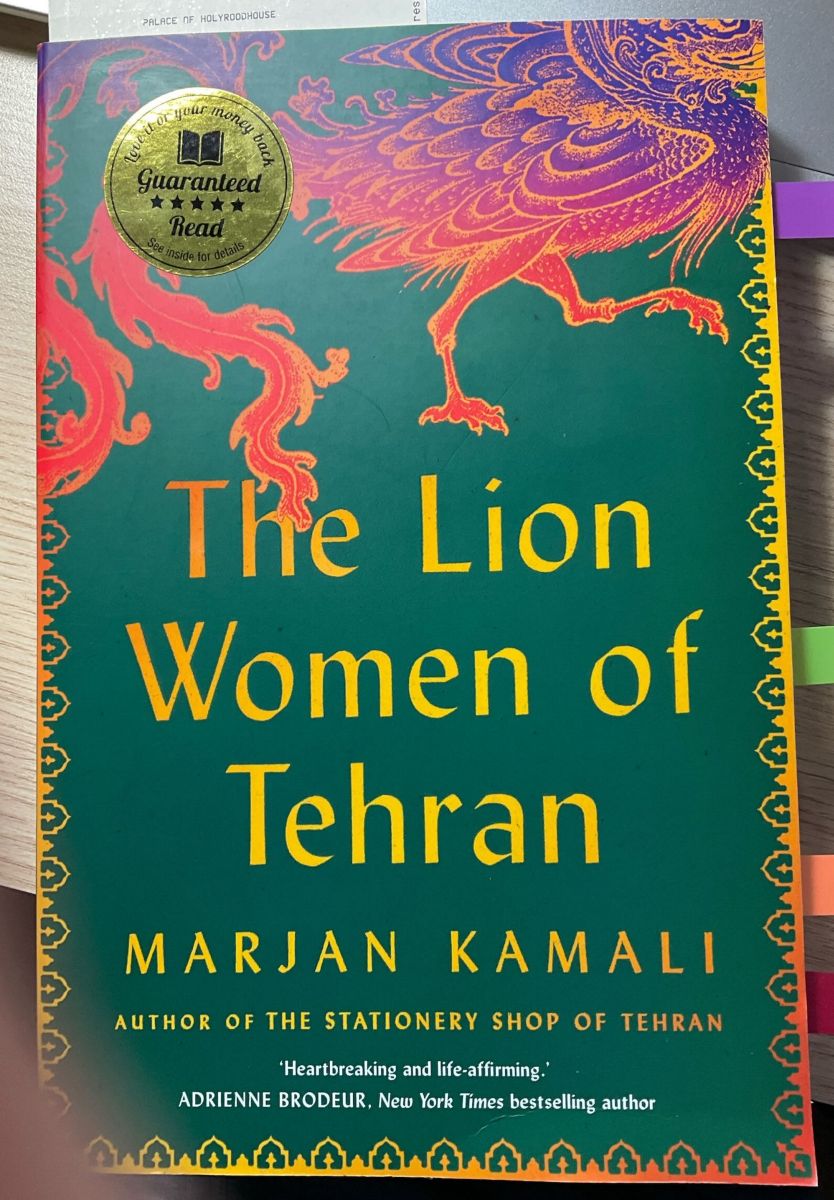
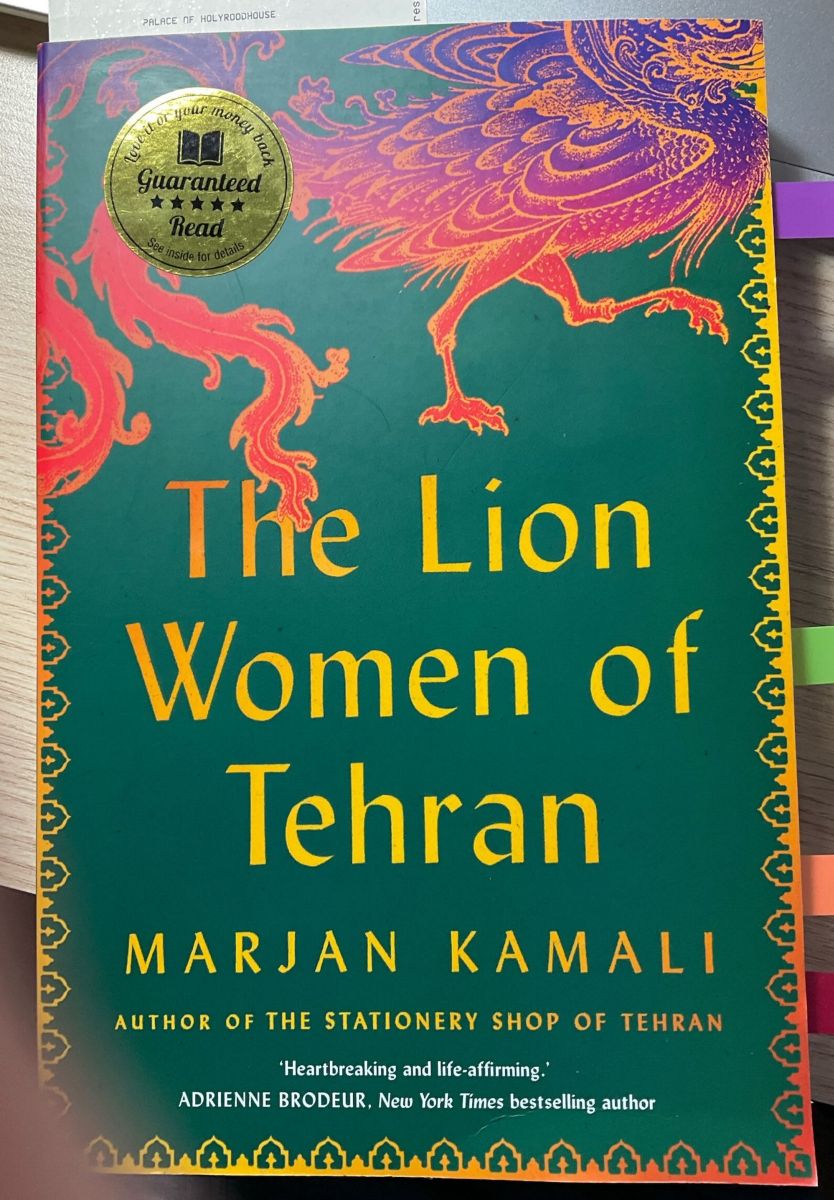
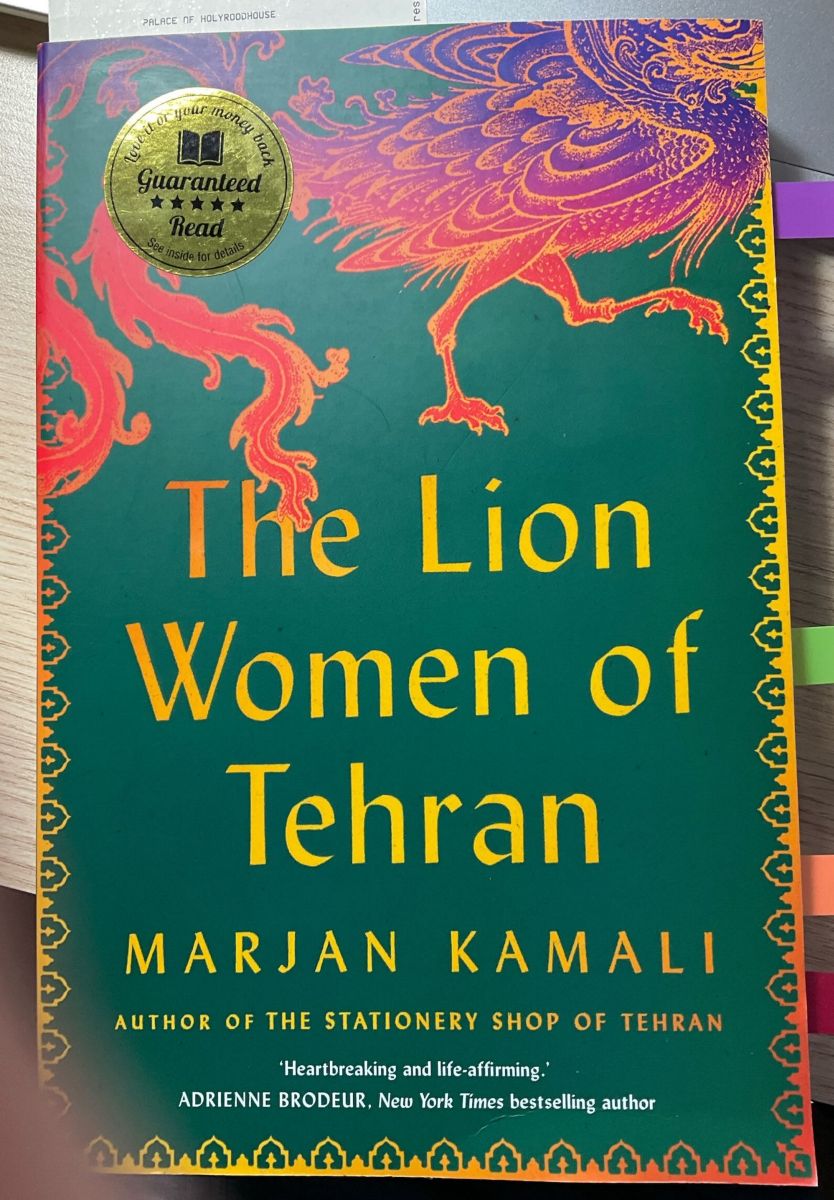
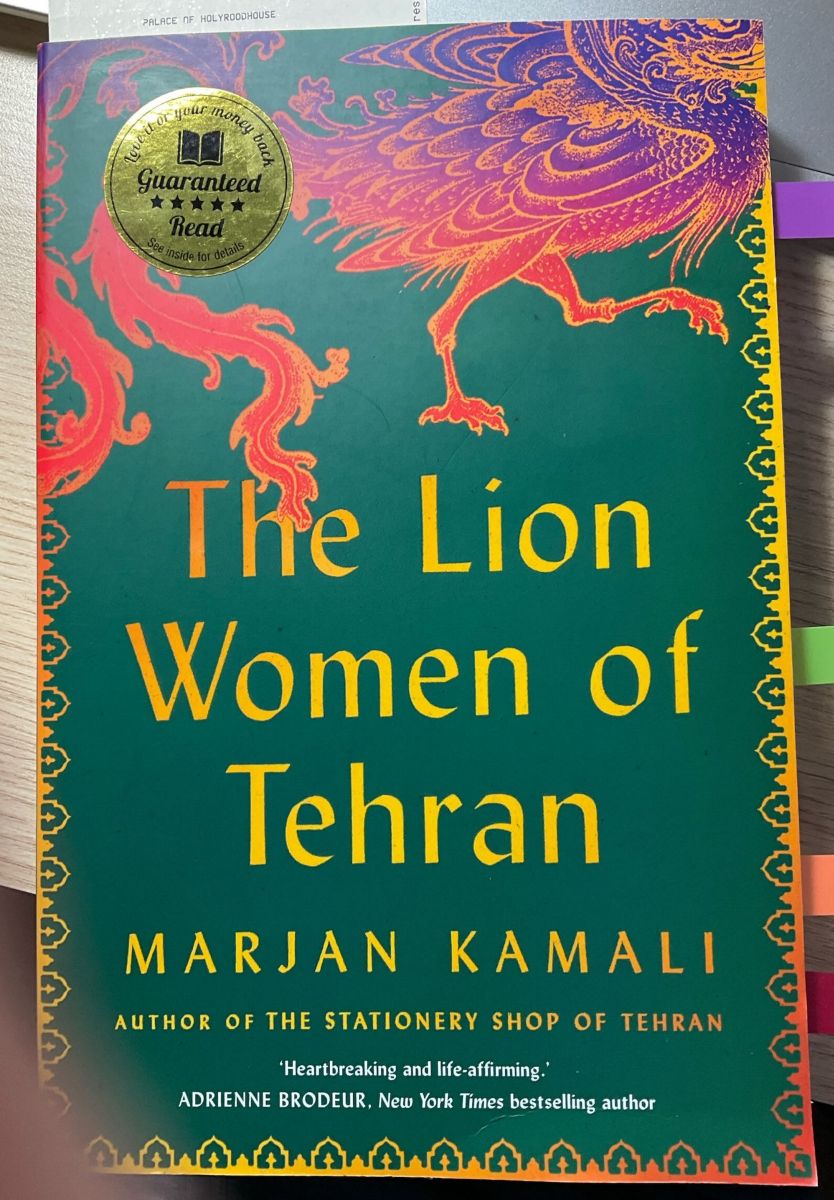
This is my latest book club book, which (I am embarrased to say), I already had in my pile.
As per my previous post, I am going to talk about chapter 1 – heaps of spoilers.
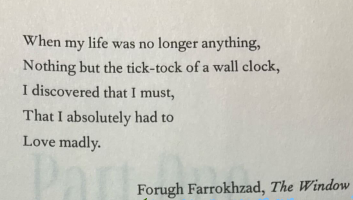
There are two quotes before the book starts
I googled Forugh Farrokhzad she was a poet and film maker who died when she was 32 in a car accident. She was divorced and had little access to her son (apparently because of all of her affairs). A strong feminist voice.
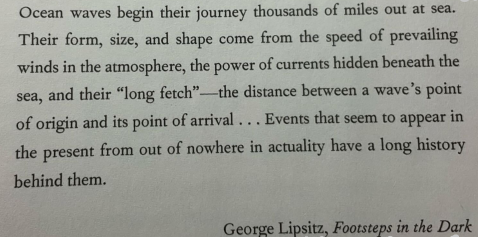
and
I believe Footsteps in the Dark is an academic text, the subtitle is The Hidden Histories of Popular Music.
Ok, on to chapter 1.
Chapter 1 (December 1981 New York)
We have a narrator – Ellie. She’s living in New York selling perfume (one of those people who want to squirt you as you walk through a department store).
I am thinking this chapter might be a bit of a framing device.
Ellie is from Iran. Her husband is an academic and they left Iran before the revolution. She had a friend, Homa, and it appears that Ellie did something terrible to her and they have been estranged for 17 years.
Out of the blue a letter arrives from Homa – breezy and full of news, but giving her phone number and requesting and urgent call.
Will Ellie call her?
On the way to catch the train home after work, Ellie gives her slice of pizza and all of her cash to an old beggar woman. Why is this in the book? Are we meant to see Ellie in a kind light (so we think better of her when we know what she did)
The bitter, sour notes would forever remind me of one long-ago night in Iran. The night when an act of betrayal changed the entire course of my friendship with Homa and both of our lives.
At the end of my shift, I removed my name pin, put it in the counter drawer, then pulled on my warm camel coat and striped leg warmers
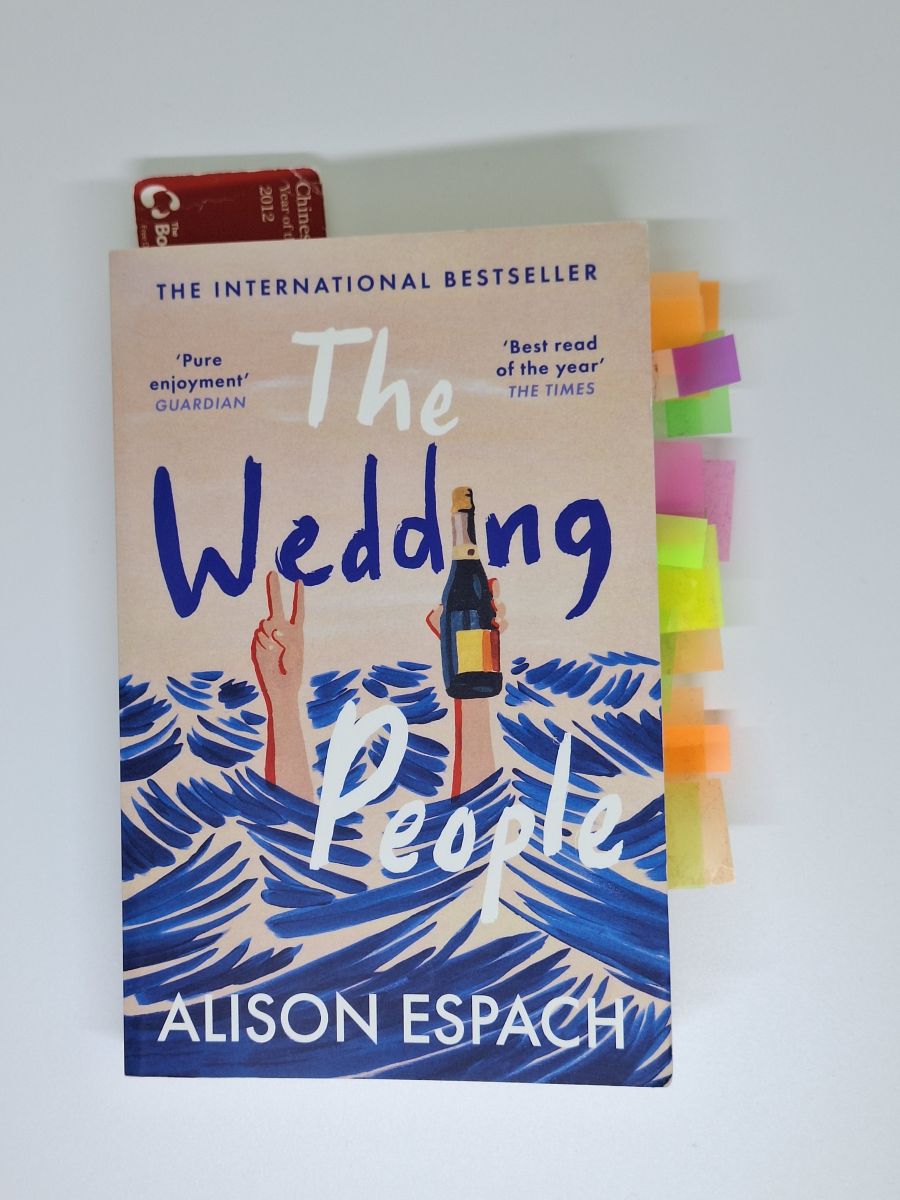
I reserved this at the library, it took about a year for it to be my turn, but once I got started, I knew I needed my own copy.
Here is the blurb …
Phoebe Stone arrives at a grand beachside hotel in Rhode Island wearing her best dress and her least comfortable shoes. Immediately she is mistaken for one of the wedding people – but she is actually the only guest at the Cornwall Inn who isn’t here for the big event.
When the bride discovers her elaborate destination wedding could be ruined by a divorced and depressed stranger, she is furious. Lila has spent months accounting for every detail and every possible disaster – except for, well, Phoebe… Soon both women find their best laid plans derailed and an unlikely confidante in one another.
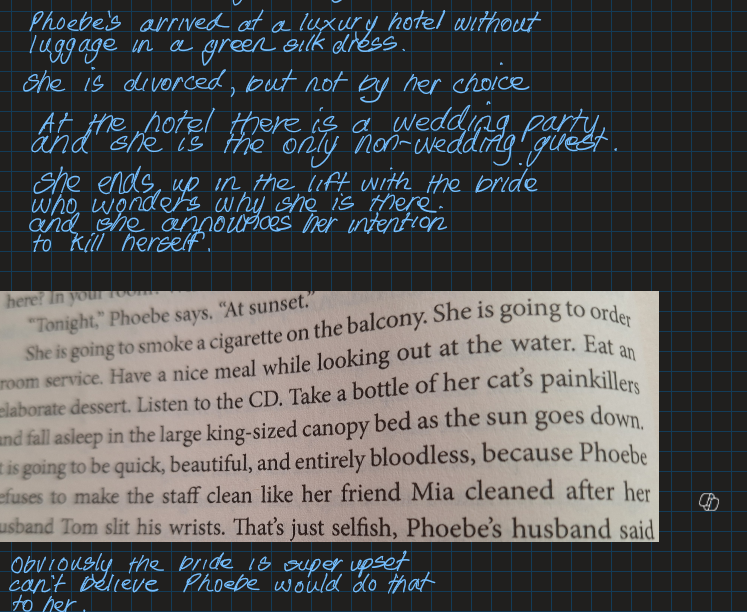
I have been trialing a new approach to reading – to ensure that I am actually taking things in – I have been writing chapter summaries (after reading each chapter twice) along with my thoughts and comments.
A snapshot of my summaries (I am using OneNote)
It did occur to me when I got to the end of this novel that I should have uploaded my summaries one at a time – or at least my thoughts on that chapter. Don’t worry, I am not going to inflict them all on you now.
This novel resonanted with me, the characters were incredibly life-like in all of their messy, kind and ordinary ways.
It was about honesty – being honest with ourselves and others. About having the confidence to choose the bigger life rather than drifting.
Phoebe is devasted by her divorce (to the point of suicide). She realises over the days of the wedding (yes days!) that her life has been contained – always trying to do the right thing, and to not be too much. When she no longer cares what people think she starts speaking her truth. I think many women would identify with this – trying to be good, all things to all people.
Lila wants the wedding to be perfect because then her life, and her marriage will be perfect.
And Gary? Well he’s just standing by letting Lila make all of the plans.
There are some funny moments and some very poignant ones.
All in all a very satisfying novel.
Some of my favourite quotes
Her whole life felt like work now. Even the parts that used to be the most fun, like reading over the summer or orgasming during sex or having conversations with her husband at dinner. They felt like things she had to be really good at now, in order to prove that everything was normal.
“I don’t know. It’s just what I believe,” Phoebe says. One of the few things Nietzsche wrote that she agreed with in graduate school. “Seems more plausible that Hell is some revenge fantasy concocted by unhappy people so they could punish all the happy people in their minds.”
But that is how it happens, she realises. One moment of pretending to be great leads to the next moment of pretending to be great, and ten years later, she realises she has spent her entire life just pretending to be great.
She doesn’t have to be anything, ever. Her husband is not watching. Her father is not watching. Nobody was ever really watching, except Phoebe. Phoebe was the only person waiting in the dark to condemn herself for every single thing when the day was over.
And it was perfect. It really was. But life is strange, always thinking this one thing is going to make you happy, because then you get it, and then maybe you’re not as happy as you imagined you would be, because every day is still just every day. Like the happiness becomes so big, you have no choice but to live inside of it, until you can no longer see it or feel it. And so you start to fixate on something else – you want a child, and then the child is here, and that happiness is so big, it begins to feel like nothing. Like just the air around you.
You do things in the moment for the person you hope you might be two years from now. You don’t kill yourself when you’re sad because one day you might not be sad, and you might want to go surfing with a man you really like?
To collect is to care more than most. But it is also to hoard. To take things out of the world and make them only yours.

.jpg)