Category Archives: Fiction

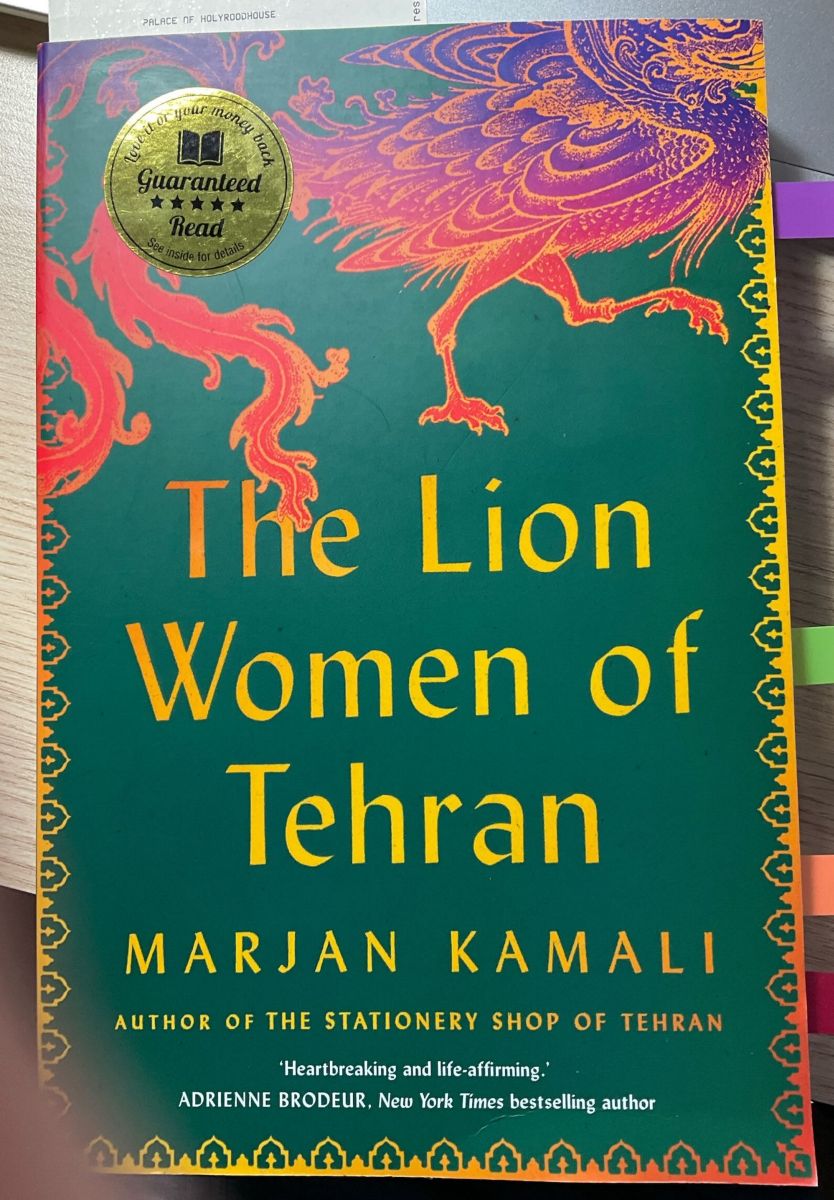
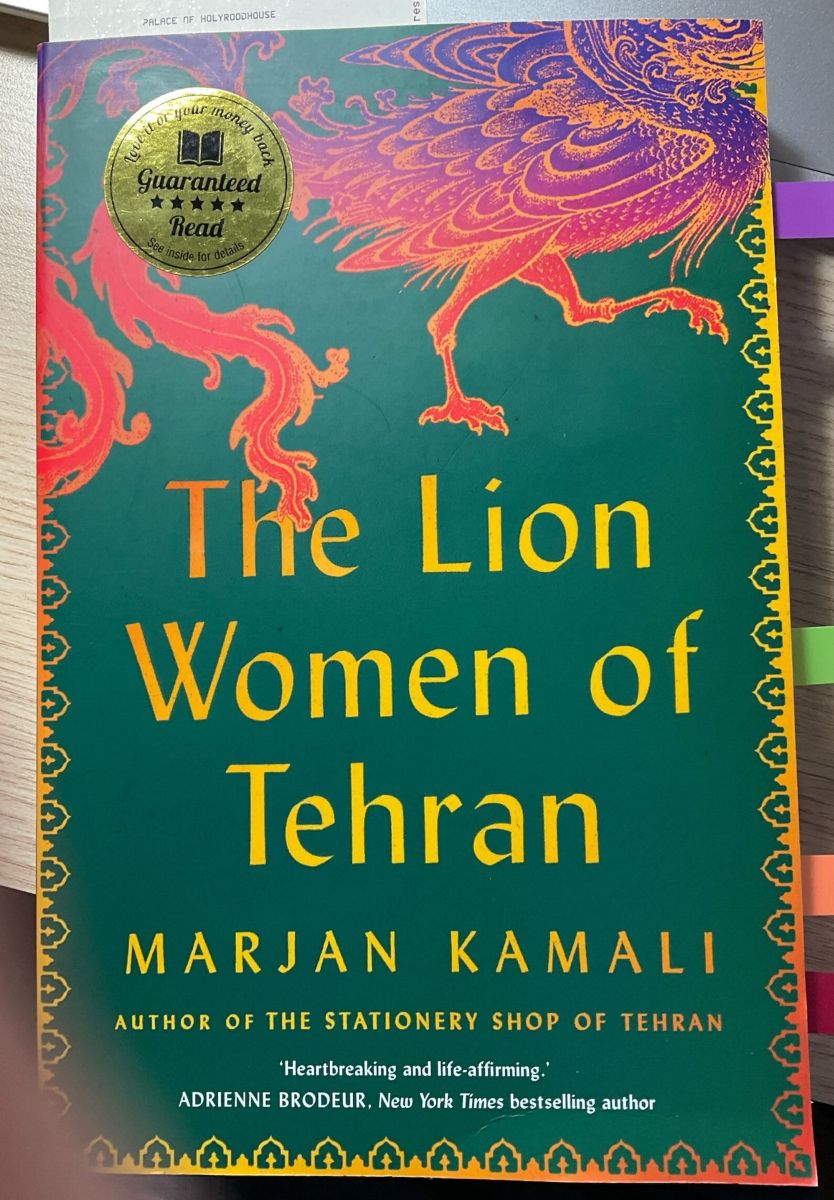
The Lion Women of Tehran (Chapter 7 and 8) – Marjan Kamali

The Lion Women of Tehran – Marjan Kamali

Chapter 7 1953 May and June

The girls get a detention. Ellie wins ‘first in class’. There is a crowning ceremony and a lunch. She excitedly tells her mother who is calmly (icily) happy for her, but seems more interested in the fact that Ellie won’t be home for lunch.

After the crowning ceremony the girls get the afternoon off. Ellie returns unexpectedly to the house to find her mother in bed with her uncle (I thought this was going to happen).

Is the mother doing this because she thinks this is the only way she can saw Ellie?

Chapter 8 1953 June

The mother and Uncle Massoud are getting married and they are all moving ‘uptown’.

Ellie asks her mother why she accepted him when she use to say that she couldn’t stand him.

You sacrifice yourself for others.

She has to say goodbye to Homa. Homa gives her a necklace with a Homa bird pendant. Ellie gives Homa a notebook.

She is desperately unhappy about the move.

Leave a Comment

Filed under Fiction, Historical Fiction, Paper, Summary

The Lion Women of Tehran (Chapter 4,5 and 6) – Marjan Kamali

The Lion Women of Tehran – Marjan Kamali

Chapter Four – October 1950

Ellie goes to Homa’s house after school. Ellie’s mother won’t have Homa in her house (I tell you this woman is awful).

Homa’s mother is lovely. Homa has a baby sister Sarah. They play hopscotch, jump rope and eat amazing pastries. Ellie wants Homa’s life, she is jealous of her.

Chapter Five – November 1950

Ellie and Homa become firm friends. Homa’s mother teaches them how to cook. At home Ellie’s mother is letting her do more cooking.

Ellie can’t understand how Homa’s family can afford so much food. It turns out that Homa’s father is the head waiter at a restaurant and he brings home the excess.

Chapter 6 May 1953

We’ve jumped in time (thankfully it was beginning to feel a bit slow). Both girls are doing well at school. They have skipped a grade.

Towards the end of the year Homa convinces Ellie to skip school. The go to the Grand Bazaar and eat ice cream and have nuts. They return for lunch at home.

Ellie’s mother knows she has skipped school – they were seen by one of the neighbours. There is a nasty argument about Homa.

[…] her father waits on people all day like a servant. Her mother is illiterate. They are vermin in the alley, my dear. They are nobodies who come from nobodies.

Ellie responds with

So the fact that you are his descendent [the qajar king] basically makes you the great-grand daughter of a whore.

Something is brewing. This chapter marks a turning point for the mother. She seems to have made a decision (is she going to marry Uncle Massoud?)

Leave a Comment

Filed under Fiction, Historical Fiction, Paper, Summary

The Lion Women of Tehran (Chapter 3) – Marjan Kamali

The Lion Women of Tehran – Marjan Kamali

Remember lots of spoilers.

Chapter Three 1950

Ellie starts school. She walks herself to school following the directions of Uncle Massoud (is her mother depressed? sad? or just useless). She is hoping to meet an amazing girl who will become her best friend. She just meets an annoying girl.

Five weeks later, on a Wednesday, she is heading home for lunch (they get 2 hours!). Her mother makes her pick the stones and grit out of the rice (apparently the mother’s eyes don’t work very well from all of the crying). And then the mother is too tired to prepare anything else, so they have rice and yogurt. On the way back to school she meets the annoying girl, Homa, who, after calling her a donkey asks her to play – hopscotch, 5 stones. They race back to school (Ellie enjoys the running).

This is still a setting the scene chapter. Homa has just been introduced, any sympathy for the mother is declining and Uncle Massoud is taking at least minimal care of them.

Leave a Comment

Filed under Fiction, Historical Fiction, Miscellaneous, Paper, Summary

Villette – Charlotte Bronte

Villette – Charlotte Brontë

I have tried to read Villette many times. I usually get to the part when Lucy is desperately lonely and visits the catholic church. However, this time I made it all the way to the end (and it has a happy ending (well maybe a happy ending) – who knew? I thought it was going to be miserable).

Here’s the wikipedia summary

Villette begins with its protagonist and unreliable narrator, Lucy Snowe, aged 13, staying at the home of her godmother Mrs. Bretton in “the clean and ancient town of Bretton”, in England. Also in residence are Mrs. Bretton’s teenaged son, John Graham Bretton (whom the family calls Graham), and a young visitor, Paulina Home (who is called Polly), who is aged 6. Polly’s mother, who neglected her daughter, has recently died and her father is recommended by doctors to travel to improve his spirits. Polly is invited by Mrs. Bretton to stay. Polly is a serious little girl, who is described as unlike normal children.

Polly soon develops a deep devotion to Graham, who showers her with attention. But Polly’s visit is cut short when her father arrives to summon her to live with him abroad.

For reasons that are not stated, Lucy leaves Mrs. Bretton’s home a few weeks after Polly’s departure. Some years pass, during which an unspecified family tragedy leaves Lucy without family, home, or means. After some initial hesitation, she is hired as a caregiver by Miss Marchmont, a rheumatic crippled woman. Lucy is soon accustomed to her work and has begun to feel content with her quiet, frugal lifestyle.

The night of a dramatic storm, Miss Marchmont regains all her energy and feels young again. She shares with Lucy her sad love story of 30 years ago, and concludes that she should treat Lucy better and be a better person. She believes that death will reunite her with her dead lover. The next morning, Lucy finds Miss Marchmont died in the night.

Newspaper illustration from abridged version of Villette, 1909

Lucy then leaves the English countryside and goes to London. At the age of 22, she boards a ship for Labassecour despite knowing very little French. On the ship, she meets Ginevra Fanshawe, who tells Lucy that the directress of her boarding school for girls (based upon the Hegers’ Brussels pensionnat) she is attending, Madame Beck, needs a bonne for her children. She travels to the city of Villette in Labassecour where Madame Beck’s school is located. After a time, she is hired to teach English at the school, in addition to having to mind Madame Beck’s three children. She thrives despite Madame Beck’s constant spying on the staff and students.

“Dr. John,” a handsome English doctor, frequently visits the school at the behest of Madame Beck, and deepens his affection for the coquette Ginevra Fanshawe. In one of Villette’s famous plot twists, “Dr. John” is later revealed to be John Graham Bretton, a fact that Lucy has known since he once asked her why she was staring at him, but has deliberately concealed from the reader.

During the school holidays, all the teachers and pupils have either gone to travel abroad or gone back to their families. The school is completely empty except for a disabled child whom Lucy is supposed to take care of. After the disabled child is fetched away, Lucy is extremely lonely and becomes both mentally and physically ill. She goes to a Catholic church (despite being a Protestant) to confess to a priest. On the way back to the school, she collapses due to fever and mental exhaustion. Dr. John brings her to his home, which he shares with his mother, Mrs. Bretton.

Graham recognises Lucy only after she is brought to Mrs. Bretton’s home. After Dr. John (i.e., Graham) discovers Ginevra’s true character while at the theatre, he turns his attention to Lucy, and they become close friends. She values this friendship highly despite her usual emotional reserve. Lucy soon develops feelings for Dr. John and treasures the letters he sends her once she returns to the pensionnat.

Lucy and Graham meet Polly (Paulina Home) again at the same theatre after a fire, in which Polly is injured. Polly’s father has inherited the title “de Bassompierre” and is now a Count; thus her name is now Paulina Mary Home de Bassompierre. Polly and Graham soon discover that they knew each other in the past and slowly renew their friendship. They fall in love and eventually marry despite the initial reluctance of Polly’s father.

Lucy becomes progressively closer to a colleague, the irascible, autocratic, and confrontational professeur, M. Paul Emanuel, a relative of Mme. Beck. Lucy gradually realises that his apparent antagonism is actually helping her to overcome her weaknesses and to grow. She and Paul eventually fall in love.

However, a group of conspiring antagonists, including Madame Beck, the priest Père Silas, and the relatives of M. Paul’s long-dead fiancée, work to keep the two apart, on the grounds that a union between a Catholic and a Protestant is impossible. They finally succeed in forcing M. Paul’s departure for Guadeloupe to oversee a plantation there. He nonetheless declares his love for Lucy before his departure and arranges for her to live independently as the headmistress of her own day school, which she later expands into a pensionnat.

During the course of the novel, Lucy has three encounters with the figure of a nun — which may be the ghost of a nun who was buried alive on the school’s grounds as punishment for breaking her vow of chastity. In a highly symbolic scene near the end of the novel, she discovers the “nun’s” habit in her bed and destroys it. She later finds out that it was a disguise worn by Ginevra’s amour, Alfred de Hamal, placed in Lucy’s bed as a prank. The episodes with the nun no doubt contributed substantially to the novel’s reputation as a gothic novel. Ginevra keeps in contact with Lucy through letters that show the young coquette has not changed and expects to live off of her uncle’s (Basompierre’s) good graces.

Villette’s final pages are ambiguous. Although Lucy says that she wants to leave the reader free to imagine a happy ending, she hints strongly that M. Paul’s ship was destroyed by a storm during his return journey from the West Indies. She says that, “M. Emanuel was away three years. Reader, they were the three happiest years of my life.” This passage suggests that he was drowned by the “destroying angel of tempest.”

There is not much of a plot to this novel, it’s more about Lucy’s progress through life. Her loneliness, her self-possession, the impact other people have on her (both well-meaning and not so well-meaning – Madame Beck and her surveillance). The story is told from Lucy’s point of view. She is a solitary creature who longs for human connection. It is definitely from the 19th century, there is a lot of thinking, religion, and discussions about duty.

Claire Fallon’s thoughts on Villette

1 Comment

Filed under 4, Audio, Classic, Fiction, Recommended, Romance, Serious

The Lion Women of Tehran (Chapter 2)- Marjan Kamali

The Lion Women of Tehran – Marjan Kamali

Right chapter two.

I was right – we have returned to the past.

It’s 1950, Ellie is 7 and her dad has just died from tuberculosis.

Her uncle (father’s brother) makes them move out of their mansion and into an apartment in the ‘slums’. There is an implication that this move is a punishment because Ellie’s mother has refused to marry him.

Ellie is going to start school and she is hoping to make friends.

We learn her mother is descended from Qajar royalty.

Leave a Comment

Filed under Fiction, Historical Fiction, Paper, Summary

The Lion Women of Tehran – Marjan Kamali (Chapter 1)

This is my latest book club book, which (I am embarrased to say), I already had in my pile.

As per my previous post, I am going to talk about chapter 1 – heaps of spoilers.

There are two quotes before the book starts

I googled Forugh Farrokhzad she was a poet and film maker who died when she was 32 in a car accident. She was divorced and had little access to her son (apparently because of all of her affairs). A strong feminist voice.

and

I believe Footsteps in the Dark is an academic text, the subtitle is The Hidden Histories of Popular Music.

Ok, on to chapter 1.

Chapter 1 (December 1981 New York)

We have a narrator – Ellie. She’s living in New York selling perfume (one of those people who want to squirt you as you walk through a department store).

I am thinking this chapter might be a bit of a framing device.

Ellie is from Iran. Her husband is an academic and they left Iran before the revolution. She had a friend, Homa, and it appears that Ellie did something terrible to her and they have been estranged for 17 years.

Out of the blue a letter arrives from Homa – breezy and full of news, but giving her phone number and requesting and urgent call.

Will Ellie call her?

On the way to catch the train home after work, Ellie gives her slice of pizza and all of her cash to an old beggar woman. Why is this in the book? Are we meant to see Ellie in a kind light (so we think better of her when we know what she did)

The bitter, sour notes would forever remind me of one long-ago night in Iran. The night when an act of betrayal changed the entire course of my friendship with Homa and both of our lives.

At the end of my shift, I removed my name pin, put it in the counter drawer, then pulled on my warm camel coat and striped leg warmers

I had to put the leg warmer one in, so eighties.

1 Comment

Filed under Fiction, Historical Fiction, Summary

The Wedding People – Alison Espach

Wedding People – Alison Espach

I reserved this at the library, it took about a year for it to be my turn, but once I got started, I knew I needed my own copy.

Here is the blurb …

Phoebe Stone arrives at a grand beachside hotel in Rhode Island wearing her best dress and her least comfortable shoes. Immediately she is mistaken for one of the wedding people – but she is actually the only guest at the Cornwall Inn who isn’t here for the big event.

When the bride discovers her elaborate destination wedding could be ruined by a divorced and depressed stranger, she is furious. Lila has spent months accounting for every detail and every possible disaster – except for, well, Phoebe… Soon both women find their best laid plans derailed and an unlikely confidante in one another.

I have been trialing a new approach to reading – to ensure that I am actually taking things in – I have been writing chapter summaries (after reading each chapter twice) along with my thoughts and comments.

A snapshot of my summaries (I am using OneNote)

It did occur to me when I got to the end of this novel that I should have uploaded my summaries one at a time – or at least my thoughts on that chapter. Don’t worry, I am not going to inflict them all on you now.

This novel resonanted with me, the characters were incredibly life-like in all of their messy, kind and ordinary ways.

It was about honesty – being honest with ourselves and others. About having the confidence to choose the bigger life rather than drifting.

Phoebe is devasted by her divorce (to the point of suicide). She realises over the days of the wedding (yes days!) that her life has been contained – always trying to do the right thing, and to not be too much. When she no longer cares what people think she starts speaking her truth. I think many women would identify with this – trying to be good, all things to all people.

Lila wants the wedding to be perfect because then her life, and her marriage will be perfect.

And Gary? Well he’s just standing by letting Lila make all of the plans.

There are some funny moments and some very poignant ones.

All in all a very satisfying novel.

Some of my favourite quotes

Her whole life felt like work now. Even the parts that used to be the most fun, like reading over the summer or orgasming during sex or having conversations with her husband at dinner. They felt like things she had to be really good at now, in order to prove that everything was normal.

“I don’t know. It’s just what I believe,” Phoebe says. One of the few things Nietzsche wrote that she agreed with in graduate school. “Seems more plausible that Hell is some revenge fantasy concocted by unhappy people so they could punish all the happy people in their minds.”

But that is how it happens, she realises. One moment of pretending to be great leads to the next moment of pretending to be great, and ten years later, she realises she has spent her entire life just pretending to be great.

She doesn’t have to be anything, ever. Her husband is not watching. Her father is not watching. Nobody was ever really watching, except Phoebe. Phoebe was the only person waiting in the dark to condemn herself for every single thing when the day was over.

And it was perfect. It really was. But life is strange, always thinking this one thing is going to make you happy, because then you get it, and then maybe you’re not as happy as you imagined you would be, because every day is still just every day. Like the happiness becomes so big, you have no choice but to live inside of it, until you can no longer see it or feel it. And so you start to fixate on something else – you want a child, and then the child is here, and that happiness is so big, it begins to feel like nothing. Like just the air around you.

You do things in the moment for the person you hope you might be two years from now. You don’t kill yourself when you’re sad because one day you might not be sad, and you might want to go surfing with a man you really like?

To collect is to care more than most. But it is also to hoard. To take things out of the world and make them only yours.

A review.

Leave a Comment

Filed under 5, Fiction, Paper, Recommended

Anna Karenina – Leo Tolstoy

Anna Karenina – Leo Tolstoy

After my success at listening to War and Peace, I decided to try Anna Karenina, and this version is read by Maggie Gyllenhaal (what could be better?).

Here is the Goodreads blurb …

Acclaimed by many as the world’s greatest novel, Anna Karenina provides a vast panorama of contemporary life in Russia and of humanity in general. In it Tolstoy uses his intense imaginative insight to create some of the most memorable characters in all of literature. Anna is a sophisticated woman who abandons her empty existence as the wife of Karenin and turns to Count Vronsky to fulfil her passionate nature – with tragic consequences. Levin is a reflection of Tolstoy himself, often expressing the author’s own views and convictions.

Throughout, Tolstoy points no moral, merely inviting us not to judge but to watch. As Rosemary Edmonds comments, ‘He leaves the shifting patterns of the kaleidoscope to bring home the meaning of the brooding words following the title, ‘Vengeance is mine, and I will repay.

I am sure that everyone knows the story of Anna Karenina. And I have watched several adaptations; this one – with Keira Knightley, this one – with Sophie Marceau and Sean Bean as Vronsky, and a modern Australian version, The Beautiful Lie – with Sarah Snook.

Given that I felt I knew the story, I was pleasantly surprised by the novel. I have always thought that Karenin and Vronsky dashing and heroic, and Anna makes really bad decisions. However, now I think Karenin was good, but too christian, and Vronsky is a cad, and Anna still makes really bad decisions.

Although to be fair to Anna, this was the time before divorce, and she was stuck in a marriage with an old boring man, and she had nothing to do.

Vronsky should not have pursued her so relentlessly. He was selfish and self-centred.

Anna reminded me of Madame Bovary – that need for drama, romance and love. Not to mention blowing up their own lives. Madame Bovary was serialised in 1856 and Anna Karenina was published in 1878. Was Tolstoy having a conversation with Flaubert? Or is this a common type of woman in the 19th Century?

I did, however, like Levin and Kitty. They made up for all of the awful, selfish characters.

A review.

Leave a Comment

Filed under 4, Audio, Fiction, Format, Historical Fiction, Recommended, Serious

The Ladies Road Guide to Utter Ruin (Book 2) – Alison Goodman

The Ladies Guide to Utter Ruin – Alison Goodman

Miss A got this from Dymocks as an advanced reader copy. It languished on my pile until a friend read it, and then I finally dug it out. I have read the first one, and I think it is better if you read the first one before this one.

Here’s the blurb …

To most of Regency high society, forty-two-year-old Lady Augusta Colebrook, or Gus, and her twin sister, Julia, are just unmarried ladies of a certain age—hardly worth a second glance. But the Colebrook twins are far from useless old maids. They are secretly protecting women and children ignored by society and the law.

When Lord Evan—a charming escaped convict who has won Gus’s heart—needs to hide his sister and her lover from their vindictive brother, Gus and Julia take the two women into their home. They know what it is like to have a powerful and overbearing brother. But Lord Evan’s complicated past puts them all in danger. Gus knows they must clear his name of murder if he is to survive the thieftakers who hunt him. But it is no easy task—the fatal duel was twenty years ago and a key witness is nowhere to be found.                    

In a deadly cat-and-mouse game, Gus, Julia, and Lord Evan must dodge their pursuers and investigate Lord Evan’s past. They will be thrust into the ugly underworld of Georgian gentlemen’s clubs, spies, and ruthless bounty hunters, not to mention the everyday threat of narrow-minded brothers. Will the truth be found in time, or will the dangerous secrets from the past destroy family bonds and rip new love and lives apart?

These novels are adventurous romps. They’re full of period detail, but the heroines and heroes have modern sensibilities (at least as to how they view women). The villains are despicable and evil, and then there are the men (and women) who have extremely conservative views (Lord Duffy for instance).

There is an occasional reference to Austen – one of the characters is reading Sense and Sensibility and another character is given the false name of Miss Dashwood.

He glared at me. “I do not take my leave of you, Augusta. You will not receive my courtesy until you behave in the manner of a gentle woman and a sister.”

Very Lady Catherine De Burgh.

These are lots of fun and the end sets up the next one.

A review.

Leave a Comment

Filed under 4, Australian, Fiction, Historical Fiction, Paper, Recommended, Romance

Love Forms – Claire Adam

Love Forms – Claire Adam

As you’re probably all aware, this novel has been long-listed for the Booker Prize. It sounded appealing so I bought a kindle copy (it’s not available in paper in Australia yet) and an audible copy. In the end I listened to it.

Here’s the blurb …

Trinidad, 1980: Dawn Bishop, aged 16, leaves her home and journeys across the sea to Venezuela. There, she gives birth to a baby girl, and leaves her with nuns to be given up for adoption.

Dawn tries to carry on with her life – a move to England, a marriage, a career, two sons, a divorce – but through it all, she still thinks of the child she had in Venezuela, and of what might have been.

Then, forty years later, a woman from an internet forum gets in touch. She says that she might be Dawn’s long-lost daughter, stirring up a complicated mix of feelings: could this be the person to give form to all the love and care a mother has left to offer?

This was beautiful. Dawn is telling us her story with lots of tangents and interesting side stories. The story unfolds slowly with gaps that get filled in later. It’s about parents, children, family life, the immigrant experience, and mistakes made when young.

A review.

Leave a Comment

Filed under 5, Audio, Digital, Fiction, Recommended