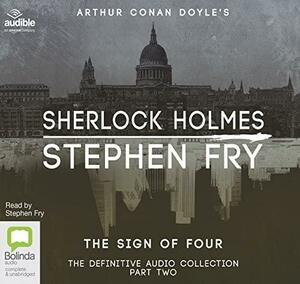
I have continued my Sherlock Holmes adventure with number two. Also read by Stephen Fry.
Here’s the blurb …
Sherlock Holmes is bored and case-less, and relieving his boredom by alternating morphine and cocaine. Enter the charming Miss Mary Morstan, with whom Watson is instantly smitten. She requests the assistance of Holmes and Watson to solve the mysterious disappearance of her father, and the subsequent invitation to ‘have justice’ by an anonymous letter writer.
Holmes and Watson happily accompany her to see the anonymous letter writer; only to become deeply embroiled in a mystery concerning treasure, murders, India, escaped convicts and small savages with poisoned blowpipes.
I enjoyed this – the interesting locations; India, and the Andaman Islands, there is treasure, a man with a wooden leg, an Indian uprising, and a murder in a locked room.
It had the same structure as number one – first half solving the crime and the second half from the criminal’s perspective. Is this the standard Sherlock Holmes’ structure?
Dr Watson meets Mary! What happens now? How can he continue to live with Sherlock?
I am having a bit of a pause while I listen to Bad Actors by Mick Herron (I always like a Slough House novel).
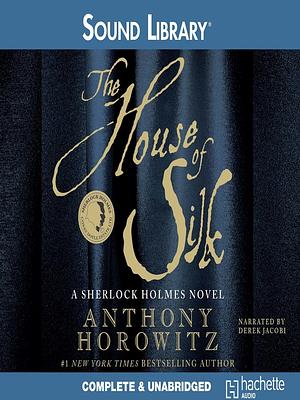
I read the Anthony Horowitz’s The House of Silk, which is a Sherlock Holmes’ novel written by Horowitz with approval from the estate, and I enjoyed it so I thought I would tackle the real thing. I remember a friend telling me to read them years ago – sorry Jacq I am finally onto it!
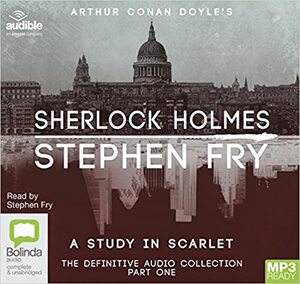
This is the first in the series, here is the blurb …
Dr. John Watson, discharged from military service after suffering severe wounds, is at a loose end until a chance encounter leads him to take rooms with a remarkable young man. The arrogant, irascible Sherlock Holmes is a master chemist, a talented musician and an expert on all aspects of crime. And when Watson is drawn into the investigation of a bizarre murder in which Holmes is involved, he is unaware that it is the beginning of the most famous partnership in the history of criminal detection.
First, Stephen Fry is a fabulous narrator.
In this first novel we get most of the characteristics that Sherlock is known for – amazing detection skills, cocaine taker, musician, weird experiments (he was beating a corpse to see if bruises can happen after death) etc. This novel is written in two parts (and possibly they all are?). In the first part, we get to the point where we know the murderer and then in the second part we get his back story – in this case set amongst the mormans in Utah!
I love how they are written – a bit Dickensian, with gentlemen, street urchins, and young ladies who require protection.
After Magpie Murders, I wanted to read more Anthony Horowitz. In particular, I wanted to read the next one in the Magpie series, but that wasn’t in our Audible library (and I am trying not to buy anymore books). However, I did find this one.
Here’s the blurb …
For the first time in its one-hundred-and-twenty-five-year history, the Arthur Conan Doyle Estate has authorized a new Sherlock Holmes novel.
Once again, The Game’s Afoot…London, 1890. 221B Baker St. A fine art dealer named Edmund Carstairs visits Sherlock Holmes and Dr John Watson to beg for their help. He is being menaced by a strange man in a flat cap – a wanted criminal who seems to have followed him all the way from America. In the days that follow, his home is robbed, his family is threatened. And then the first murder takes place.
Almost unwillingly, Holmes and Watson find themselves being drawn ever deeper into an international conspiracy connected to the teeming criminal underworld of Boston, the gaslit streets of London, opium dens and much, much more. And as they dig, they begin to hear the whispered phrase-the House of Silk-a mysterious entity that connects the highest levels of government to the deepest depths of criminality. Holmes begins to fear that he has uncovered a conspiracy that threatens to tear apart the very fabric of society.
The Arthur Conan Doyle Estate chose the celebrated, #1 New York Times bestselling author Anthony Horowitz to write The House of Silk because of his proven ability to tell a transfixing story and for his passion for all things Holmes. Destined to become an instant classic, The House of Silk brings Sherlock Holmes back with all the nuance, pacing, and almost superhuman powers of analysis and deduction that made him the world’s greatest detective, in a case depicting events too shocking, too monstrous to ever appear in print…until now.
I have never read any Sherlock Holmes, but I did love the series with Benedict Cumberbatch and Martin Freeman. I was picturing them while reading/listening to it.
I very much enjoyed this – if this is what the original Sherlock Holmes novels are like, I will have to read them. There was more than one crime, several mysteries, poor children, rich ladies, American outlaws, art and possibly poison.
I watched the 2011 TV adaptation (which is great), then I read a paper copy, and now I have listened to it. Clearly a bit of a favourite.
Here’s the blurb …
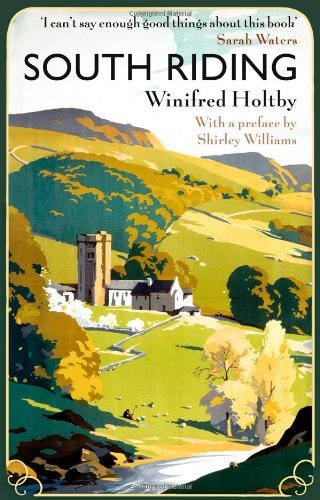
Winifred Holtby’s masterpiece is a rich evocation of the lives and relationships of the characters of South Riding. Sarah Burton, the fiery young headmistress of the local girls’ school; Mrs Beddows, the district’s first alderwoman—based on Holtby’s own mother; and Robert Carne, the conservative gentleman-farmer locked in a disastrous marriage—with whom the radical Sarah Burton falls in love. Showing how public decisions can mold the individual, this story offers a panoramic and unforgettable view of Yorkshire life.
I really enjoyed this novel. I think it shows a slice of rural life in England between the wars. The machinations of the local council, the living conditions of the poor (lack of sanitation, not to mention birth control), the lack of welfare services (I am thinking of Lydia having to leave school to look after her siblings after her mother dies), but there is also community spirit and a hope that things will improve.
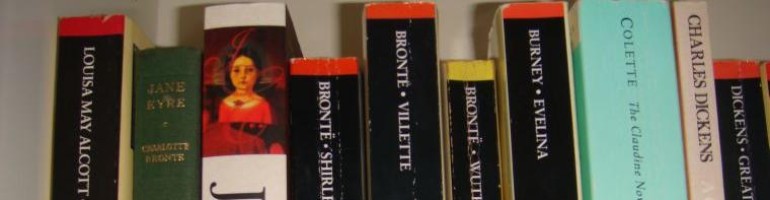
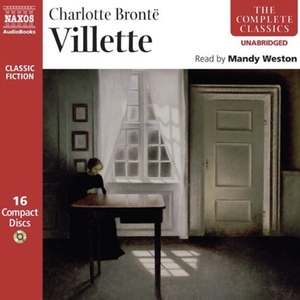
I have tried to read Villette many times. I usually get to the part when Lucy is desperately lonely and visits the catholic church. However, this time I made it all the way to the end (and it has a happy ending (well maybe a happy ending) – who knew? I thought it was going to be miserable).
Here’s the wikipedia summary
Villette begins with its protagonist and unreliable narrator, Lucy Snowe, aged 13, staying at the home of her godmother Mrs. Bretton in “the clean and ancient town of Bretton”, in England. Also in residence are Mrs. Bretton’s teenaged son, John Graham Bretton (whom the family calls Graham), and a young visitor, Paulina Home (who is called Polly), who is aged 6. Polly’s mother, who neglected her daughter, has recently died and her father is recommended by doctors to travel to improve his spirits. Polly is invited by Mrs. Bretton to stay. Polly is a serious little girl, who is described as unlike normal children.
Polly soon develops a deep devotion to Graham, who showers her with attention. But Polly’s visit is cut short when her father arrives to summon her to live with him abroad.
For reasons that are not stated, Lucy leaves Mrs. Bretton’s home a few weeks after Polly’s departure. Some years pass, during which an unspecified family tragedy leaves Lucy without family, home, or means. After some initial hesitation, she is hired as a caregiver by Miss Marchmont, a rheumatic crippled woman. Lucy is soon accustomed to her work and has begun to feel content with her quiet, frugal lifestyle.
The night of a dramatic storm, Miss Marchmont regains all her energy and feels young again. She shares with Lucy her sad love story of 30 years ago, and concludes that she should treat Lucy better and be a better person. She believes that death will reunite her with her dead lover. The next morning, Lucy finds Miss Marchmont died in the night.
Newspaper illustration from abridged version of Villette, 1909
Lucy then leaves the English countryside and goes to London. At the age of 22, she boards a ship for Labassecour despite knowing very little French. On the ship, she meets Ginevra Fanshawe, who tells Lucy that the directress of her boarding school for girls (based upon the Hegers’ Brussels pensionnat) she is attending, Madame Beck, needs a bonne for her children. She travels to the city of Villette in Labassecour where Madame Beck’s school is located. After a time, she is hired to teach English at the school, in addition to having to mind Madame Beck’s three children. She thrives despite Madame Beck’s constant spying on the staff and students.
“Dr. John,” a handsome English doctor, frequently visits the school at the behest of Madame Beck, and deepens his affection for the coquette Ginevra Fanshawe. In one of Villette’s famous plot twists, “Dr. John” is later revealed to be John Graham Bretton, a fact that Lucy has known since he once asked her why she was staring at him, but has deliberately concealed from the reader.
During the school holidays, all the teachers and pupils have either gone to travel abroad or gone back to their families. The school is completely empty except for a disabled child whom Lucy is supposed to take care of. After the disabled child is fetched away, Lucy is extremely lonely and becomes both mentally and physically ill. She goes to a Catholic church (despite being a Protestant) to confess to a priest. On the way back to the school, she collapses due to fever and mental exhaustion. Dr. John brings her to his home, which he shares with his mother, Mrs. Bretton.
Graham recognises Lucy only after she is brought to Mrs. Bretton’s home. After Dr. John (i.e., Graham) discovers Ginevra’s true character while at the theatre, he turns his attention to Lucy, and they become close friends. She values this friendship highly despite her usual emotional reserve. Lucy soon develops feelings for Dr. John and treasures the letters he sends her once she returns to the pensionnat.
Lucy and Graham meet Polly (Paulina Home) again at the same theatre after a fire, in which Polly is injured. Polly’s father has inherited the title “de Bassompierre” and is now a Count; thus her name is now Paulina Mary Home de Bassompierre. Polly and Graham soon discover that they knew each other in the past and slowly renew their friendship. They fall in love and eventually marry despite the initial reluctance of Polly’s father.
Lucy becomes progressively closer to a colleague, the irascible, autocratic, and confrontational professeur, M. Paul Emanuel, a relative of Mme. Beck. Lucy gradually realises that his apparent antagonism is actually helping her to overcome her weaknesses and to grow. She and Paul eventually fall in love.
However, a group of conspiring antagonists, including Madame Beck, the priest Père Silas, and the relatives of M. Paul’s long-dead fiancée, work to keep the two apart, on the grounds that a union between a Catholic and a Protestant is impossible. They finally succeed in forcing M. Paul’s departure for Guadeloupe to oversee a plantation there. He nonetheless declares his love for Lucy before his departure and arranges for her to live independently as the headmistress of her own day school, which she later expands into a pensionnat.
During the course of the novel, Lucy has three encounters with the figure of a nun — which may be the ghost of a nun who was buried alive on the school’s grounds as punishment for breaking her vow of chastity. In a highly symbolic scene near the end of the novel, she discovers the “nun’s” habit in her bed and destroys it. She later finds out that it was a disguise worn by Ginevra’s amour, Alfred de Hamal, placed in Lucy’s bed as a prank. The episodes with the nun no doubt contributed substantially to the novel’s reputation as a gothic novel. Ginevra keeps in contact with Lucy through letters that show the young coquette has not changed and expects to live off of her uncle’s (Basompierre’s) good graces.
Villette’s final pages are ambiguous. Although Lucy says that she wants to leave the reader free to imagine a happy ending, she hints strongly that M. Paul’s ship was destroyed by a storm during his return journey from the West Indies. She says that, “M. Emanuel was away three years. Reader, they were the three happiest years of my life.” This passage suggests that he was drowned by the “destroying angel of tempest.”
There is not much of a plot to this novel, it’s more about Lucy’s progress through life. Her loneliness, her self-possession, the impact other people have on her (both well-meaning and not so well-meaning – Madame Beck and her surveillance). The story is told from Lucy’s point of view. She is a solitary creature who longs for human connection. It is definitely from the 19th century, there is a lot of thinking, religion, and discussions about duty.
.jpg)