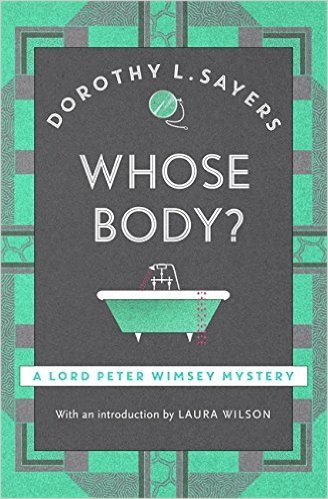
After reading Square Haunting, I was keen to read Dorothy L Sayers. This is the first of the Lord Peter Wimsey mysteries. I listened to this one, narrated by Robert Bathurst.
Here’s the blurb …
It was the body of a tall stout man. On his dead face, a handsome pair of gold pince-nez mocked death with grotesque elegance.
The body wore nothing else.
Lord Peter Wimsey knew immediately what the corpse was supposed to be. His problem was to find out whose body had found its way into Mr Alfred Thipp’s Battersea bathroom.
I loved it, and the crime was fiendish. All of the characters are brilliant – Lord Wimsey, his valet Bunter, fellow detective Mr Parker, and his mother the Dowager Duchess. I imagine all of these characters will reappear in future novels.
The setting is very 1920s London, with Lord Peter needing to dress appropriately for every social event, everyone is ‘jolly decent’ – even the murderer! These are well-written and lots of fun. I shall definitely be reading more. I am quite keen to get to Gaudy Night and Harriet Vane, but I shall read them in order.
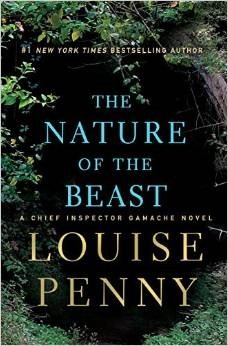
Hardly a day goes by when nine year old Laurent Lepage doesn’t cry wolf. From alien invasions, to walking trees, to winged beasts in the woods, to dinosaurs spotted in the village of Three Pines, his tales are so extraordinary no one can possibly believe him. Including Armand and Reine-Marie Gamache, who now live in the little Quebec village.
But when the boy disappears, the villagers are faced with the possibility that one of his tall tales might have been true.
And so begins a frantic search for the boy and the truth. What they uncover deep in the forest sets off a sequence of events that leads to murder, leads to an old crime, leads to an old betrayal. Leads right to the door of an old poet.
And now it is now, writes Ruth Zardo. And the dark thing is here.
A monster once visited Three Pines. And put down deep roots. And now, Ruth knows, it is back.
Armand Gamache, the former head of homicide for the Sûreté du Québec, must face the possibility that, in not believing the boy, he himself played a terrible part in what happens next.
As usual this is beautifully written. There are lots of literary and biblical references. Plus some hints about what Gamache might do next (I started with number 12, so I know where he goes next). There is evil at the heart of this one, multiple deaths, a serial killer, spies and a reckoning for Ruth.
I found this book in the Book Exchange at Margaret River and had to provide a home for a Perspehone book.
Here is the blurb …
When these captivating and at times bizarre stories were published posthumously in 1949, Angus Wilson wrote: ‘It appears no exaggeration to say that Frances Towers’s death in 1948 may have robbed us of a figure of more than purely contemporary significance. At first glance one might be disposed to dismiss Miss Towers as an imitation Jane Austen, but it would be a mistaken judgment, for her cool detachment and ironic eye are directed more often than not against the sensible breeze that blasts and withers, the forthright candour that kills the soul. Miss Towers flashes and shines now this way, now that, like a darting sunfish.’ ‘At her best her prose style is a shimmering marvel,’ wrote the Independent on Sunday, ‘and few writers can so deftly and economically delineate not only the outside but the inside of a character…There’s always more going on than you can possibly fathom.’ And the Guardian said: ‘Her social range may not be wide, but her descriptions are exquisite and her tone poised between the wry and the romantic.’
I loved it. They are all stories about love, mostly romantic love, but not all. The writing is beautiful. It reminded me a bit of LM Montgomery’s short story writing. I wish there was more I could read.
I love these Gamache novels. This one was more about finding a missing person (but don’t worry there was still a very well planned murder).
Here’s the blurb …
Happily retired in the village of Three Pines, Armand Gamache, former Chief Inspector of Homicide with the Sûreté du Québec, has found a peace he’d only imagined possible. On warm summer mornings he sits on a bench holding a small book, The Balm in Gilead, in his large hands. “There is a balm in Gilead,” his neighbor Clara Morrow reads from the dust jacket, “to make the wounded whole.”
While Gamache doesn’t talk about his wounds and his balm, Clara tells him about hers. Peter, her artist husband, has failed to come home. Failed to show up as promised on the first anniversary of their separation. She wants Gamache’s help to find him. Having finally found sanctuary, Gamache feels a near revulsion at the thought of leaving Three Pines. “There’s power enough in Heaven,” he finishes the quote as he contemplates the quiet village, “to cure a sin-sick soul.” And then he gets up. And joins her.
Together with his former second-in-command, Jean-Guy Beauvoir, and Myrna Landers, they journey deeper and deeper into Québec. And deeper and deeper into the soul of Peter Morrow. A man so desperate to recapture his fame as an artist, he would sell that soul. And may have. The journey takes them further and further from Three Pines, to the very mouth of the great St. Lawrence River. To an area so desolate, so damned, the first mariners called it “the land God gave to Cain.” And there they discover the terrible damage done by a sin-sick soul.
This one ventures out of Three Pines to the wilderness of Québec – there are small planes, rollicking boats (there is a bit of humour in the rooms they are assigned on the boat), art discussions – is there a 10th muse?, and is Ruth in love?
There is kindness, friendship, love and the occasional awful person.
I bought this solely for the title! From here. I always thought slag was an Australian word (like root and chook), but it must also be an English word.
Here’s the blurb …
Slag. Noun. A promiscuous woman, of cheap or questionable character. Mostly derogatory. Sometimes affectionate.
Takes one to know one…
Sisters Sarah and Juliette are going on a whisky-fuelled campervan road-trip across Scotland to celebrate Juliette’s birthday – and they’re going to dig up some demons from the past.
Sarah is 15.
SEXUAL 2.5 (one only went halfway in)
GREAT 1 (her English teacher Mr Keaveney, who definitely feels the same way)
Her annoying younger sister Juliette
Her best friend Nessa, boy band 4Princes
Sarah is 41.
SEXUAL Rather not say, but that last one was compellingly awful
GREAT Nope
Millennials like Juliette thinking they’ve got it bad
Fellow Gen X-ers
From the acclaimed author of ANIMALS and ADULTS, SLAGS is a no-holds-barred, frank and heartfelt exploration of sisterhood, friendship and teenage obsession.
I was at high school in the 80s and slag was used prolifically to insult girls (ya slag). I enjoyed this novel. It has two time periods – contemporary and when Sarah is 15 (alternating chapters). It is all from Sarah’s perspective, sometimes first person and sometimes third.
This is a novel that needs to be read more than once. There is an event early in the novel that seems incidental, but is in fact a triggering event for Sarah’s life.
This novel is about friendships, sisterly relationships, early sexual experiences and the narratives well tell ourselves (sometimes true, but also sometimes false).
I heard the author interviewed on ABC Book Show and thought it sounded interesting, so I tracked down a copy – it did take me a while to get to it (my random number generator is working well).
Here’s the blurb …
Tbilisi’s littered with memories that await me like landmines. The dearly departed voices I silenced long ago have come back without my permission. The situation calls for someone with a plan. I didn’t even bring toothpaste.
Saba is just a child when he flees his home in Georgia with his older brother, Sandro, and father, Irakli, for asylum in the UK after Russia’s occupation of South Ossetia. Two decades later, all three men are struggling to make peace with the past, haunted by the places and people they left behind.
When Irakli decides to return to Georgia, pulled back by memories of a lost wife and a decaying but still beautiful homeland, Saba and Sandro wait eagerly for news. But within weeks of his arrival, Irakli disappears, and the final email they receive from him causes a mystery to unfold before ‘ My boys, I did something I can’t undo. I need to get away from here before those people catch me. Maybe in the mountains I’ll be safe. I left a trail I can’t erase. Do not follow it.’
In a journey that will lead him to the very heart of a conflict that has marred generations and fractured his own family, Saba must retrace his father’s footsteps to discover what remains of their homeland and its people. By turns savage and tender, compassionate and harrowing, Hard by a Great Forest is a powerful and ultimately hopeful novel about the individual and collective trauma of war, and the indomitable spirit of a people determined not only to survive, but to remember those who did not.
This was fabulous – it’s about war and displacement, grief, brothers and there is even a treasure hunt of sorts. Plus it is funny. There are a lot of literary references (I suspect some went over my head), Shakespeare, Charles Bukowski. There is also references to Hansel and Gretel and a trail of bread crumbs.
I can’t believe this hasn’t been more popular or won some awards (it has been nominated for some).
It’s an adventure story and a reckoning with the past.
I have been wanting to read this book for ages, but it was difficult to find a copy. I just checked and there is a kindle version, so I am not sure what my problem was, but in the end I ordered it from Stefan’s Books.
Here’s the blurb …
Maisie Dobbs, Psychologist and Investigator, began her working life at the age of thirteen as a servant in a Belgravia mansion, only to be discovered reading in the library by her employer, Lady Rowan Compton. Fearing dismissal, Maisie is shocked when she discovers that her thirst for education is to be supported by Lady Rowan and a family friend, Dr. Maurice Blanche. But The Great War intervenes in Maisie’s plans, and soon after commencement of her studies at Girton College, Cambridge, Maisie enlists for nursing service overseas. Years later, in 1929, having apprenticed to the renowned Maurice Blanche, a man revered for his work with Scotland Yard, Maisie sets up her own business. Her first assignment, a seemingly tedious inquiry involving a case of suspected infidelity, takes her not only on the trail of a killer, but back to the war she had tried so hard to forget.
I do enjoy things set in the early 20th century. This was delightful. Full of lovely historical detail with good characters and an intriguing mystery/crime to solve.
I believe there is eighteen books in the series, so that will keep me going for a while (plus I am still making my way through the Gamache series).
I am not sure why I selected this book. There are quotes by Miranda Cowley Heller and Yale van der Wouden, two authors I like, so maybe that was why?
Here’s the blurb …
An extraordinarily moving and expansive debut novel that follows three generations of women from New York to rural Ireland and back again.
It is late September in 2001 and the walls of New York are papered over with photos of the missing. Cora Brady’s father is there, the poster she made taped to columns and bridges. Her mother died long ago and now, orphaned on the cusp of adulthood, Cora is adrift and alone. Soon, a letter will arrive with the offer of a new life: far out on the ragged edge of Ireland, in the town where her parents were young, an estranged aunt can provide a home and fulfil a long-forgotten promise. There the story of her family is hidden, and in her presence will begin to unspool…
An essential, immersive debut from an astonishing new voice, Confessions traces the arc of three generations of women as they experience in their own time the irresistible gravity of the past: its love and tragedy, its mystery and redemption, and, in all things intended and accidental, the beauty and terrible shade of the things we do.
This is a female driven narrative told from several points of view. Probably my favourite type of novel. Mostly it is first person, but there is a second person section and an epistolary section – so interesting structurally. Time is not linear either – it moves forwards and backwards, depending on whose perspective we have. It touches on events in the wider world – 9/11, the abortion debate in Ireland, and gay marriage, but mostly it is about relationships – female relationships, sisters, friends, lovers, mothers, etc. The story unfolds gradually, I feel that the author trusts that the reader will understand and appreciate the subtlety and the nuance.
A superb debut! I look forward to reading more of her work.
I love Inspector Gamache books and after the last one – The Beautiful Mystery – I had to read this one.
I wondered if this was the planned ending for these novels – it ends in a very satisfying manner (all mysteries solved and relationships sorted). As there is no gap in the publishing schedule, maybe this one was never intended to be the end (all good because I love them and I have about ten more to go).
Here’s the blurb …
Christmas is approaching, and in Québec it’s a time of dazzling snowfalls, bright lights, and gatherings with friends in front of blazing hearths. But shadows are falling on the usually festive season for Chief Inspector Armand Gamache of the Sûreté de Québec. Most of his best agents have left or been transferred out of the Homicide Department; his old friend and lieutenant Jean-Guy Beauvoir hasn’t spoken to him in months; and hostile forces are lining up against him.
When Gamache receives a message from Myrna Landers, in the village of Three Pines, he welcomes the chance to get away from the city for a few hours. Myrna’s longtime friend, who was due to spend Christmas in the village, has failed to arrive. When Chief Inspector Gamache presses for information, Myrna is reluctant to reveal her friend’s name. Mystified, Gamache soon discovers the missing woman was once one of the most famous people not just in North America but in the world, and now goes unrecognized by virtually everyone except the mad, brilliant poet Ruth Zardo.
As events come to a head at the Sûreté, Gamache is drawn ever deeper into the world of Three Pines. Increasingly, he is not only investigating the disappearance of Myrna’s friend but also seeking a safe place for himself and his still-loyal colleagues—if such a refuge exists amid mounting danger. Is there peace to be found even in Three Pines, and at what cost to Gamache and the people he holds dear?
Gamache is quite sneaky in this one and it is only at the end, you appreciate how sneaky he has been over several years – definitely playing the long game.
There is beautiful settings, the usual cast of characters (although Reine-Marie is in Paris) and an interesting case to solve as well as the shenanigans in the Sûreté.
I do like Inspector Gamache books. I have been listening to this one – read by Adam Sims.
Here is the blurb …
No outsiders are ever admitted to the monastery of Saint-Gilbert-Entre-les-Loups, hidden deep in the wilderness of Québec, where two dozen cloistered monks live in peace and prayer. Ironically, for a community that has taken a vow of silence, the monks have become world-famous for their glorious voices, raised in ancient chants whose effect on both singer and listener is so profound it is known as “the beautiful mystery.”
But when the renowned choir director is murdered, the lock on the monastery’s massive wooden door is drawn back to admit Chief Inspector Armand Gamache and Jean-Guy Beauvoir of the Sûreté du Québec. There they discover disquiet beneath the silence, discord in the apparent harmony. But before finding the killer, before restoring peace, the Chief must first consider the divine, the human, and the cracks in between.
This one is not set in Three Pines, but in an isolated monastery (Saint-Gilbert-Entre-les-Loups). It has all things that I love about Gamache novels – great settings, interesting plot, and intriguing characters. There is some political intrigue in the Sûreté bureaucracy – Gamache didn’t get rid of all of the rot when he arrested Arnaud – I think it will continue for a few more novels. The way this one ended (no spoilers) made me a bit sad, so I have quickly started number 9.