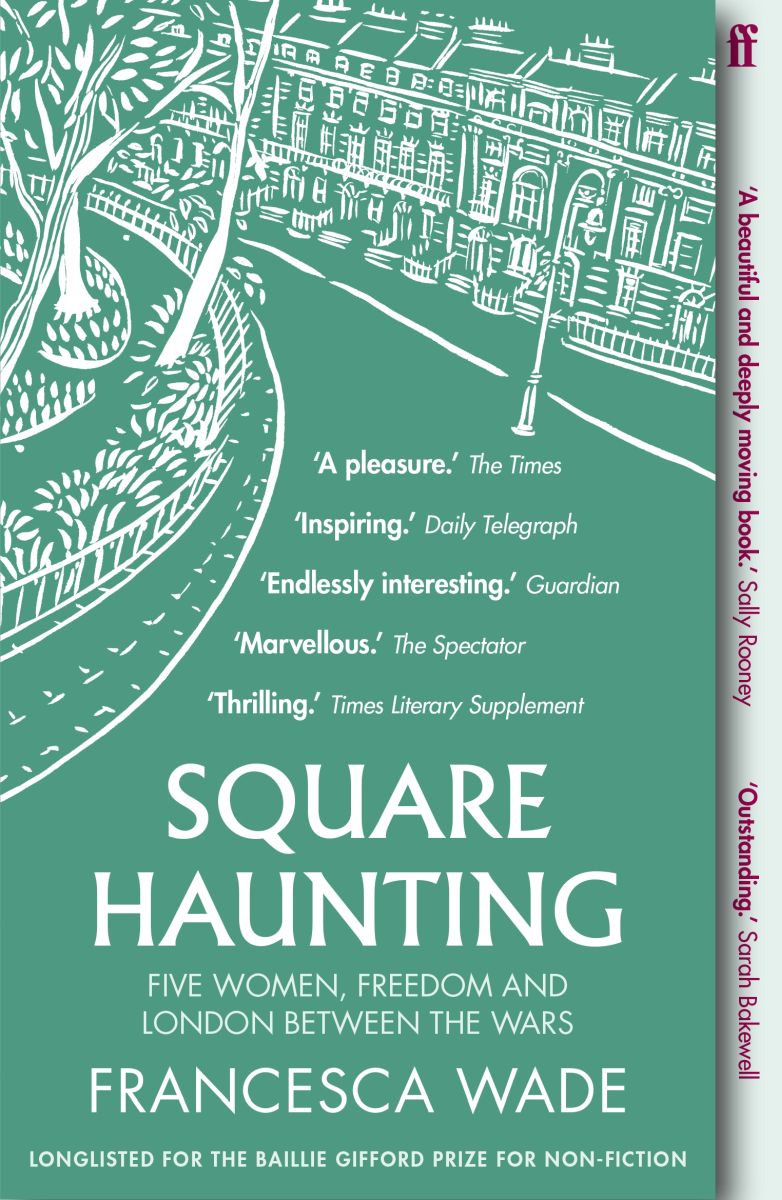
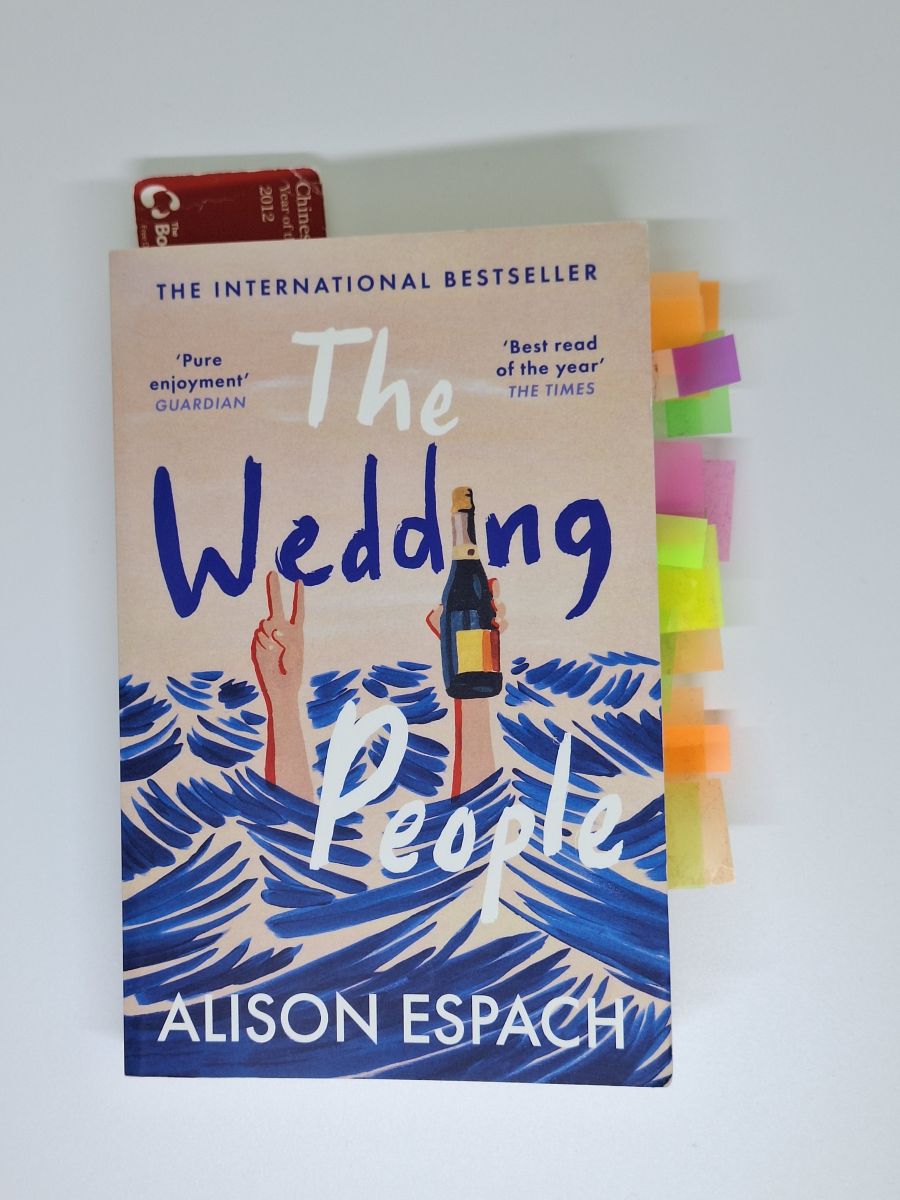
I have been wanting to read this book for ages, but it was difficult to find a copy. I just checked and there is a kindle version, so I am not sure what my problem was, but in the end I ordered it from Stefan’s Books.
Here’s the blurb …
Maisie Dobbs, Psychologist and Investigator, began her working life at the age of thirteen as a servant in a Belgravia mansion, only to be discovered reading in the library by her employer, Lady Rowan Compton. Fearing dismissal, Maisie is shocked when she discovers that her thirst for education is to be supported by Lady Rowan and a family friend, Dr. Maurice Blanche. But The Great War intervenes in Maisie’s plans, and soon after commencement of her studies at Girton College, Cambridge, Maisie enlists for nursing service overseas. Years later, in 1929, having apprenticed to the renowned Maurice Blanche, a man revered for his work with Scotland Yard, Maisie sets up her own business. Her first assignment, a seemingly tedious inquiry involving a case of suspected infidelity, takes her not only on the trail of a killer, but back to the war she had tried so hard to forget.
I do enjoy things set in the early 20th century. This was delightful. Full of lovely historical detail with good characters and an intriguing mystery/crime to solve.
I believe there is eighteen books in the series, so that will keep me going for a while (plus I am still making my way through the Gamache series).
I am not sure why I selected this book. There are quotes by Miranda Cowley Heller and Yale van der Wouden, two authors I like, so maybe that was why?
Here’s the blurb …
An extraordinarily moving and expansive debut novel that follows three generations of women from New York to rural Ireland and back again.
It is late September in 2001 and the walls of New York are papered over with photos of the missing. Cora Brady’s father is there, the poster she made taped to columns and bridges. Her mother died long ago and now, orphaned on the cusp of adulthood, Cora is adrift and alone. Soon, a letter will arrive with the offer of a new life: far out on the ragged edge of Ireland, in the town where her parents were young, an estranged aunt can provide a home and fulfil a long-forgotten promise. There the story of her family is hidden, and in her presence will begin to unspool…
An essential, immersive debut from an astonishing new voice, Confessions traces the arc of three generations of women as they experience in their own time the irresistible gravity of the past: its love and tragedy, its mystery and redemption, and, in all things intended and accidental, the beauty and terrible shade of the things we do.
This is a female driven narrative told from several points of view. Probably my favourite type of novel. Mostly it is first person, but there is a second person section and an epistolary section – so interesting structurally. Time is not linear either – it moves forwards and backwards, depending on whose perspective we have. It touches on events in the wider world – 9/11, the abortion debate in Ireland, and gay marriage, but mostly it is about relationships – female relationships, sisters, friends, lovers, mothers, etc. The story unfolds gradually, I feel that the author trusts that the reader will understand and appreciate the subtlety and the nuance.
A superb debut! I look forward to reading more of her work.
Eric and Irene and Bill and Rita. Two young couples living next to each other, the first in a beautiful cottage – suitable for a newly appointed local doctor – the second in a rundown, perennially under-heated farm. Despite their apparent differences, the two women (both pregnant) strike an easy friendship – a connection that comes as a respite from the surprising tediousness of married life, with its unfulfilled expectations, growing resentments and the ghosts of a recent past.
But as one of the coldest winters on record grips England in a never-ending frost and as the country is enveloped in a thick, soft, unmoving layer of snow, the two couples find themselves cut off from the rest of the world. And without the small distractions of everyday existence, suddenly old tensions and shocking new discoveries threaten to change the course of their lives forever.
This novel had a very interesting structure because the people we meet in the first chapter aren’t the people the rest of the novel focusses on. This novel is more about character than plot. We follow two married couples – Eric and Irene, and Bill and Rita. Both couples are recently married and now are expecting babies. There are class differences, the shadows of World War Two (Martin has been shattered by what he saw while liberating Belsen), and an extremely cold winter that brings the country to a grinding halt (quite literally – the trains and buses stop running). It is beautifully written, with a lot of period detail (there was a lot of drinking, smoking and drug taking even Irene and Rita), and domestic minutiae. It’s about people trying to live in a world recovering from devastation, evil and despair. There is mental illness, infidelity, kindness, sadness and resignation.
I need to think about this more, and possibly re-read it. I got caught up in the story and rushed through, without paying proper attention.
Some of my favourite quotes
[…] in the corridor there were lino tiles, geometries in bright colours. You had to be careful not to get lost on it, not try stepping only from green square to green square, or find yourself marooned on a red triangle.
Time would level it out, for that, he had learned (quite recently) was what time did.
When he heard her coming up the stairs he’d pushed it [photo album] back into the shadows under the bed and thought hos nice it was, what a relief, to be free of the past.
Is it possible to be free of the past?
And though he was not much given to thinking about love, did not much care for the word, thought it has been worn to a kind of uselessness, gutted by the advertising men and the crooners, and even by politicians, some of whom seemed, recently, to have discovered it, it struck him that in the end, it might just mean a willingness to imagine another’s life. To do that. To make the effort.
He was like a bird whose arrival heralded better weather.
I know this author as a textile artist – I have her other book, so I was interested to read this one. And then there was a good review in The Australian.
Here’s the blurb …
The extraordinary novel that asks: Can a name change the course of a life?
In the wake of a catastrophic storm, Cora sets off with her nine-year-old daughter, Maia, to register her son’s birth. Her husband, Gordon, a local doctor, respected in the community but a terrifying and controlling presence at home, intends for her to name the infant after him. But when the registrar asks what she’d like to call the child, Cora hesitates…
Spanning thirty-five years, what follows are three alternate and alternating versions of Cora’s and her young son’s lives, shaped by her choice of name. In richly layered prose, The Names explores the painful ripple effects of domestic abuse, the messy ties of family, and the possibilities of autonomy and healing.
With exceptional sensitivity and depth, Knapp draws us into the story of one family, told through a prism of what-ifs, causing us to consider the “one . . . precious life” we are given. The book’s brilliantly imaginative structure, propulsive storytelling, and emotional, gut-wrenching power are certain to make The Names a modern classic.
This novel had a very interesting concept about names. Does our name effect our personality, life journey and the way other people treat us? There are lovely chapters on the various characters getting on with their lives – meeting people, finding a passion, etc.
I do think it should come with a trigger warning for domestic violence, and something happens to one of the versions of Cora’s son, which made me want to throw the book across the room. Originally I thought I would suggest it to my book club, but not now. Which isn’t to say it’s not beautifully written, moving and ultimately satisfying.
I won this book, and then it languished in the pile.
Here’s the blurb …
In the summer of 2002, when Korea is abuzz over hosting the FIFA World Cup, nineteen-year-old Kim Hae-on is killed in what becomes known as the High School Beauty Murder. Two suspects quickly emerge: rich kid Shin Jeongjun, whose car Hae-on was last seen in, and delivery boy Han Manu, who witnesses Hae-on in the passenger seat of Jeongjun’s car just a few hours before her death. But when Jeongjun’s alibi turns out to be solid, and no evidence can be pinned on Manu, the case goes cold.
Seventeen years pass without any resolution for those who knew and loved Hae-on, and the grief and uncertainty take a cruel toll on her younger sister, Da-on, in particular. Unable to move on with her life, Da-on tries in her own twisted way to recover some of what she’s lost, ultimately setting out to find the truth of what happened.
Told at different points in time from the perspectives of Da-on and two of Hae-on’s classmates, Lemon loosely follows the structure of a detective novel. But finding the perpetrator is not the main objective here. Instead, the work explores grief and trauma, raising important questions about guilt, retribution, and the meaning of death and life.
I don’t think I have read anything else like this. There are three narrators, but it can take a while to work out who is doing the narrating. For one of the narrators we have a one-sided conversation with a therapist or psychiatrist, and we can read between the lines. There are hints about who the murderer might be, and there might be another crime (well there is definitely another crime, but we might know who did it). However, mostly I would say it is about grief and trauma, and how to move on from terrible events. Two of the narrators Da-On and Yun Tareim are self-absorbed, selfish and obsessive about the murder.
A Short History of the World According to Sheep – Sally Coulthard
Using a random number generator to select my books is going well. I wanted to read this, but I suspect it would have languished in the pile.
Here’s the blurb …
‘This book deserves a place in your bookcase next to Harari’s Sapiens. It’s every bit as fascinating and is surely destined to be just as successful’ Julian Norton From the plains of ancient Mesopotamia to the vast sheep farms of modern-day Australia, sheep have been central to the human story. Since our our Neolithic ancestors’ first forays into sheep-rearing nearly 11,000 years ago, these remarkable animals have fed us, clothed us, changed our diet and language and financed the conquest of large swathes of the earth.Sally Coulthard weaves this fascinating story into a vivid and colourful tapestry of engaging anecdotes and extraordinary ovine facts, whose multiple strands celebrate just how pivotal these woolly animals are to almost every aspect of human society and culture.This title was published also in the United States under the title Follow the Flock.‘A snappy, stimulating book, and certainly not just for shepherds’ Mail on Sunday‘Full of fascinating social history’ Independent‘You won’t look at a sheep in the same way again’ Country Living.
I am a knitter and I am fascinated by sheep. I would like to know the source of my yarn (although that seems impossible in Australia), what type of sheep it came from, etc.
This book has 14 chapters with different aspects of sheep history and evolution (breeding), the way humans have used sheep, and the way sheep have been fundamental to human development. Also, what should happen now? In this world of climate change? Wool is a wonder material, which must have a part to play in the future.
I found this a bit icky
The only way to do this [domesticate a sheep] would be to take a lamb from its mother as soon as it was born and breastfeed it. And so, astonishingly, the history of sheep may indeed have started with a woman nursing a newborn lamb.
And I guess this is the lot of archaeologists
At the end of the 1990s, archaeologists had the rather unusual privilege of being allowed to sift through the remains of a seventeenth-century toilet at Dudley Castle in the West Midlands.
This has languished in the ‘pile of death’ as my daughter refers to my storage of unread books. And then its number was selected (number 190).
Here’s the blurb …
‘He’s gone…’
When his daughter Samantha calls in the dead of night, John Rebus knows it’s not good news. Her husband has been missing for two days.
Rebus fears the worst – and knows from his lifetime in the police that his daughter will be the prime suspect.
He wasn’t the best father – the job always came first – but now his daughter needs him more than ever. But is he going as a father or a detective?
As he leaves at dawn to drive to the windswept coast – and a small town with big secrets – he wonders whether this might be the first time in his life where the truth is the one thing he doesn’t want to find…
I have read and enjoyed other Rebus novels. Not all of them and not in order, but I don’t think it is necessary to read them in order. I like the characters and the world-building and the twisty plots. These are some of the best crime novels I have read.
I had heard about this novel – who can forget that title? – and, so when I saw it at Readings I had to buy it.
Here’s the blurb …
In this moving, poignant novel by the bestselling author of Birds of America we share a grown woman’s bittersweet nostalgia for the wildness of her youth.
The summer Berie was fifteen, she and her best friend Sils had jobs at Storyland in upstate New York where Berie sold tickets to see the beautiful Sils portray Cinderella in a strapless evening gown. They spent their breaks smoking, joking, and gossiping. After work they followed their own reckless rules, teasing the fun out of small town life, sleeping in the family station wagon, and drinking borrowed liquor from old mayonnaise jars. But no matter how wild, they always managed to escape any real danger—until the adoring Berie sees that Sils really does need her help—and then everything changes.
First, this book is beautifully written – witty and thoughtful. For me, it was about the intense friendships and expectations of young women countered by the disillusions of middle-age. Ordinary people living their lives and have the occasional extraordinary experience. This is one of my favourite novels this year.
Here are some of my favourite quotes:
I often think that at the centre of me is a voice that at last did split, a house in my heart so invaded with other people and their speech, friends I believed I was devoted to, people whose lives I can only guess at now, that it leaves me with the impression I am simply a collection of them, that they all existed for themselves, but had inadvertently formed me, then vanished. But, what: Should I have been expected to create my own self, out of nothing, out of thin, thin air and alone?
In his iconic way our father remained very much ours, And in the long shadows of his neglect, we fashioned our own selves, quietly improvised our own rules, as kids did in America, in the fatherless fifties and sixties.
When later in life she [Sils] would appear – in a dream with a group of people; or in a thought about friends I never saw anymore, those I had consented to lose and live without…
She was, probably, the nicest person I had ever known. Yet in the years following, for myself, I abandoned even believing in niceness or being nice. I could scarcely control myself, wherever I was, from telling everyone, anyone, what I thought of them. It was an urge, a compulsion, my tongue bitten a futile blue.
I read in this article, that the novel’s title comes from a painting Ms Moore bought.
I have been on a holiday, so I wanted some fun, light and easy reads.
Here’s the blurb …
Annie Walker is on a quest to find her perfect match—someone who complements her happy, quiet life running the local flower shop in Rome, Kentucky. But finding her dream man may be harder than Annie imagined. Everyone knows everyone in her hometown, and the dating prospects are getting fewer by the day. After she overhears her latest date say she is “so unbelievably boring,” Annie starts to think the problem might be her. Is it too late to become flirtatious and fun like the leading ladies in her favorite romance movies? Maybe she only needs a little practice . . . and Annie has the perfect person in mind to be her tutor: Will Griffin.
Will—the sexy, tattooed, and absolutely gorgeous bodyguard—is temporarily back in Rome, providing security for Amelia Rose as excitement builds for her upcoming marriage to Noah Walker, Annie’s brother. He has one personal objective while on the job: stay away from Annie Walker and any other possible attachments to this sleepy town. But no sooner than he gets settled, Will finds himself tasked with helping Annie find the love of her life by becoming the next leading lady of Rome, Kentucky. Will wants no part in changing the sweet and lovely Annie. He knows for a fact that some stuffy, straitlaced guy won’t make her happy, but he doesn’t have the heart to say no.
Amid steamy practice dates and strictly “educational” tutoring lessons, Annie discovers there are more layers to Will’s usual stoic attitude. As the lines of their friendship become dangerously blurred, Annie reconsiders her dream guy. Maybe her love life doesn’t need to be perfect—it just needs to be real.
I haven’t read the first in this series – When in Rome, but it’s not necessary. This was fun, I enjoyed the banter between Will and Annie, and the set-up (Will being Annie’s dating coach). I did find it a bit long, and the reasons for keeping them apart a bit flimsy.
Having said that, it is just a mismatch between me and this novel. People must love it, it has four stars on goodreads.
Can a modern woman take lessons in love from Shakespeare? Book Lovers meets 10 Things I Hate About You in this sparkling romantic comedy from beloved Aussie author Jessica Dettmann. ‘Sigh no more, ladies, sigh no more. Men were deceivers ever …’ Since she was sixteen, Willa’s curious touchstone in life and work has been the 1993 film Much Ado About Nothing . She’s always looking for The Feeling, the stirring in her heart – and loins – that she gets when watching the opening scenes. Now she’s navigating her mid-thirties, her career as a romance publisher in an unusual family business, and her determination to remain child-free, while quietly holding out for a love as big as Beatrice and Benedick’s. But when relationships start to get complicated between Willa, her cousin Imogen and the four sons of the family she works for, and the events of her own life begin to mirror the plot of her beloved comedy, Willa must consider whether there is such a thing as too much ado. A delightfully Shakespearean romantic comedy about modern love, women’s roles and how the films and stories we grow up with shape us. ‘An absolute delight! With its witty dialogue, relatable characters, and laugh-out-loud moments, this book is the perfect escape.
I am also a fan of Much Ado About Nothing, probably not as much as Willa. This does loosely follow the plot – I did spend a bit of time wondering who the ‘Benedick’ would be. I found Willa to be a bit more caustic than witty at times, but overall this is a fun, well-written novel. And it is always nice to read an Australian novel, set somewhere that I recognise.