I was looking for something to listen to on my husband’s audible account (it was in alphabetical order) and I decided to give this one a go. Science fiction is not my usual choice, but I do, occassionally read it. I didn’t realise this was book 1 though.
Here’s the blurb …
We were fighting on the wrong side, of a war we couldn’t win. And that was the good news.
The Ruhar hit us on Columbus Day. There we were, innocently drifting along the cosmos on our little blue marble, like the native Americans in 1492. Over the horizon come ships of a technologically advanced, aggressive culture, and BAM! There go the good old days, when humans only got killed by each other. So, Columbus Day. It fits.
When the morning sky twinkled again, this time with Kristang starships jumping in to hammer the Ruhar, we thought we were saved. The UN Expeditionary Force hitched a ride on Kristang ships to fight the Ruhar, wherever our new allies thought we could be useful. So, I went from fighting with the US Army in Nigeria, to fighting in space. It was lies, all of it. We shouldn’t even be fighting the Ruhar, they aren’t our enemy, our allies are.
I’d better start at the beginning….
This was quite long – 17 hours, and a lot happened and a lot had to be described. There is a lot of galaxy and world building going on (all done very well). But, as for any story, it really comes down to the characters. Skippy, the beer can AI, was my favourite and I loved how Joe and Skippy played off each other. It was a very immersive experience and I can imagine it as a film or television series.
I have been making my way through Mick Herron’s Slow Horses series and when I saw the adaptation of this on Apple, I decided to give it a go.
Here’s the blurb …
CWA Gold Dagger winner Mick Herron’s debut novel introduces Sarah Tucker, whose search for a missing child unravels a murderous conspiracy.
When a house explodes in a quiet Oxford suburb and a young girl disappears in the aftermath, Sarah Tucker—a young married woman, bored and unhappy with domestic life—becomes obsessed with finding her. Accustomed to dull chores in a childless household and hosting her husband’s wearisome business clients for dinner, Sarah suddenly finds herself questioning everything she thought she knew, as her investigation reveals that people long believed dead are still among the living, while the living are fast joining the dead. What begins in a peaceful neighborhood reaches its climax on a remote, unwelcoming Scottish island as the search puts Sarah in league with a man who finds himself being hunted down by murderous official forces.
I didn’t realise this was his debut novel – it is certainly very good, with all of his trademarks. Self-serving spooks, witty dialogue and no character is safe (there is no plot armour).
It’s twisty and turny and there was one very unexpected event (no spoilers). I am looking forward to watching the adaptation now.
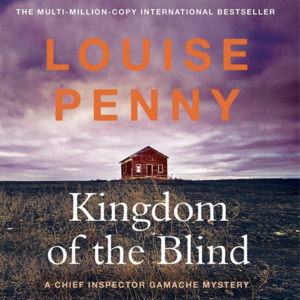
I do like a Gamache story (I think there is 20 of them!).
Here’s the blurb for this one…
When a mysterious figure appears in Three Pines one cold November day, Armand Gamache and the rest of the villagers are at first curious. Then wary. Through rain and sleet, the figure stands unmoving, staring ahead.
From the moment the creature’s shadow falls over the village, Gamache, now Chief Superintendent of the Sûreté du Quebec, suspects it has deep roots and a dark purpose. Yet he does nothing. What can he do? Only watch and wait. And hope his mounting fears are not realized.
But when the figure vanishes overnight and a body is discovered, it falls to Gamache to discover if a debt has been paid or levied.
Months later, on a steamy July day, as the trial for the accused begins in Montréal, Chief Superintendent Gamache continues to struggle with actions he set in motion that bitter November from which there is no going back. More than the accused is on trial. Gamache’s own conscience is standing in judgment.
In her latest utterly gripping book, number-one New York Times bestselling author Louise Penny shatters the conventions of the crime novel to explore what Gandhi called the court of conscience. A court that supersedes all others.
This story is told over two time-frames. When the murder occurred (around Halloween) and when the murderer went on trial (July the following year). There are sneaky things afoot – a hidden door, perjury, feigned incompetence and a few red herrings as well.
Like all of the Gamache novels, it is beautifully written and we learn a bit about Cobradors (here is an article about them), although our Cobrador is more of a conscience than a debt collector.
I watched the 2011 TV adaptation (which is great), then I read a paper copy, and now I have listened to it. Clearly a bit of a favourite.
Here’s the blurb …
Winifred Holtby’s masterpiece is a rich evocation of the lives and relationships of the characters of South Riding. Sarah Burton, the fiery young headmistress of the local girls’ school; Mrs Beddows, the district’s first alderwoman—based on Holtby’s own mother; and Robert Carne, the conservative gentleman-farmer locked in a disastrous marriage—with whom the radical Sarah Burton falls in love. Showing how public decisions can mold the individual, this story offers a panoramic and unforgettable view of Yorkshire life.
I really enjoyed this novel. I think it shows a slice of rural life in England between the wars. The machinations of the local council, the living conditions of the poor (lack of sanitation, not to mention birth control), the lack of welfare services (I am thinking of Lydia having to leave school to look after her siblings after her mother dies), but there is also community spirit and a hope that things will improve.
I enjoyed the first Peter Wimsey story, so when I was looking for something easy to listen to (after Villette), I chose this one. I am very keen to get to Gaudy Night, but that is book number 10.
Here’s the blurb …
Rustic old Riddlesdale Lodge was a Wimsey family retreat filled with country pleasures and the thrill of the hunt — until the game turned up human and quite dead. He lay among the chrysanthemums, wore slippers and a dinner jacket and was Lord Peter’s brother-in-law-to-be. His accused murderer was Wimsey’s own brother, and if murder set all in the family wasn’t enough to boggle the unflappable Lord Wimsey, perhaps a few twists of fate would be — a mysterious vanishing midnight letter from Egypt…a grieving fiancee with suitcase in hand…and a bullet destined for one very special Wimsey.
I love everything about these novels. The settings, the language, the way of life, the characters – Lord Peter, Bunter and Inspector Parker (clearly in love with Lady Mary). I like how the crimes are solved. But it’s not just a cozy mystery they have some emotional heft to them.
I have tried to read Villette many times. I usually get to the part when Lucy is desperately lonely and visits the catholic church. However, this time I made it all the way to the end (and it has a happy ending (well maybe a happy ending) – who knew? I thought it was going to be miserable).
Here’s the wikipedia summary
Villette begins with its protagonist and unreliable narrator, Lucy Snowe, aged 13, staying at the home of her godmother Mrs. Bretton in “the clean and ancient town of Bretton”, in England. Also in residence are Mrs. Bretton’s teenaged son, John Graham Bretton (whom the family calls Graham), and a young visitor, Paulina Home (who is called Polly), who is aged 6. Polly’s mother, who neglected her daughter, has recently died and her father is recommended by doctors to travel to improve his spirits. Polly is invited by Mrs. Bretton to stay. Polly is a serious little girl, who is described as unlike normal children.
Polly soon develops a deep devotion to Graham, who showers her with attention. But Polly’s visit is cut short when her father arrives to summon her to live with him abroad.
For reasons that are not stated, Lucy leaves Mrs. Bretton’s home a few weeks after Polly’s departure. Some years pass, during which an unspecified family tragedy leaves Lucy without family, home, or means. After some initial hesitation, she is hired as a caregiver by Miss Marchmont, a rheumatic crippled woman. Lucy is soon accustomed to her work and has begun to feel content with her quiet, frugal lifestyle.
The night of a dramatic storm, Miss Marchmont regains all her energy and feels young again. She shares with Lucy her sad love story of 30 years ago, and concludes that she should treat Lucy better and be a better person. She believes that death will reunite her with her dead lover. The next morning, Lucy finds Miss Marchmont died in the night.
Newspaper illustration from abridged version of Villette, 1909
Lucy then leaves the English countryside and goes to London. At the age of 22, she boards a ship for Labassecour despite knowing very little French. On the ship, she meets Ginevra Fanshawe, who tells Lucy that the directress of her boarding school for girls (based upon the Hegers’ Brussels pensionnat) she is attending, Madame Beck, needs a bonne for her children. She travels to the city of Villette in Labassecour where Madame Beck’s school is located. After a time, she is hired to teach English at the school, in addition to having to mind Madame Beck’s three children. She thrives despite Madame Beck’s constant spying on the staff and students.
“Dr. John,” a handsome English doctor, frequently visits the school at the behest of Madame Beck, and deepens his affection for the coquette Ginevra Fanshawe. In one of Villette’s famous plot twists, “Dr. John” is later revealed to be John Graham Bretton, a fact that Lucy has known since he once asked her why she was staring at him, but has deliberately concealed from the reader.
During the school holidays, all the teachers and pupils have either gone to travel abroad or gone back to their families. The school is completely empty except for a disabled child whom Lucy is supposed to take care of. After the disabled child is fetched away, Lucy is extremely lonely and becomes both mentally and physically ill. She goes to a Catholic church (despite being a Protestant) to confess to a priest. On the way back to the school, she collapses due to fever and mental exhaustion. Dr. John brings her to his home, which he shares with his mother, Mrs. Bretton.
Graham recognises Lucy only after she is brought to Mrs. Bretton’s home. After Dr. John (i.e., Graham) discovers Ginevra’s true character while at the theatre, he turns his attention to Lucy, and they become close friends. She values this friendship highly despite her usual emotional reserve. Lucy soon develops feelings for Dr. John and treasures the letters he sends her once she returns to the pensionnat.
Lucy and Graham meet Polly (Paulina Home) again at the same theatre after a fire, in which Polly is injured. Polly’s father has inherited the title “de Bassompierre” and is now a Count; thus her name is now Paulina Mary Home de Bassompierre. Polly and Graham soon discover that they knew each other in the past and slowly renew their friendship. They fall in love and eventually marry despite the initial reluctance of Polly’s father.
Lucy becomes progressively closer to a colleague, the irascible, autocratic, and confrontational professeur, M. Paul Emanuel, a relative of Mme. Beck. Lucy gradually realises that his apparent antagonism is actually helping her to overcome her weaknesses and to grow. She and Paul eventually fall in love.
However, a group of conspiring antagonists, including Madame Beck, the priest Père Silas, and the relatives of M. Paul’s long-dead fiancée, work to keep the two apart, on the grounds that a union between a Catholic and a Protestant is impossible. They finally succeed in forcing M. Paul’s departure for Guadeloupe to oversee a plantation there. He nonetheless declares his love for Lucy before his departure and arranges for her to live independently as the headmistress of her own day school, which she later expands into a pensionnat.
During the course of the novel, Lucy has three encounters with the figure of a nun — which may be the ghost of a nun who was buried alive on the school’s grounds as punishment for breaking her vow of chastity. In a highly symbolic scene near the end of the novel, she discovers the “nun’s” habit in her bed and destroys it. She later finds out that it was a disguise worn by Ginevra’s amour, Alfred de Hamal, placed in Lucy’s bed as a prank. The episodes with the nun no doubt contributed substantially to the novel’s reputation as a gothic novel. Ginevra keeps in contact with Lucy through letters that show the young coquette has not changed and expects to live off of her uncle’s (Basompierre’s) good graces.
Villette’s final pages are ambiguous. Although Lucy says that she wants to leave the reader free to imagine a happy ending, she hints strongly that M. Paul’s ship was destroyed by a storm during his return journey from the West Indies. She says that, “M. Emanuel was away three years. Reader, they were the three happiest years of my life.” This passage suggests that he was drowned by the “destroying angel of tempest.”
There is not much of a plot to this novel, it’s more about Lucy’s progress through life. Her loneliness, her self-possession, the impact other people have on her (both well-meaning and not so well-meaning – Madame Beck and her surveillance). The story is told from Lucy’s point of view. She is a solitary creature who longs for human connection. It is definitely from the 19th century, there is a lot of thinking, religion, and discussions about duty.
After my success at listening to War and Peace, I decided to try Anna Karenina, and this version is read by Maggie Gyllenhaal (what could be better?).
Here is the Goodreads blurb …
Acclaimed by many as the world’s greatest novel, Anna Karenina provides a vast panorama of contemporary life in Russia and of humanity in general. In it Tolstoy uses his intense imaginative insight to create some of the most memorable characters in all of literature. Anna is a sophisticated woman who abandons her empty existence as the wife of Karenin and turns to Count Vronsky to fulfil her passionate nature – with tragic consequences. Levin is a reflection of Tolstoy himself, often expressing the author’s own views and convictions.
Throughout, Tolstoy points no moral, merely inviting us not to judge but to watch. As Rosemary Edmonds comments, ‘He leaves the shifting patterns of the kaleidoscope to bring home the meaning of the brooding words following the title, ‘Vengeance is mine, and I will repay.
I am sure that everyone knows the story of Anna Karenina. And I have watched several adaptations; this one – with Keira Knightley, this one – with Sophie Marceau and Sean Bean as Vronsky, and a modern Australian version, The Beautiful Lie – with Sarah Snook.
Given that I felt I knew the story, I was pleasantly surprised by the novel. I have always thought that Karenin and Vronsky dashing and heroic, and Anna makes really bad decisions. However, now I think Karenin was good, but too christian, and Vronsky is a cad, and Anna still makes really bad decisions.
Although to be fair to Anna, this was the time before divorce, and she was stuck in a marriage with an old boring man, and she had nothing to do.
Vronsky should not have pursued her so relentlessly. He was selfish and self-centred.
Anna reminded me of Madame Bovary – that need for drama, romance and love. Not to mention blowing up their own lives. Madame Bovary was serialised in 1856 and Anna Karenina was published in 1878. Was Tolstoy having a conversation with Flaubert? Or is this a common type of woman in the 19th Century?
I did, however, like Levin and Kitty. They made up for all of the awful, selfish characters.
As you’re probably all aware, this novel has been long-listed for the Booker Prize. It sounded appealing so I bought a kindle copy (it’s not available in paper in Australia yet) and an audible copy. In the end I listened to it.
Here’s the blurb …
Trinidad, 1980: Dawn Bishop, aged 16, leaves her home and journeys across the sea to Venezuela. There, she gives birth to a baby girl, and leaves her with nuns to be given up for adoption.
Dawn tries to carry on with her life – a move to England, a marriage, a career, two sons, a divorce – but through it all, she still thinks of the child she had in Venezuela, and of what might have been.
Then, forty years later, a woman from an internet forum gets in touch. She says that she might be Dawn’s long-lost daughter, stirring up a complicated mix of feelings: could this be the person to give form to all the love and care a mother has left to offer?
This was beautiful. Dawn is telling us her story with lots of tangents and interesting side stories. The story unfolds slowly with gaps that get filled in later. It’s about parents, children, family life, the immigrant experience, and mistakes made when young.
After reading Square Haunting, I was keen to read Dorothy L Sayers. This is the first of the Lord Peter Wimsey mysteries. I listened to this one, narrated by Robert Bathurst.
Here’s the blurb …
It was the body of a tall stout man. On his dead face, a handsome pair of gold pince-nez mocked death with grotesque elegance.
The body wore nothing else.
Lord Peter Wimsey knew immediately what the corpse was supposed to be. His problem was to find out whose body had found its way into Mr Alfred Thipp’s Battersea bathroom.
I loved it, and the crime was fiendish. All of the characters are brilliant – Lord Wimsey, his valet Bunter, fellow detective Mr Parker, and his mother the Dowager Duchess. I imagine all of these characters will reappear in future novels.
The setting is very 1920s London, with Lord Peter needing to dress appropriately for every social event, everyone is ‘jolly decent’ – even the murderer! These are well-written and lots of fun. I shall definitely be reading more. I am quite keen to get to Gaudy Night and Harriet Vane, but I shall read them in order.
Hardly a day goes by when nine year old Laurent Lepage doesn’t cry wolf. From alien invasions, to walking trees, to winged beasts in the woods, to dinosaurs spotted in the village of Three Pines, his tales are so extraordinary no one can possibly believe him. Including Armand and Reine-Marie Gamache, who now live in the little Quebec village.
But when the boy disappears, the villagers are faced with the possibility that one of his tall tales might have been true.
And so begins a frantic search for the boy and the truth. What they uncover deep in the forest sets off a sequence of events that leads to murder, leads to an old crime, leads to an old betrayal. Leads right to the door of an old poet.
And now it is now, writes Ruth Zardo. And the dark thing is here.
A monster once visited Three Pines. And put down deep roots. And now, Ruth knows, it is back.
Armand Gamache, the former head of homicide for the Sûreté du Québec, must face the possibility that, in not believing the boy, he himself played a terrible part in what happens next.
As usual this is beautifully written. There are lots of literary and biblical references. Plus some hints about what Gamache might do next (I started with number 12, so I know where he goes next). There is evil at the heart of this one, multiple deaths, a serial killer, spies and a reckoning for Ruth.