La Vie N’est Pas Un Roman De Susan Cooper – Stéphane Carlier
I have been learning french for a long time. I started at Alliance Française, and then Duolingo (I finished the French ‘tree’) and now Lingoda. While I was in Paris, I bought this novel. I struggled a bit because my vocabulary is not extensive, but I think I understood and appreciated the story.
Here’s the blurb …
Susan Cooper, romancière britannique établie à Paris, écrit des polars lus dans le monde entier. Alors qu’elle s’apprête à se rendre au Salon du livre de Monaco, une jeune femme qu’elle ne connaît pas la contacte via Instagram et lui annonce qu’elle a tué un homme quelques heures plus tôt. Que répondre à cet étrange message ? D’ailleurs, faut-il y répondre ? Le plus sage serait sans doute de l’ignorer. Mais, c’est bien connu, les écrivains sont par nature des gens curieux…
I will try to translate
Susan Cooper, a British novelist living in Paris, writes crime novels read all over the world. While she was getting ready to go to the Salon of Books Of Monaco, a young woman who she didn’t know contacted her via Instragam and she announces that she had killed a man a few hours earlier. How to respond to this strange message. Besides was it necessary to respond? The prudent thing would be without a doubt to ignore it. But it is well-Known that writers are by nature curious people …
It took me a while to read it, I started in August. The plot was interesting, but my french is not good enough to comment on the writing. I did enjoy increasing my vocabulary, particularly with words and phrases more informal than you learn in class.
Now I am reading La Vie Pourrie d’Ellie by Lucy Vine. I found my copy at the local school fête. I think it is an english novel translated into french.
I a very dear friend lent this one to me. I didn’t know what to expect, but I trust her judgement. It is great – one of my favourite reads of the year (so far).
Here’s the blurb …
From the Booker Prize finalist author of The Island of Missing Trees, an enchanting new tale about three characters living along two rivers, all under the shadow of one of the greatest epic poems of all time. “Make place for Elif Shafak on your bookshelf… you won’t regret it.” (Arundhati Roy)
In the ancient city of Nineveh, on the bank of the River Tigris, King Ashurbanipal of Mesopotamia, erudite but ruthless, built a great library that would crumble with the end of his reign. From its ruins, however, emerged a poem, the Epic of Gilgamesh, that would infuse the existence of two rivers and bind together three lives.
In 1840 London, Arthur is born beside the stinking, sewage-filled River Thames. With an abusive, alcoholic father and a mentally ill mother, Arthur’s only chance of escaping destitution is his brilliant memory. When his gift earns him a spot as an apprentice at a leading publisher, Arthur’s world opens up far beyond the slums, and one book in particular catches his interest: Nineveh and Its Remains.
In 2014 Turkey, Narin, a ten-year-old Yazidi girl, is diagnosed with a rare disorder that will soon cause her to go deaf. Before that happens, her grandmother is determined to baptize her in a sacred Iraqi temple. But with the rising presence of ISIS and the destruction of the family’s ancestral lands along the Tigris, Narin is running out of time.
In 2018 London, the newly divorced Zaleekah, a hydrologist, moves into a houseboat on the Thames to escape her husband. Orphaned and raised by her wealthy uncle, Zaleekah had made the decision to take her own life in one month, until a curious book about her homeland changes everything.
A dazzling feat of storytelling, There Are Rivers in the Sky entwines these outsiders with a single drop of water, a drop which remanifests across the centuries. Both a source of life and harbinger of death, rivers—the Tigris and the Thames—transcend history, transcend fate: “Water remembers. It is humans who forget.”
This novel has the structure of a water molecule – H2O. The two Hs are Narin and Zaleekah, and the O is Arthur. Their stories are separated by time, but connected. This is a watery novel with multitudes of water descriptions, metaphors and similes.
[about a rain drop] Inside its miniature orb, it holds the secret of infinity, a story uniquely its own.
But now a sense of foreboding tugs at his [Arthur] insides, like the pull of a river’s undercurrent
Just as a drop of rain or a pellet of hail, water in whatever form, will always remember, he too, will never forget.
It is as if love, by its fluid nature, its riverine force, is all about the melding of markers, to the extent that you can no longer tell where your being ends and another’s begins.
Yet the key element for her is, and always has been water. She says it washes away disease, purifies the mind, calms the heart. Water is the best cure for melancholy.
Time is a river that meanders, branching out into tributaries and rivulets, depositing sediments of stories along its shows in the hope that someday, someone, somewhere, will find them.
It’s also about women and their place (or lack of place) in the world. Nisaba, the goddess of storytelling, replaced by Nabu. ISIS taking the Yasidi women and girls making them slaves (all kinds of slavery).
He does not look at her. It does not occur to him that he might frighten her with his proximity, having never had cause to feel such fear himself.
It’s about family and what people are prepared to do for family.
It’s about colonialism and who owns the ancient artifacts.
Westerners take our past, our memories. And then they say, “Don’t worry, you can come and see them anytime”.
He [Arthur] firmly believes that he is here to help excavate and preserve antiquities that will surely be better off in the hands of Europeans than the natives.
This novel is breath-taking in its scope; Mesopotamia, Victorian London, modern London and modern Iraq. The writing is beautiful, the sense of place exquisite. Like all good writing, I feel like I have been on an adventure; trying to decipher cuneiform with Arthur, listening to Narin’s grand mother’s stories about their culture and heritage, cheering Zaleekah on as she explores new options (and realising just how far her family is prepared to go to protect one of its own).
Why hasn’t this been made into a TV series? There’s beautiful people, swords and magic. I listened to this, and the narrator (Steven Pacey) is superb!
Here’s the blurb …
The chimneys of industry rise over Adua and the world seethes with new opportunities. But old scores run deep as ever.
On the blood-soaked borders of Angland, Leo dan Brock struggles to win fame on the battlefield, and defeat the marauding armies of Stour Nightfall. He hopes for help from the crown. But King Jezal’s son, the feckless Prince Orso, is a man who specializes in disappointments.
Savine dan Glokta – socialite, investor, and daughter of the most feared man in the Union – plans to claw her way to the top of the slag-heap of society by any means necessary. But the slums boil over with a rage that all the money in the world cannot control.
The age of the machine dawns, but the age of magic refuses to die. With the help of the mad hillwoman Isern-i-Phail, Rikke struggles to control the blessing, or the curse, of the Long Eye. Glimpsing the future is one thing, but with the guiding hand of the First of the Magi still pulling the strings, changing it will be quite another…
I really enjoyed this (so much so I am currently listening to the second) – it has a very medieval Europe feel to it. We follow various different characters from all walks of life – (some of them have great names – it took me a while to work out that ‘the bloody nine’ was in fact one person and not nine!) It’s witty and the world building is fabulous.
I have been keeping ahead of the Apple TV series of Slow Horses, we have just watched series four, so I decided it was time to read (listen) book 5 London Rules.
Here’s the blurb …
London Rules might not be written down, but everyone knows rule one.
Cover your arse.
Regent’s Park’s First Desk, Claude Whelan, is learning this the hard way. Tasked with protecting a beleaguered prime minister, he’s facing attack from all directions himself: from the showboating MP who orchestrated the Brexit vote, and now has his sights set on Number Ten; from the showboat’s wife, a tabloid columnist, who’s crucifying Whelan in print; and especially from his own deputy, Lady Di Taverner, who’s alert for Claude’s every stumble.
Meanwhile, the country’s being rocked by an apparently random string of terror attacks, and someone’s trying to kill Roddy Ho.
Over at Slough House, the crew are struggling with personal problems: repressed grief, various addictions, retail paralysis, and the nagging suspicion that their newest colleague is a psychopath. But collectively, they’re about to rediscover their greatest strength – that of making a bad situation much, much worse.
It’s a good job Jackson Lamb knows the rules. Because those things aren’t going to break themselves.
I do hope the secret service is not like it is described in these novels (although it probably is). I do like how these books are written; there is funny bits, moving bits, adventure and excitement, not to mention double-dealing and back-stabbing, but the slow horses look after their own.
I have read The Women Upstairs and The emperor’s Children – I enjoyed the former more than the latter, but was keen to give this one a go. And then it was nominated for the Booker Prize (but didn’t make the shortlist), which was my project this year.
Here’s the blurb …
An immersive, masterful story of a family born on the wrong side of history, from one of our finest contemporary novelists.
Over seven decades, from 1940 to 2010, the pieds-noirs Cassars live in an itinerant state—separated in the chaos of World War II, running from a complicated colonial homeland, and, after Algerian independence, without a homeland at all. This Strange Eventful History, told with historical sweep, is above all a family story: of patriarch Gaston and his wife Lucienne, whose myth of perfect love sustains them and stifles their children; of François and Denise, devoted siblings connected by their family’s strangeness; of François’s union with Barbara, a woman so culturally different they can barely comprehend one another; of Chloe, the result of that union, who believes that telling these buried stories will bring them all peace.
First, I knew nothing about Algeria (I knew it had been a French colony, but nothing about its independence). It sounds like a beautiful place, although I suspect it’s a bit troubled now as many former colonies are. This is a story about Gaston and Lucienne, their children and their grandchildren. It’s about life, love and family. It’s based on the author’s own family.
A few bits I highlighted
I know also that everything is connected, the constellations of our lives moving together in harmony and disharmony.
A story is not a line; it is a richer thing, one that circles and eddies, rises and falls, repeats upon itself.
We were on the one hand interchangeable and on the other each our selves.
[…] we had agency over only some small aspects of our stories
This strange eventful history that made a life. Not good or bad – rather, both good and bad – but that was not the point. Above all, they had been, for so long, wildly curious. Just to see, to experience all that they could, to set foot anywhere, to speak to anyone, taste anything, to learn, to know.
The writing is beautiful, I can see why it was nominated.
I am a sucker for a women’s history book. I bought this one from the Subiaco Bookshop (it has a great selection of books). However, in the end I read it on my Kobo (so I have two versions – print and digital).
Here’s the blurb …
Virginal, chaste, humble, patiently waiting for rescue by brave knights and handsome princes: this idealised – and largely mythical – notion of the medieval noblewoman still lingers. Yet the reality was very different, as Kelcey Wilson-Lee shows in this vibrant account of the five daughters of the great English king, Edward I. The lives of these sisters – Eleanora, Joanna, Margaret, Mary and Elizabeth – ran the full gamut of experiences open to royal women in the Middle Ages. Living as they did in a courtly culture founded on romantic longing and brilliant pageantry, they knew that a princess was to be chaste yet a mother to many children, preferably sons, meek yet able to influence a recalcitrant husband or even command a host of men-at-arms.
These women’s lives were fascinating. The royal family was constantly on the move – visiting various palaces, manors, nobles, etc. The children had their own households from a young age and roamed the country. Mary was sent to a nunnery when she was 6! The other girls were married off to various European nobility. What I found interesting was the care and interest Edward took in his children (obviously he ordered them about when required), but he clearly loved them as well. Within the constraints of the time, these women wielded power and influence, and had great wealth they used to further causes important to them.
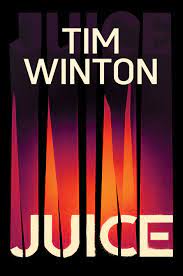
I am not a huge Tim Winton fan, I usually find his characters to be unsympathetic, but I have always admired his creation of place. I heard him being interviewed by Claire Nicols and it sounded like something I would like. In the end, I listened to it.
Here’s the blurb …
An epic novel of determination, survival, and the limits of the human spirit. This is Tim Winton as you’ve never read him before.
Two fugitives, a man and a child, drive all night across a stony desert. As dawn breaks, they roll into an abandoned mine site. From the vehicle they survey a forsaken place – middens of twisted iron, rusty wire, piles of sun-baked trash. They’re exhausted, traumatised, desperate now. But as a refuge, this is the most promising place they’ve seen. The child peers at the field of desolation. The man thinks to himself, this could work.
Problem is, they’re not alone.
So begins a searing, propulsive journey through a life whose central challenge is not simply a matter of survival, but of how to maintain human decency as everyone around you falls ever further into barbarism.
The descriptions of the different landscapes were fabulous. I enjoyed how the story unfolded slowly and we gradually learnt what had brought our protagonist to this bleak place. It is a story for our times and might hopefully get people thinking about the environment and the impact of climate change. It is a bleak story and (without giving away spoilers) it has a ‘Winton’ ending. I can see this being made into a movie.